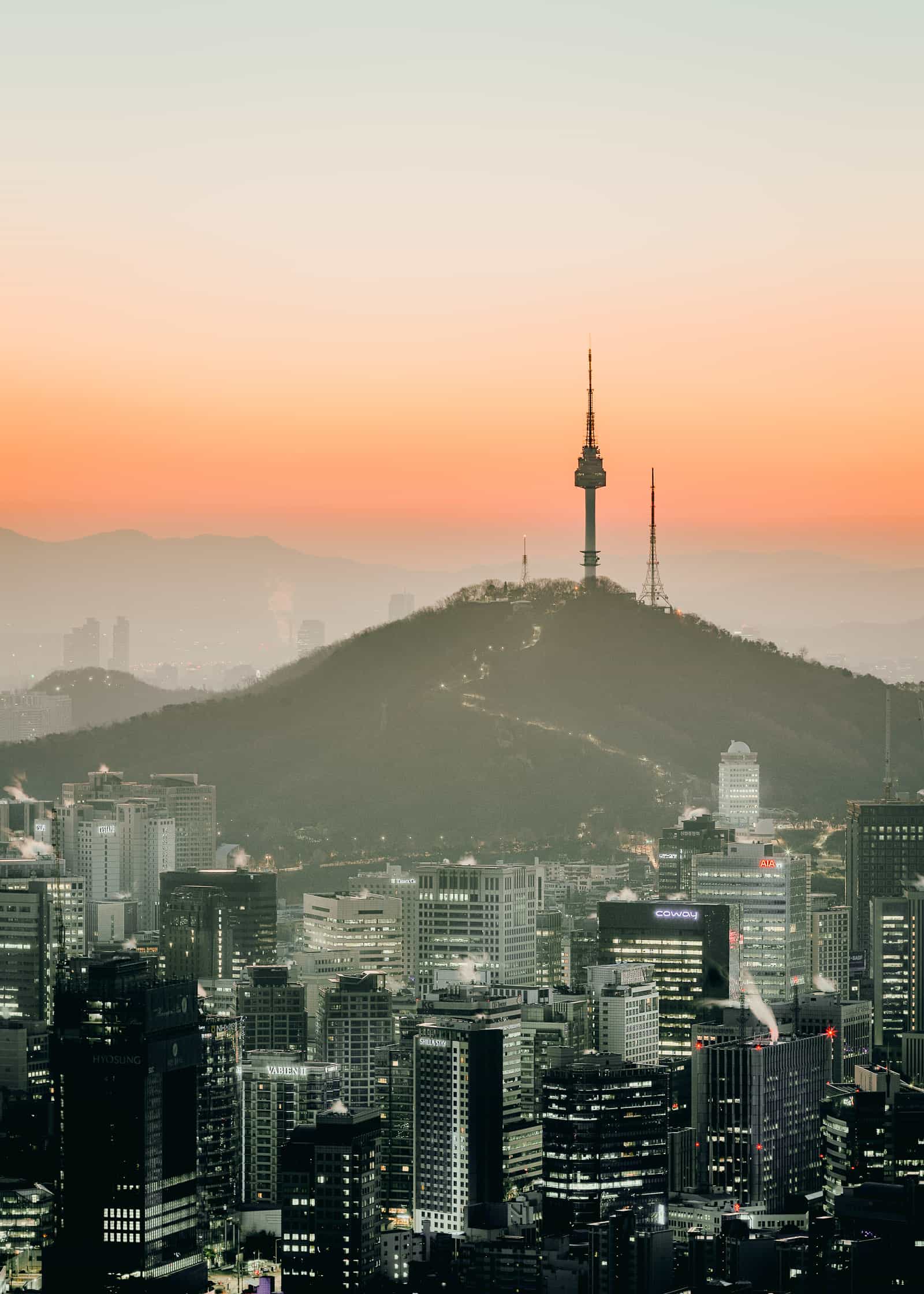
Why Visit South Korea?
Go for Seoul and stay for the rest. The capital has five Joseon-era palaces, neighbourhoods that each feel like a different city, and a food scene that runs late: grilled meat, fried chicken, market stalls and cafés on every corner. What makes the country easy is the trains. The KTX gets you from Seoul to Busan in under three hours, so a week can cover the capital, the old royal city of Gyeongju and the coast without long travel days.
Where to Go
- Seoul: Gyeongbokgung Palace, the hanok houses of Bukchon, street food at Gwangjang Market, and nights in Hongdae or Itaewon. Most first trips spend at least four days here.
- Busan: Korea’s second city and its biggest port. Beaches at Haeundae and Gwangalli, the Jagalchi fish market and the hillside Gamcheon Culture Village.
- Gyeongju: The capital of the Silla kingdom for about a thousand years. Bulguksa Temple and the Seokguram Grotto are a UNESCO World Heritage Site, and the royal burial mounds sit right in town.
- Jeju Island: A short flight from Seoul or Busan. Volcanic coast, Hallasan (South Korea’s highest mountain) and the Olle walking trails that loop the island.
- Jeonju: A hanok village of more than 700 traditional houses, and the home of bibimbap. An easy day or overnight from Seoul by KTX.
Best Time to Visit
- Spring (April–May): Cherry blossom in early April, mild days, and the busiest time for hotels.
- Summer (June–August): Hot and humid. The monsoon (jangma) usually runs from late June to late July, so expect heavy rain for days at a time.
- Autumn (September–November): My pick. Clear skies, comfortable temperatures, and the leaves turn red and gold from mid-October.
- Winter (December–February): Cold and dry, often well below freezing in Seoul. Good for skiing, hot food and cheaper rooms.
Travel Tips
- The currency is the Korean won (KRW). Cards work almost everywhere in the cities, but keep some cash for markets and street stalls.
- Buy a T-money card at any convenience store or station. It pays for the subway, buses and taxis in Seoul and in other cities too.
- Use Naver Map or KakaoMap for directions. They are the apps Koreans use, and they tell you which subway exit to take.
- Plugs are type C and F (the two round pins used in most of Europe), at 220V.
- Tipping is not expected in restaurants, cafés or taxis.
- Book KTX seats ahead for weekends and holidays, especially Chuseok and Seollal (Lunar New Year), when much of the country travels home.