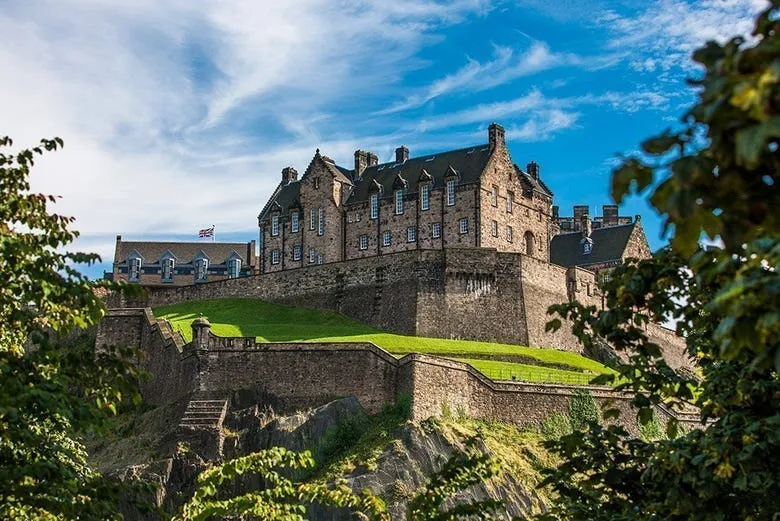
This is the start of the walk, not a stop on it: budget at least 2 hours if you're going in, and book online (it's cheaper and the only way to guarantee a summer slot). Our full review, with the room-by-room detail, is in the Old Town guide.
The Royal Mile walked top to bottom: Castlehill to the Canongate, the closes worth ducking into, exact prices for every ticketed stop, and what I'd skip.
The Royal Mile is one street wearing four different names as it drops from Edinburgh Castle to the Palace of Holyroodhouse: Castlehill, the Lawnmarket, the High Street, and the Canongate, 0.89 miles (1.43km) door to door. It's the street everyone pictures when they say 'Edinburgh's Old Town', but the two aren't quite the same thing. The Old Town is the whole medieval district this street runs through (Grassmarket, Victoria Street, the Cowgate, the university quarter) and that guide covers the district's restaurants, pubs and museums properly. This one is just the Mile itself: the street, walked top to bottom in the order you actually meet it, with the historic closes and wynds most visitors walk straight past.
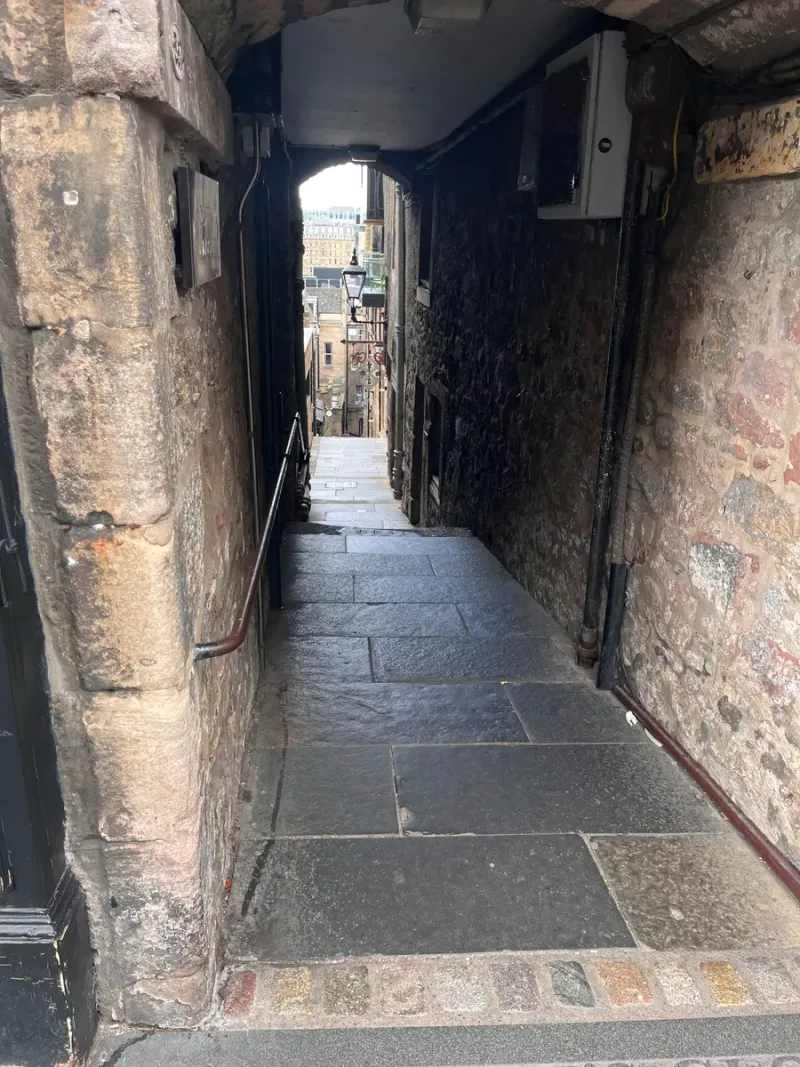
What makes the Mile worth walking slowly rather than rushing is what's off to the sides. Medieval Edinburgh was built on a narrow ridge, so it grew upward and sideways rather than outward: eleven-storey tenements along the spine, with dozens of closes and wynds, some barely a shoulder wide, dropping steeply away on either side. A few are dead ends leading to nothing but a view; a few open onto genuine hidden courtyards and gardens. Most people never step into a single one of them. This guide sequences a route that does.
The honest caveat, covered properly at the end: parts of the upper Mile, roughly Castlehill down to St Giles', are dense with tartan megastores, costumed photo touts and sandwich-board tour sellers, and no walking guide should pretend otherwise. The fix isn't to avoid the street, it's to know which stretches reward slowing down and which ones you can walk straight through. For the city's wider highlights beyond this one street, see our things to do in Edinburgh guide.
Edinburgh Castle is where this walk starts, at the top of the ridge everything else on the Mile runs downhill from. It's not really a stop on the walk so much as the reason the walk exists in this shape: book at least two hours if you're going in, more if you want to catch the One O'Clock Gun. For the room-by-room review, our Old Town guide covers it in full; this guide picks up from the Castle Esplanade itself, the flat cobbled forecourt used for the Military Tattoo every August.

This is the start of the walk, not a stop on it: budget at least 2 hours if you're going in, and book online (it's cheaper and the only way to guarantee a summer slot). Our full review, with the room-by-room detail, is in the Old Town guide.
The Hub, right where Castlehill starts to narrow, is impossible to miss: its spire is the tallest thing on the entire Royal Mile, a former church, Tolbooth St John's, built in 1845 and once the tallest structure in the whole city. It's not a museum you queue for; it's the year-round home and box office of the Edinburgh International Festival, with a bar (the Dunard Bar) worth knowing about if you want a drink somewhere quieter than the street outside.
There's no general admission fee since it isn't a ticketed attraction in its own right, only whatever's showing that week. Worth a glance up at the spire even if you don't go in, and worth checking the box office if you're around during the Festival or Fringe in August.
You can't miss it: this former church has the tallest spire on the whole street, about 73.7m/241ft, once the tallest structure in Edinburgh. It's the year-round home and box office of the Edinburgh International Festival.
Riddle's Court is the first close on this walk worth actually stepping into, and the one I'd flag hardest, because almost nobody does. The entrance off the Lawnmarket is an unmarked stone archway that looks like a shop doorway from the street; through it is the Royal Mile's only surviving internal courtyard hidden behind its own shopfronts, restored by the Scottish Historic Buildings Trust in a £6m project finished in 2017.
David Hume lived here and is said to have hosted Benjamin Franklin under this same roof. It's free to walk into the courtyard and there's a restaurant, Scotts Kitchen, on the lower ground floor if you want to stop. Two minutes off the main drag, and most people walk straight past.
The unmarked arched entrance is genuinely easy to miss, and that's exactly why it's worth the two-minute detour: it's the Royal Mile's only surviving internal courtyard hidden behind its shopfronts. David Hume lived here and is said to have hosted Benjamin Franklin.
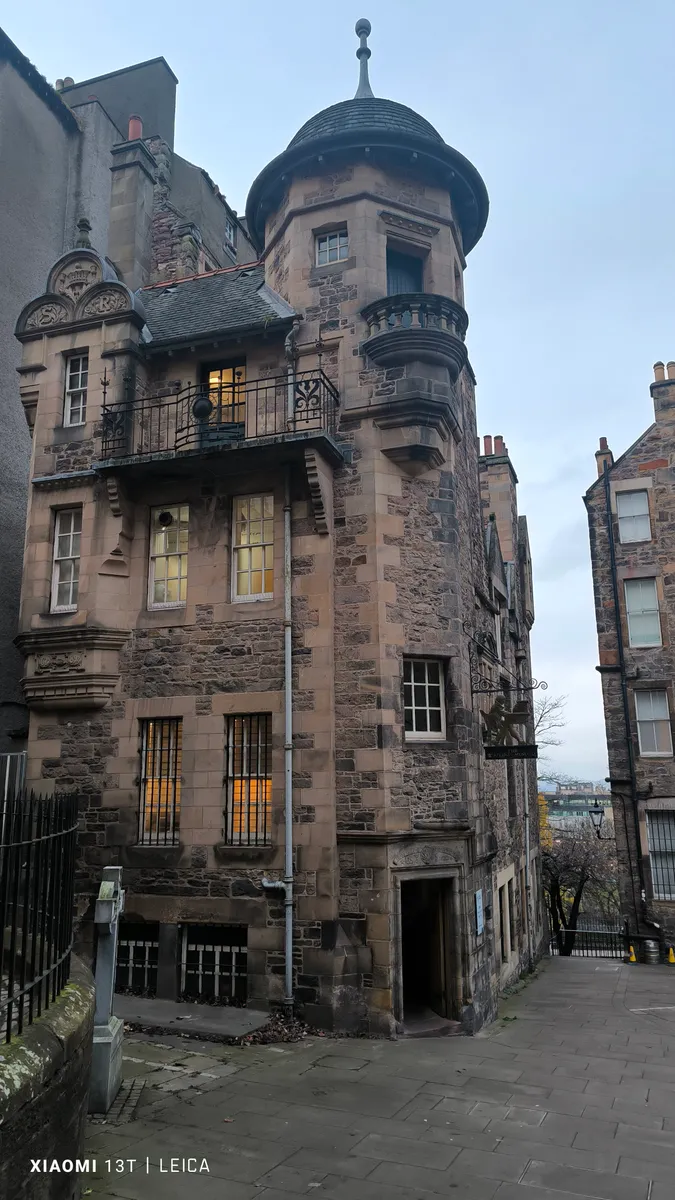
Lady Stair's Close, a few doors further down the Lawnmarket, is one of the Mile's most atmospheric wynds: narrow, cobbled, and paved out front with quotes from Scottish writers set into the flagstones of Makars' Court. The Writers' Museum sits inside it, in a 1622 townhouse, free to enter, dedicated to Burns, Scott and Stevenson.
I'll keep this brief since the museum gets a full review in our best museums guide: the reason it's on this walk is the close itself, not a repeat of that review. If you do go in, it's open 10-5 daily with last entry at 4:30, and the upper floors are stairs-only with no lift.

Lady Stair's Close, the wynd it sits in, is one of the Mile's most atmospheric, paved with quotes from Scottish writers in Makars' Court out front. The museum itself gets a full review in our best museums guide; this is just the reason to duck down the close.
Deacon Brodie's Tavern sits right on the corner where the Lawnmarket meets George IV Bridge, named for William Brodie, an actual 18th-century Edinburgh town councillor by day and a burglar by night, hanged in 1788, and the real inspiration behind Robert Louis Stevenson's Dr Jekyll and Mr Hyde. It's a proper working pub, not a themed re-enactment, with mains running £16-£30.
It's a landmark you pass rather than a destination meal on this particular walk: worth clocking the name and the story, less essential to actually stop for unless you want a pint at the junction where the walk's first stretch ends.
Named for William Brodie: respected town councillor by day, burglar by night, hanged in 1788 (on gallows he may have advised on himself), and the real-life inspiration for Robert Louis Stevenson's Dr Jekyll and Mr Hyde. It's a landmark you pass rather than a destination meal, but it's on the corner right where the Lawnmarket meets George IV Bridge.
Parliament Square, just past St Giles', is easy to walk straight through without noticing what's underfoot: a heart-shaped granite mosaic set into the cobbles, the Heart of Midlothian, marks the site of the old Tolbooth prison and courthouse, demolished in 1817. Local tradition says spitting on it brings luck (it's genuinely folklore, possibly rooted in contempt for the executions once carried out here rather than any real good-luck charm).
The square itself sat at the heart of pre-1707 Scottish government, and Parliament House on its west side is still in daily use as the Court of Session, Scotland's supreme civil court. Free, flat, step-free, and worth 30 seconds of looking down before you keep walking.
Look down before you look up: the heart-shaped granite mosaic set into the cobbles, the Heart of Midlothian, marks the entrance to the old Tolbooth prison, demolished in 1817. Local tradition holds that spitting on it brings luck: it's genuinely folklore, possibly rooted in contempt for the executions once carried out here, not a fact. Parliament House on the square's west side, pre-1707 home of the Scottish Parliament, is still the seat of the Court of Session, Scotland's supreme civil court.
Advocate's Close, opposite St Giles', is the single best photo stop on this entire walk, and it's completely free. The close drops away steeply toward Market Street, and the view lines up almost perfectly with the Scott Monument and the New Town rooftops below, a sightline that only opened up after 1920s demolitions cleared the buildings that used to block it.
It's genuinely steep and stepped throughout, so it's not wheelchair or pushchair accessible, but it's a public thoroughfare open any time, no ticket, no gate. It dates from at least the 15th century and takes its name from Sir James Stewart, a Lord Advocate who once had a house down here.
The single best framed view on this walk: the close drops away steeply and lines up perfectly with the Scott Monument and the New Town skyline below, a sightline that opened up after 1920s demolitions along the close. It dates from at least the 15th century and takes its name from Sir James Stewart, a Lord Advocate who once had a house here.
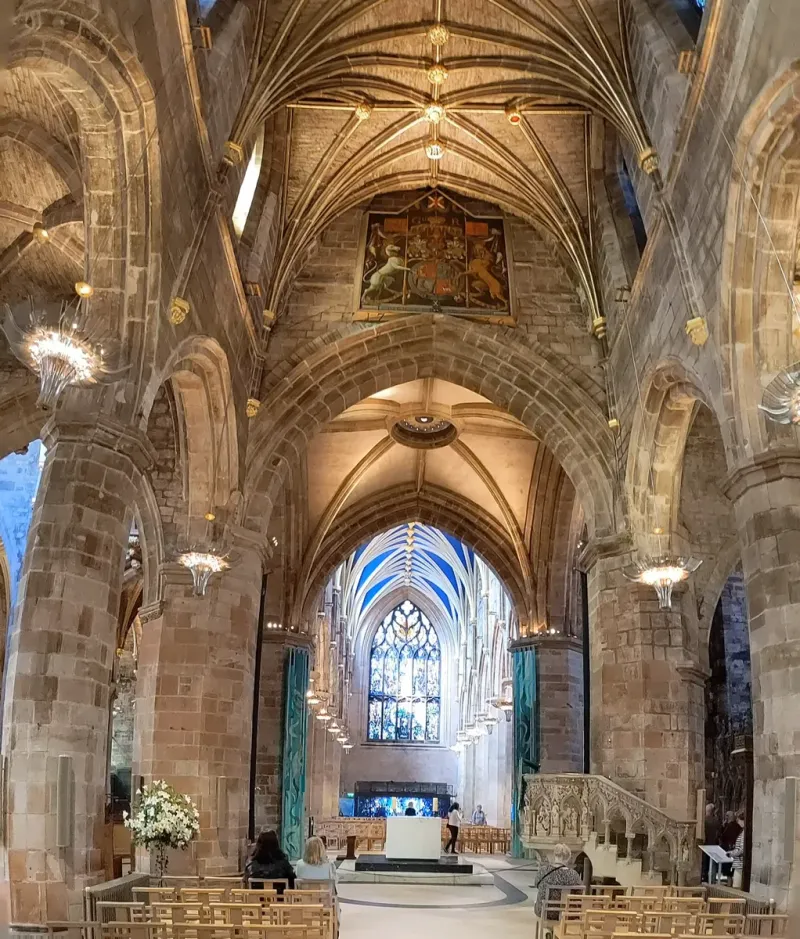
St Giles' Cathedral, with its distinctive crown spire, is the Mile's real architectural midpoint, and the one building on this walk I'd always step inside for, donation-run at a suggested £10. Go to the back for the Thistle Chapel, a small, densely carved 1911 addition, and budget ten to fifteen minutes if you're just passing through, longer if a choir's rehearsing.
It's a working parish church, not a museum, so Sunday mornings and any service in progress will restrict what you can see. Our Old Town guide has the fuller interior review; this is just where it sits in the walk.

The distinctive crown spire is the Mile's real architectural midpoint, and it's the one building on this walk I'd always go inside: ten quiet minutes in the Thistle Chapel at the back is worth the detour. It's a working parish church, not a museum, so a service in progress will restrict what you can see. Full review, with the interior detail, is in our Old Town guide.
The Real Mary King's Close, tucked under and beside St Giles', is the closest this walk gets to seeing exactly what a Royal Mile close looked like before the city built over it: real 17th-century streets and houses, sealed up rather than demolished, walked through on a guided tour (there's no self-guided option).
Book ahead, slots sell out fast in summer and December. The adult rate is £28.50. It's history, not a scare tour: if actual frights are what you want, our ghost tours guide ranks the ones built for that instead.

This is the closest you'll get to what a Royal Mile close actually looked like before it was built over: a real 17th-century street sealed underground rather than demolished. Book ahead; slots sell out, especially in August and December. Fuller review in our Old Town guide, and it's the top history-led pick in our ghost tours guide if you want the same close with a scarier framing.
Mercat Cross, a few steps past St Giles', looks like a static monument but it isn't: royal proclamations are still read here by Lord Lyon heralds, most recently Charles III's accession in September 2022. The current structure dates to 1885, funded by William Gladstone, rebuilt a few metres from the original site, with genuine 15th-century stonework from the earlier cross built into its base.
Free, flat, no stairs, and worth thirty seconds to look up at the unicorn finial (an 1869 reproduction of the original's design) before carrying on down the High Street.
Edinburgh's historic market cross, rebuilt in its current form in 1885 (funded by William Gladstone), with genuine 15th-century stonework from the original cross built into the base. It's not just a monument: royal proclamations are still read here by Lord Lyon heralds, most recently Charles III's accession in September 2022.
Fleshmarket Close, dropping steeply off the High Street toward Market Street and Waverley, takes its name from the butcher's market that once stood nearby ("fleshmarket" is the old Scots word). It's better known today as the title of Ian Rankin's 2004 Inspector Rebus novel Fleshmarket Close (the novel's action is set mostly elsewhere), later adapted for TV.
It's genuinely steep and stepped, so this is a look-and-maybe-descend stop rather than a detour everyone needs to make, but the view down toward the station is a good marker for where you are on the walk. Free, always open.
Named for the butcher's market that once stood nearby ("fleshmarket" is the Scots term), and better known now as the title of Ian Rankin's 2004 Inspector Rebus novel Fleshmarket Close (the novel itself is mostly set elsewhere), later adapted for TV. Worth a quick look down toward Waverley even if you don't walk the full flight.
Tron Kirk, at the junction with North and South Bridge, was a working church from 1636 until deconsecration; today it trades as Tron Kirk Market, an independent Scottish craft and design market, open 10-6 daily and free to browse.
The building's own trust describes this explicitly as a temporary "meanwhile use" while it consults on the site's long-term future, so what's inside on the day you visit may not be what's there next year. Worth a quick look at the surviving 17th-century stonework either way.
A former 17th-century church (1636-47) at the junction with North/South Bridge, deconsecrated and now trading as Tron Kirk Market, an independent Scottish craft and design market. The building's trust describes this explicitly as a temporary "meanwhile use" while it consults on the building's long-term future, so what's inside could change.
John Knox House, at the Netherbow where the High Street becomes the Canongate, is Edinburgh's oldest surviving townhouse, dating to the 1470s. Whether the reformer actually lived here is genuinely disputed: the connection was first recorded around 1800, and some historians place his real home in Warriston Close nearby, marked today by a plaque. What's documented is that a goldsmith connected to Mary, Queen of Scots, lived here in the 1560s, but it's the Knox association, real or not, that saved the building from demolition in the 1840s.
It's £7 adult admission (£1.50 for kids over 7, under 7 free), open 10-6 daily with last admission at 5, no booking needed. It's combined with the Scottish Storytelling Centre next door, worth checking for events while you're there.
Edinburgh's oldest surviving townhouse, dating to the 1470s. Whether reformer John Knox actually lived here is genuinely disputed: the association was first recorded around 1800, and some historians place his real home in Warriston Close nearby, marked today by a plaque. What's certain is a goldsmith connected to Mary, Queen of Scots, lived here in the 1560s, and it's that Knox association, real or not, that saved the building from demolition in the 1840s. Combined today with the Scottish Storytelling Centre next door.
The People's Story Museum, in the unmistakable turreted Canongate Tolbooth (built 1591, once the burgh's council chamber, courthouse and jail), is free and tells Edinburgh's history from the perspective of the people who actually lived it, built entirely from oral testimony rather than official record: a recreated bookbinder's workshop, a wartime kitchen, a jail cell.
It's not fully step-free: the ground floor and first floor are ramped, but the second-floor exhibition and third-floor video room are stairs-only, though a British Sign Language tour is available. Open 10-5 daily, last entry 4:30. One visitor review on the museum's own site calls it possibly the most important museum in Edinburgh, and it's an easy case to make for how directly it puts ordinary people's own words on the wall.
It's housed in the Canongate Tolbooth, built 1591 with its distinctive projecting clock tower, once the burgh's council chamber, courthouse and jail, and the building itself is as much the exhibit as anything inside. Everything on display is built from oral history and written testimony of ordinary Edinburgh people from the 18th century to today: a recreated bookbinder's workshop, a wartime kitchen, a jail cell.
Possibly the most important museum in Edinburgh. from a visitor review
Canongate Kirk, a short walk further down, is the King's official Edinburgh parish church, built 1688-91. The kirkyard is the resting place of economist Adam Smith and of Agnes Maclehose, 'Clarinda' to Robert Burns in their real correspondence, and it's also where Zara Phillips married Mike Tindall in a genuine royal wedding on 30 July 2011.
There's no general daytime visitor hours published beyond Sunday services (10:30am, plus a monthly evening service), so treat a weekday visit as walking the free, open kirkyard rather than expecting the church itself to be unlocked. Five themed burial trails with podcasts are downloadable from the church's own site if the graveyard interests you.
Built 1688-91, it's the King's official Edinburgh parish church, and the kirkyard is the resting place of economist Adam Smith and of Agnes Maclehose, 'Clarinda', Robert Burns's real-life correspondent. It's also where Zara Phillips married Mike Tindall in a genuine royal wedding on 30 July 2011. Five themed burial trails with podcasts are downloadable from the church's own site if the graveyard interests you.
Museum of Edinburgh, a little further along in Huntly House, a genuine 16th/17th-century merchant's home, is free and holds two objects worth the stop on their own: an original copy of the National Covenant, signed at Greyfriars Kirk in 1638, and the actual collar gifted to Greyfriars Bobby by the city's Lord Provost in 1867.
It's the closest this walk gets to Edinburgh's real civic archive rather than a curated visitor experience, and it's got a genuinely maze-like layout by its own description, so budget a bit longer than you'd expect for a small building. Open 10-5 daily, last entry 4:30.
Housed in Huntly House, it holds a genuine original copy of the National Covenant, signed at Greyfriars Kirk in 1638, and the actual collar gifted to Greyfriars Bobby by the Lord Provost in 1867. It's the closest this walk gets to Edinburgh's real civic archive rather than a curated visitor experience.
Dunbar's Close Garden, tucked behind an easy-to-miss close entrance on the Canongate, is the quietest stop on this whole walk, and free. It looks like a 17th-century survivor, all clipped hedges and formal paths, but it's actually a modern creation, laid out from scratch in 1976 by landscape architect Seamus Filor and gifted to the city by the Mushroom Trust.
Opens at 7am; closing time shifts through the year, from about 3:30pm in deep winter to 7:30pm at midsummer. Most people walking the Canongate never notice the entrance: it's worth the thirty-second detour for the silence alone.
The garden looks like a 17th-century survivor, but it's a modern creation: built from scratch in 1976 by landscape architect Seamus Filor and gifted to the city by the Mushroom Trust. It's the quietest stop on this whole walk, and most people on the Canongate never notice the close entrance.
White Horse Close, right near the bottom of the Canongate, is one of the prettiest closes on the whole Mile and one of the easiest to walk straight past, since the entrance passage is unmarked. It was once the site of the White Horse Inn, a genuine 18th-century coaching inn from which stagecoaches departed for Newcastle and London. The old undercroft, stables, smithy and coach houses, is still visible through arches on the Calton Road side.
The buildings became 15 working-class flats in 1889, were restored in 1961-64, and are now all privately owned. The courtyard is public and free to walk into; the surrounding flats are people's homes, so treat it accordingly.
Once the site of the White Horse Inn, a coaching inn that ran stagecoaches to Newcastle and London through the 18th century. The old undercroft (stables, smithy, coach houses) is still visible via arches on the Calton Road side. The buildings became 15 working-class flats in 1889, were restored in 1961-64, and are now all privately owned. It's one of the prettiest closes on the whole Mile and the entrance is genuinely easy to miss.
The Scottish Parliament Building, right at the foot of the Mile opposite the Palace, is a genuinely modern architectural statement after everything before it on this walk: Catalan architect Enric Miralles's building, opened 2004, is free to visit, including 45-minute guided tours (Mon, Fri and Sat only) and, when it's sitting, public gallery access to debates and committee meetings Tuesday to Thursday.
It's explicitly built and staffed as an accessible building, with dedicated drop-off parking and Changing Places facilities, a contrast worth noting after several stepped medieval closes further up the hill. Arrive 20 minutes early for security, an hour early for First Minister's Questions, and expect no photography once you're seated in the public gallery.
Designed by Catalan architect Enric Miralles, opened 2004. Guided tours (45 min) run Mon, Fri and Sat only; debates and committee meetings, including First Minister's Questions, run Tuesday to Thursday. Arrive 20 minutes early for security, an hour early for FMQs, and expect no photography once you're in the public gallery.
The bare walk, Castle Esplanade to the Palace gates, is 0.89 miles (1.43km) and takes 20-25 minutes if you don't stop once. Nobody should walk it that way. Budget half a day if you're doing even half of what's above properly, and a full day if you're adding Edinburgh Castle (2 hours) and the Real Mary King's Close (guided, about an hour) as timed, ticketed stops. The free museums cluster in two groups, the Lawnmarket (Writers' Museum) and the Canongate (People's Story, Museum of Edinburgh), so it's easy to do the free stuff on one pass and save the ticketed sights for when you've got a slot booked.
It's downhill the whole way from Castle to Palace, which is the direction to walk it in if you have a choice: the climb back up is a genuine slog on cobbles. The upper half, Castlehill through the Lawnmarket to St Giles', carries the heaviest foot traffic; the Canongate past John Knox House is noticeably calmer any time of day. If you're building a longer Edinburgh trip around this walk, our 1-day itinerary uses this same spine as its backbone.
Roughly Castlehill down to St Giles' is dense with interchangeable "Whisky & Cashmere" megastores, costumed photo touts charging for a snap, and sandwich-board sellers pushing whichever ghost or whisky tour pays the best commission that day. None of it is dangerous, and it's not really a scam, it's just filler that eats time on a street with better things a few steps away from it. Our Old Town guide has the fuller version of this warning with specific examples; the short version here is: if a shop's window display is identical to the one you passed fifty metres ago, keep walking.
At the very end of the walk: the Palace of Holyroodhouse, the King's official residence in Scotland, sits behind the Scottish Parliament, and it's genuinely worth the stop if you have the time, though it's outside the scope of this street-by-street guide. Our best museums guide has the full review of what's inside, including the Holyrood Abbey ruins behind it, and it closes without much notice during royal visits, so check current hours before you build a day around it.
Planning your trip? Save these Royal Mile stops into a day-by-day plan with Tourli, the app that turns travel guides into actionable itineraries.
Stop reading lists.
Start the trip.
Tourli turns any guide into an actionable day plan — pinned to a map, walking directions and offline access included. One tap to save every place on this page.