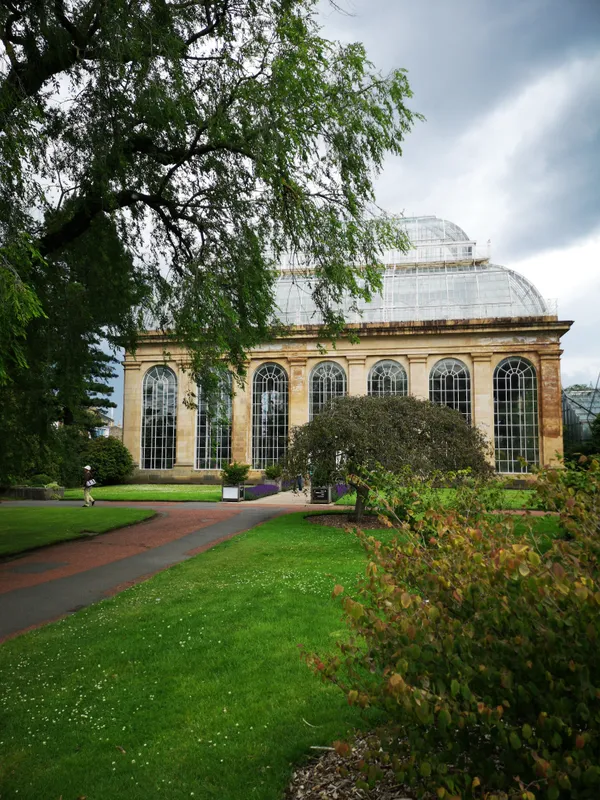
Free entry to the 70-acre outdoor garden
This is the headline fact, and it's worth stating plainly: the outdoor garden costs nothing to enter, at any of the two gates, on any day it's open. Seventy acres is a genuinely large site, big enough that first-time visitors regularly underestimate how long they'll spend inside it. The garden has occupied this exact spot in Inverleith since it moved here in 1823, though the institution itself dates back to 1670, when it started life as a small physic garden for growing medicinal plants near Holyrood. That makes it one of the oldest scientific gardens anywhere, and the living collection has grown into something genuinely serious: more than 13,000 plant species across the grounds, a working research institution as much as a public park.
The layout rewards a slow loop rather than a straight line. Broad, mostly flat paths connect the main feature areas, with a long herbaceous border that peaks in July and August, a woodland garden, and enough mature planting that even a wet Tuesday in February has something worth seeing. Come in spring for the rhododendrons and cherry blossom, in autumn for the colour change, or in winter for the quieter, starker version of the same grounds. I'd treat it as a proper walk, not a quick photo stop; ninety minutes is enough to get round the main areas, but the people who say they'll just pop in for half an hour are reliably still there two hours later.
The Glasshouses: closed until 2 October 2026
This is the one part of a visit you'd actually pay for, and it's currently the honest gap in what the garden offers. The Victorian Glasshouses, the domed Palm Houses that most people picture when they think of a botanic garden, have been closed for restoration under the Edinburgh Biomes project, a long-running structural overhaul that's kept them shut for years rather than weeks. The confirmed reopening is 2 October 2026, daily, with timed entry slots running 10:15am to 4:15pm.
From that reopening date, adult tickets are £5.50 and concessions £4.70, with under-16s admitted free; Young Scot card holders and Universal Credit or Pension Credit recipients pay £1. Those headline figures include a small voluntary donation; without it, the prices drop slightly to £4.95 adult and £4.20 concession. Members get in free but still need to book a timed slot in advance. If you're visiting before October, don't plan around them: the outdoor garden more than earns the trip on its own in the meantime, and it's worth checking rbge.org.uk directly before you travel in case the reopening date moves.
The Rock Garden and the Chinese Hillside
These are the two named feature areas worth deliberately routing yourself through, rather than stumbling across by accident. The Rock Garden is a sprawling landscaped slope of alpine and rock-loving plants, at its best in spring when the dwarf alpine rhododendrons come into flower, and again in autumn when Schizostylis coccinea adds a late splash of colour among the stone. One practical note: picnics and sitting down aren't permitted in the Rock Garden itself, so treat it as a walk-through rather than a rest stop, and save the picnic blanket for the lawns.
The Chinese Hillside is the newer, quieter of the two: a slope planted almost entirely with species collected on plant-hunting expeditions to China, arranged to feel like a genuine hillside rather than a formal display. It's a good autumn stop in particular, when the scarlet fruit of Malus pumila 'Dartmouth' apple trees stands out against the rest of the planting. Neither area is signposted as heavily as the main paths, so it's worth grabbing a map at either gate if you don't want to miss them.
The historic tree collection, and the view back to the skyline
The West Gate's own address, Arboretum Place, is a clue to what's planted along that side of the grounds: a historic collection of mature specimen trees that gives the western half of the garden a different, more wooded character than the open lawns near the east. It's not a separately ticketed feature, just part of the wider walk, but it's worth building into your route if trees are your thing rather than flowers.
The reward for working your way to the higher, northern part of the garden is the view: a genuine skyline panorama back over the city, taking in the Castle and the Old Town rooftops from the garden's hillside lawn. It's one of Edinburgh's better free viewpoints precisely because almost nobody visits the Botanics specifically for the view; most people are looking at the plants and stumble onto the panorama on the way past. Go on a clear afternoon and give yourself a few minutes on the grass rather than just glancing and moving on.
John Hope Gateway: the cafe and the visitor centre
The John Hope Gateway, at the West Gate, opened in 2010 and works as the garden's main visitor hub: it's where you'll find the shop, an exhibition space, the accessible toilets, and the free mobility-scooter and wheelchair loan point. It's also home to the Gateway Cafe, serving hearty hot dishes, seasonal salads, soups and sandwiches made with produce from the garden's own organic Kitchen Garden, daily from 10am to 5pm with lunch service 11:30am to 3pm and last orders at 4:30pm. On summer weekends, the Garden View Deck & Bar opens alongside it, Friday and Saturday 12pm to 8pm and Sunday 12pm to 5pm.
It isn't the only place to eat on site. The Terrace Cafe near Inverleith House does a full cream tea (£19) alongside lighter options, the East Gate Shop & Cafe on Inverleith Row is the grab-and-go option if you're arriving from that side, and Conifer Corner near Willow Pond is a small takeaway-only stop for coffee and berries on weekends. If you're planning to make a proper afternoon of it, the Gateway Cafe at the West Gate is the one to build lunch around.