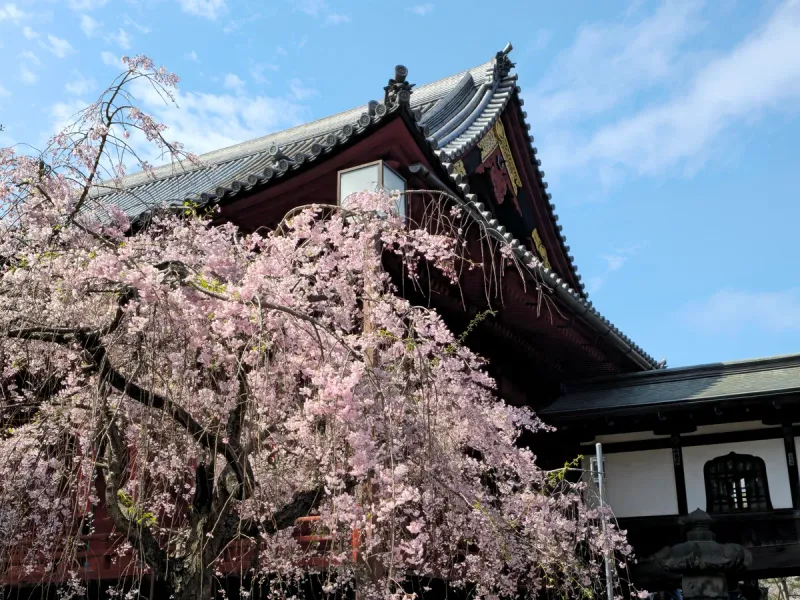
Use JR Ueno's Park Exit for the museums and the zoo; the Shinobazu Exit and Keisei Ueno put you at the bottom of the hill by the pond and Ameyoko.
Ueno is Tokyo's museum district: the Tokyo National Museum, Western art in a Le Corbusier building, science and art museums, Ueno Zoo (now without its pandas), Shinobazu Pond and the Ameyoko market under the tracks. Avoid Mondays, when nearly everything in the park shuts.
Ueno is where Tokyo keeps its museums. Ueno Park, opened in 1873 as one of Japan's first public parks, sits on a hill that was once the grounds of Kan'ei-ji temple, and it now holds the Tokyo National Museum, the National Museum of Western Art in a Le Corbusier building, the National Museum of Nature and Science, the Tokyo Metropolitan Art Museum and Ueno Zoo, with Edo-period shrines and temples between them. At the bottom of the hill is Shinobazu Pond, and across the road from the station is Ameyoko, a loud market street under the railway.
The short version: go on a Friday or Saturday, when the two national art museums stay open until 8pm. Avoid Mondays, when nearly everything in the park is shut. Do the Tokyo National Museum first, the zoo or a second museum after lunch, and walk down to Shinobazu Pond and Ameyoko as the light goes.
One change to know: the pandas have gone from Ueno Zoo. For old Tokyo on foot just north of the park, see our Yanaka guide; for where to sleep nearby, our Ueno hotels guide and the Ueno section of where to stay in Tokyo; for the rest of the city, things to do in Tokyo.

Ueno Park
Ueno Park is two things: a wooded hill, known as Ueno no Yama, and Shinobazu Pond below it. In the Edo period the hill was the grounds of Kan'ei-ji, the Tokugawa shoguns' temple; after the Meiji Restoration it became government land, and in 1873 it was named one of Japan's first public parks. The word 'Onshi' in its official name means it was an imperial gift, from when the Imperial Household handed it to the City of Tokyo in 1924. It covers about 54 hectares, and the Tokyo Metropolitan Government, which runs it, counts about 1,200 cherry trees.
Open: 5am to 11pm. Cost: free. Getting there: 2 minutes from JR Ueno, 4 from the Ginza and Hibiya line platforms, 1 from Keisei Ueno. On the way in from the Park Exit you pass the statue of Saigo Takamori walking his dog, the face of the old Ueno Daibutsu (the rest of the Buddha was lost to earthquakes and fires) and the fountain in front of the Tokyo National Museum.
When: the park says its cherries run for about two months, from early winter cherries to the Somei Yoshino in late March and early April; see our cherry blossom guide for hanami. The lotus on Shinobazu Pond peaks in late July, and the ginkgo and zelkova turn in autumn. The catch: almost every museum here is closed on Mondays, so don't come on one.

Use JR Ueno's Park Exit for the museums and the zoo; the Shinobazu Exit and Keisei Ueno put you at the bottom of the hill by the pond and Ameyoko.
The museums
The Tokyo National Museum is the one to choose if you only do one. It collects art and antiquities from Japan and the rest of Asia and shows them across several buildings around a garden: the Honkan (Japanese Gallery), the Heiseikan for archaeology and special exhibitions, the Toyokan (Asian Gallery), the Gallery of Horyuji Treasures and the Kuroda Memorial Hall. Our best museums in Tokyo page puts it in context with the rest of the city.
On now: Hiroshige: New Perspectives on Edo Japan, marking the gift of the Uchiyama Susumu Collection, in the Honkan to 20 December 2026 (¥1,500 adults, ¥500 university students), and Daitokuji: A Zen Temple Beyond Compare, for the temple's 700th anniversary, in the Heiseikan to 6 December 2026 (¥2,300 adults, ¥1,300 university, ¥900 high school). A special exhibition ticket also gets you into the collection galleries the same day. Collection galleries: ¥1,000 for adults, ¥500 for university students, free for under-18s and over-70s with proof of age; collection tickets bought online are valid for two months.
Open: 9:30am to 5pm, and until 8pm on Fridays, Saturdays and Sundays before a Monday holiday; last entry 30 minutes before closing. Closed: Mondays (the next day after a holiday Monday), 15 December, and 26 to 31 December 2026; from 22 to 25 December only the Horyuji Treasures Gallery and Kuroda Memorial Hall open, and on 1 January 2027 it opens from noon to 8pm. Partial closures: the Toyokan and Honkan rooms 17 to 20 are shut from 30 November to 31 December, Honkan room 4 to 25 April 2027 and rooms 2 and 3 from 14 December to 25 April 2027. The catch: suitcases aren't allowed in, bags are screened at the main gate, and the ticket queue can top 30 minutes at busy times, so buy online.
No suitcases, and bags are screened at the main gate. Buy collection tickets online: the gate queue can top 30 minutes on busy days.
Right by the Park Exit, the National Museum of Western Art was founded in 1959 around the Matsukata Collection of Impressionist paintings and Rodin sculptures. Its main building, completed in March 1959 as a symbol of restored ties between Japan and France, is by Le Corbusier, and since 2016 it has been part of the UNESCO World Heritage listing of his work.
On now: Turner: Painting the Sublime, in Dialogue with Contemporary Art, from Tate, to 21 February 2027 (¥2,400 adults, ¥1,500 university students, ¥1,100 high school students; junior high and younger free). University and high school students get in free with student ID from 4 to 19 November 2026. The exhibition ticket includes the permanent collection. Permanent collection: ¥500 for adults, ¥250 for university students, free for under-18s and over-65s, and free for everyone on the second Sunday of each month and on 3 November.
Open: 9:30am to 5:30pm, Fridays and Saturdays to 8pm; last entry 30 minutes before closing. Closed: Mondays (it opens on the holidays of 23 November and 11 January), 24 November, 28 December to 1 January, and 12 January. The catch: from 12 January 2027 to about 19 March 2027 the permanent collection galleries are closed for building work, so from 12 January to 21 February only the Turner show is on, and after it closes there's nothing to see until the galleries reopen.
The permanent collection is free on the second Sunday of each month (Kawasaki Free Sunday).
Next door, the National Museum of Nature and Science is Japan's national museum of natural history and science, with two halls, the Japan Gallery and the Global Gallery, and the obvious pick in Ueno if you have children with you. See Tokyo with kids for how it fits a family day.
Cost: ¥630 for adults and university students; free for high school students and younger, and for over-65s with ID. Open: 9am to 5pm, last entry 4:30pm. Closed: Mondays (the Tuesday after a holiday Monday) and 28 December to 1 January. The catch: the Global Gallery's third basement floor is closed for renovation from 8 September 2026, and part of its second floor is shut for now.
The Global Gallery's third basement floor is closed for renovation from 8 September 2026, and part of its second floor is temporarily closed.
The Tokyo Metropolitan Art Museum (Tobikan) opened in 1926 as Japan's first public art museum, paid for by a donation from the coal businessman Sato Keitaro. It works as an exhibition hall: big special exhibitions on one side, and the shows of Japan's art groups and societies on the other. Entry to the building is free; each exhibition sets its own price. For its centenary, two exhibitions run from 19 November 2026 to 11 January 2027: Ways of Reading and a show on the museum's own history.
Open: 9:30am to 5:30pm (last entry 5pm), and to 8pm on Fridays during special and thematic exhibitions. Closed: the first and third Monday of each month (every Monday while a special or thematic exhibition is on), 21 to 28 December for maintenance, 29 December to 3 January, and 12 January. It's 7 minutes from JR Ueno's Park Exit.
It turns 100 this year: two anniversary exhibitions run from 19 November 2026 to 11 January 2027.
Ueno Zoo, after the pandas
Ueno Zoo opened in 1882 as Japan's first zoo, and since the first pair arrived in 1972 it was where Japan went to see giant pandas. Not any more. The zoo says plainly that it keeps no giant pandas now: the twins Xiao Xiao and Lei Lei, born at Ueno in June 2021, left the zoo on 27 January 2026, the 15-year breeding project with China ended on 20 February 2026, and the Panda Forest enclosure in the West Garden now shows red pandas and pheasants from the same mountains. Many older guides have not caught up.
The zoo is still a good half day. The East Garden, by the main gate, has the gorilla and tiger forest, the elephants, the bears, and polar bears and seals; the West Garden, down the hill by Shinobazu Pond, has giraffes, hippos, rhinos, shoebills, aye-ayes, the reptile house and a children's zoo. Cost: ¥600 for adults, ¥300 for over-65s, ¥200 for junior high students (free if they live or study in Tokyo), free for primary school age and under. Tickets work by card, IC card or QR payment at the staffed windows, and online tickets are date-specific. Open: 9:30am to 5pm, last entry 4pm. Closed: Mondays (the Tuesday after a holiday Monday) and 29 December to 1 January.
The catch: animals go indoors early. The zoo's own list has the gibbons off show from 3pm, the gorillas from 3:45pm and the tigers from 4:20pm, so go in the morning or straight after lunch. A stretch of path in the West Garden is closed until 16 November 2026.
There are no giant pandas: the last two left for China in January 2026. Red pandas live in the West Garden's Panda Forest instead.
Shrines and temples on the hill
Ueno Toshogu was founded in 1627 and enshrines Tokugawa Ieyasu, the first shogun. The gilded buildings, rebuilt by the third shogun, Iemitsu, survived wars and earthquakes and are nationally designated Important Cultural Properties. The shrine turns 400 in 2027.
Cost: the grounds are free; the inner precinct, where you see the gold-leafed hall up close from inside the fence (not inside the hall), is ¥700 for junior high age and up and ¥300 for primary school children. Open: 9am to 4:30pm from October to February, 9am to 5:30pm from March to September; the inner precinct 9:30am to 4pm in winter. The peony garden opens for winter peonies from 1 January to mid-February.
Just behind the shrine, inside the zoo fence, is the five-storey pagoda of the old Kan'ei-ji, first given in 1631 and rebuilt after it burned in 1639. Until this autumn you had to pay for the zoo to walk round it. Since 7 October 2026 the circuit is entered free from the Toshogu approach instead, during zoo opening hours.
The shrine's approach is now also the free way in to see the old Kan'ei-ji five-storey pagoda up close, since 7 October 2026.
On the edge of the hill above the pond, Kiyomizu Kannon-do was built in 1631 by Tenkai, the monk who founded Kan'ei-ji, as a copy of Kyoto's Kiyomizu-dera, complete with a smaller version of its wooden stage. Tenkai laid out the whole hill as an Edo answer to Kyoto, with Kan'ei-ji guarding the northeast of Edo Castle as Mount Hiei guards Kyoto. Open: 9am to 5pm; free. From the stage you look down over Shinobazu Pond to the Bentendo.
Built in 1631 in imitation of Kyoto's Kiyomizu-dera, with a stage that looks down on the pond.
Shinobazu Pond fills the low ground west of the hill. On its island is the Bentendo, an eight-sided hall to the goddess Benzaiten that Tenkai founded; the original burned in the war and today's hall dates from 1958. It's open 9am to 5pm and free.
Boats: a rowing boat (up to three adults) is ¥800 for 30 minutes; a pedal boat or a swan boat is ¥1,000. From November to February the boat house is open 9:30am to 4:50pm with last tickets at 3:50pm, and it's closed on Wednesdays from December to February. When: the lotus covers the pond in summer and peaks in late July; in winter it's bare stalks, but the walk round is still the prettiest in Ueno.
The lotus that covers the pond in summer is at its best in late July, according to the park.
At the pond's southern corner, the Shitamachi Museum is a small Taito City museum of everyday life in the old low city (shitamachi), with full-size reconstructions of the houses and shops people lived and worked in, alongside everyday objects. It's the best half hour in Ueno for picturing the city before the war, and it pairs well with a walk in Yanaka.
Cost: ¥300 for adults, ¥100 for primary to high school students. Open: 9:30am to 4:30pm, last entry 4pm. Closed: Mondays (the next weekday after a holiday), 29 December to 3 January, and on its own calendar: 9, 16, 24 and 30 November, and 7, 14, 21 and 28 to 31 December 2026.
5 minutes from JR Ueno's Shinobazu Exit, 3 minutes from Keisei Ueno.
A short walk west of the pond, Kyu-Iwasaki-tei Gardens is the house built in 1896 for Iwasaki Hisaya, the third president of Mitsubishi: a wooden Western-style mansion by Josiah Conder, the British architect of the Rokumeikan, joined to a Japanese house, with a Swiss-chalet billiard room reached by a tunnel and a lawn garden. It's run by the Tokyo Metropolitan Park Association, which runs free garden tours at 11am and 2pm on most days (not on 4 May, 1 October or from 16 July to 14 September).
Cost: ¥400 for adults, ¥200 for over-65s, free for primary school age and under and for junior high students who live or study in Tokyo. Open: 9am to 5pm, last entry 4:30pm. Closed: 29 December to 1 January. Payment by card, IC card or QR code is accepted. Wheelchair users can see the lawn garden, the ground floor of the mansion and the Japanese house (with the indoor wheelchair).
Free garden tours at 11am and 2pm (about 45 minutes) on most days; none on 4 May, 1 October or 16 July-14 September.
Ameyoko and eating in Ueno
Ameyoko (Ameya Yokocho) runs for about 500 metres along and under the JR tracks from Ueno to Okachimachi. Tokyo's official tourism site counts about 500 shops and stalls: fresh seafood, sweets and snacks, food from all over the world, fashion, cosmetics and odds and ends. It's open every day, but each shop keeps its own hours, so it's busiest from late morning to early evening. Enter from JR Ueno's Shinobazu Exit and walk south.
For what to eat on the street, see our Tokyo street food guide, which covers Ameyoko's stalls. The catch: it gets shoulder to shoulder at weekends, so go on a weekday if you can, and carry some cash for the small stalls.
Enter from JR Ueno's Shinobazu Exit and walk south to Okachimachi's North Exit, about 500 metres.
This route is about 5 km on foot and fills a day. It's written for a Friday or Saturday, when the Tokyo National Museum and the National Museum of Western Art stay open until 8pm, and it avoids Mondays, when nearly everything here is shut. Winter assumption: Ueno Toshogu closes at 4:30pm from October to February and the sun sets at about 4:30pm in December, so do the shrines before the pond. In summer (gates to 5:30pm, sunset after 7pm) you can swap the order.
9:30. Tokyo National Museum. From JR Ueno's Park Exit, walk through the park past the fountain, about 10 minutes, and be at the main gate when it opens. Allow two and a half hours for the Honkan and one special exhibition. 12:00. Lunch. Eat in the park or walk down to the station; see the food notes below. 13:00. Ueno Zoo or a second museum. The zoo for two hours (animals start going indoors from about 3pm), or the National Museum of Nature and Science, or the Tobikan's exhibition.
15:00. Ueno Toshogu and the pagoda. Walk the shrine approach, pay for the inner precinct if you want the gold close up, and take the free circuit round the old Kan'ei-ji pagoda. 15:45. Kiyomizu Kannon-do and Shinobazu Pond. Down the steps past the Kannon-do's stage to the Bentendo, and a lap of the lotus pond. Add the Shitamachi Museum at the pond's south corner (last entry 4pm) if you're on time.
16:45. Ameyoko. Cross Chuo-dori and walk Ameyoko from Ueno to Okachimachi as the lights come on. 18:00. Evening. Either back up the hill for the Turner show at the National Museum of Western Art (last entry 7:30pm), or dinner. For old Tokyo just north of the park, the next day's walk is in our Yanaka guide; to fit Ueno into a trip, Asakusa is three stops away on the Ginza Line: see the Asakusa guide and the 3-day itinerary.
Planning your trip? Save these places into a day-by-day plan with Tourli, the app that turns travel guides into actionable itineraries.
Ueno's best food is already on our food pages, so rather than repeat them: tonkatsu at Ponta Honke, which opened in Ueno in 1905, is on the best tonkatsu in Tokyo; ramen at ICHIRAN Ueno is on the best ramen in Tokyo; a quiet café after the museums, and a matcha soft-serve near the park, are on the best cafés in Tokyo; and Ameyoko's stalls are on Tokyo street food. Inside the park, the official site lists a Starbucks (8am to 9pm daily) and the Ueno Green Salon by the zoo (9am to 5pm from December to March).
Stations: JR Ueno's Park Exit (Koen-guchi) is the one for the museums and the zoo; the Shinobazu Exit is for Ameyoko and the pond. Keisei Ueno, for the Skyliner from Narita, comes up 1 minute from the park; see Narita Airport to Tokyo. The Ginza and Hibiya lines stop at Ueno too, and the Oedo Line at Ueno-okachimachi. For IC cards and passes, see getting around Tokyo.
Mondays: the Tokyo National Museum, the National Museum of Western Art, the National Museum of Nature and Science, the zoo and the Shitamachi Museum all close on Mondays (the next day when Monday is a holiday). The park, the shrines and Ameyoko don't.
Free days: the zoo is free on 20 March, 4 May and 1 October; the National Museum of Western Art's permanent collection on the second Sunday of every month and on 3 November; Kyu-Iwasaki-tei Gardens on 4 May and 1 October.
Year end: the Tokyo National Museum closes from 26 to 31 December, the Tobikan from 21 December to 3 January, the National Museum of Western Art and the science museum from 28 December to 1 January, and the zoo from 29 December to 1 January.
Stop reading lists.
Start the trip.
Tourli turns any guide into an actionable day plan — pinned to a map, walking directions and offline access included. One tap to save every place on this page.