Skip to content
Updated November 2026

Tokyo in January: Weather, New Year, Sales & Sumo (2027)

Tokyo in January 2027: the New Year break from 1 to 3 January and what stays open, the New Year sales and lucky bags, the sumo tournament from 10 to 24 January, and the cold, dry, sunny weeks after the holiday, when crowds and prices drop.

4
places
4.4
avg Google rating
Tokyo
Japan
── tokyo in january · tokyo

Tokyo in January New Year, the sales, sumo, and clear winter skies

January in Tokyo starts with the biggest holiday of the year and then goes quiet. From 1 to 3 January the city is on its New Year break: shrines are packed, banks and many small restaurants are shut, and department stores open their New Year sales with fukubukuro, sealed lucky bags. Then the holiday ends, the crowds thin, and the rest of the month is cold, dry and clear, with a sumo tournament in the middle of it.

It's the coldest month, with average highs of about 10°C (50°F) and lows near freezing, but it's also the sunniest month of the winter, and snow is rare. Short days are the catch: the sun sets at 4:38pm on 1 January and only gets past 5pm in the last week.

For the year-round sights, start with the best things to do in Tokyo. Dates are as of 4 November 2026; where a 2027 date isn't out yet, it says so, and last year's dates are labelled as last year's.

Imperial Palace (New Year greeting)

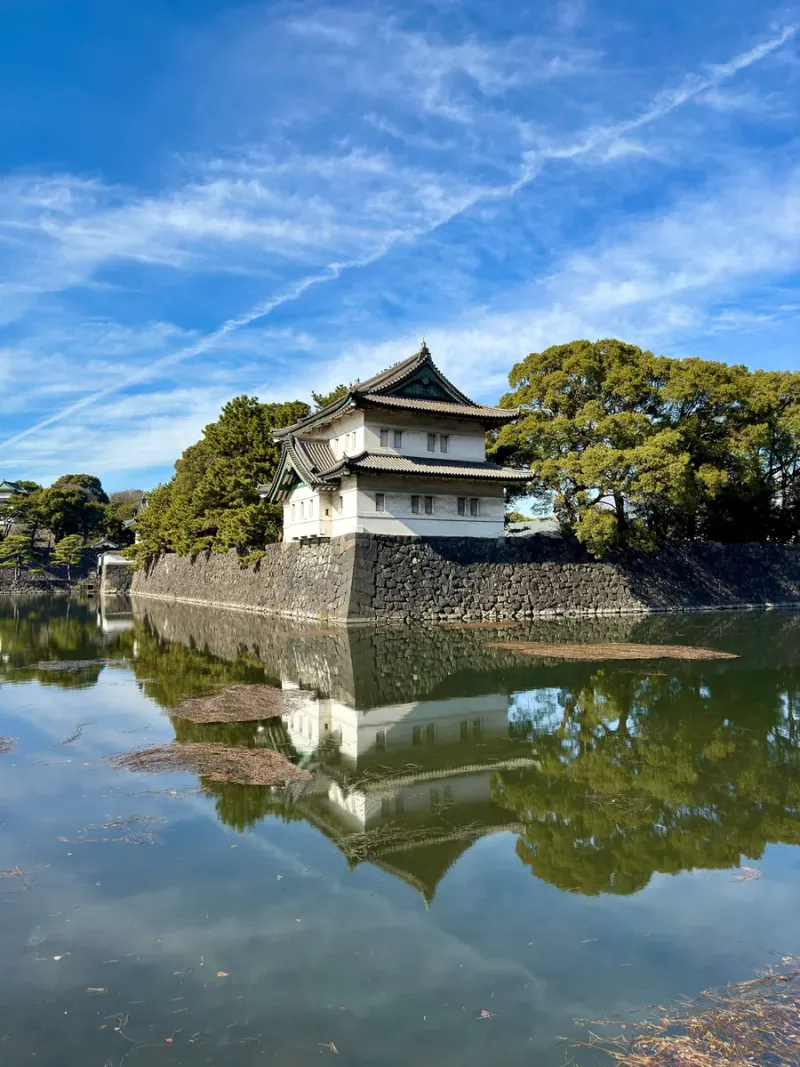
On 2 January, for the Emperor's New Year greeting, anyone can walk into the inner grounds of the Imperial Palace. Members of the imperial family come out onto the balcony of the Chowaden hall several times through the day to greet the crowd. It's free, with no ticket. In 2026 visitors went in through the main gate (Seimon) from 9:30am to 2:10pm, with about five appearances between roughly 10am and 2:20pm, and left through one of four other gates. The Imperial Household Agency hasn't published the 2027 times yet, so check its site in December.

Expect a long security queue. Bags are checked, large bags have to go in a coin locker before you join, and knives and scissors aren't allowed, nor are drones or flagpoles, and tripods can't be used inside. The agency asks people not to start queuing on the evening of 1 January, and the event can be cancelled for snow. One thing that doesn't open: the Imperial Palace East Gardens are closed from 28 December to 3 January, so save those for later in the month (they're free, but closed on Mondays and Fridays).

Imperial Palace (New Year greeting)
landmark · Marunouchi & Tokyo Station
Imperial Palace (New Year greeting)
4.4 Google (32,142) 2-3 hours on 2 January, including the security queue
1-1 Chiyoda, Chiyoda City, Tokyo 100-8111, Japan
Price: Free; no ticket or booking Hours: New Year greeting on 2 January. In 2026 entry through the main gate (Seimon) ran from 9:30am to 2:10pm, with balcony appearances at about 10:10am, 11am, 11:50am, 1:30pm and 2:20pm; the 2027 details aren't published yet. The East Gardens are closed from 28 December to 3 January, and on Mondays and Fridays; from November to February they're open 9am-4pm (last entry 3:30pm).
Tip

Carry as little as possible: there are bag checks, large bags have to go in a coin locker first, and knives and scissors aren't allowed. The Imperial Household Agency asks people not to queue outside the palace on the evening of 1 January or in the early hours of the 2nd, and says the greeting can be cancelled for snow or bad weather.

Tokyo Skytree (New Year's Day sunrise opening)

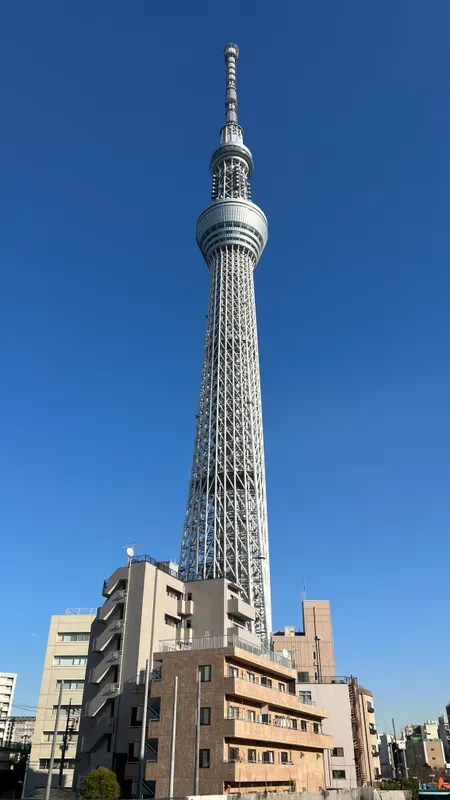
For the first sunrise of 2027, Tokyo Skytree opens early on 1 January, from 5:30am to about 7:30am, for 800 people on its two decks at 350 and 450 metres. Sunrise is at 6:50am. Tickets cost ¥11,000 per person, including a ¥1,000 voucher for the Skytree shop, and this year they're sold by lottery: the online draw for 580 tickets runs from 12pm on 5 November to 11:59pm on 26 November 2026 (Japan time), with results by email around 1 December. Tickets can't be refunded, even if cloud hides the sun. After the sunrise session, Skytree opens as normal from 8am.

If you don't get a ticket, Tokyo's best views covers the other high places in the city; check each one's New Year hours before you set an alarm. Skytree stands by Oshiage station, a short ride from Asakusa, so it pairs with a morning around Senso-ji (our Asakusa guide).

Tokyo Skytree (New Year's Day sunrise opening)
attraction · Oshiage
Tokyo Skytree (New Year's Day sunrise opening)
4.4 Google (120,889) About 2.5 hours for the sunrise session
1-1-2 Oshiage, Sumida City, Tokyo 131-0045, Japan
Price: Sunrise session ¥11,000 per person including tax, the same price for adults and children, with a ¥1,000 SKYTREE SHOP voucher; up to two preschool children per group free Hours: 1 January 2027: special sunrise opening 5:30am-7:30am (planned), entry 5:30am-6am, meeting at Solamachi Hiroba; regular opening from 8am. Online lottery for 580 tickets from 12pm on 5 November to 11:59pm on 26 November 2026 (Japan time), up to five tickets per application, results by email around 1 December.
Tip

The lottery replaces the first-come sale of previous years, and tickets can't be cancelled or refunded, including if cloud hides the sunrise. Sunrise on 1 January is at 6:50am.

Ryogoku Kokugikan (January sumo tournament)

The January sumo tournament, the Hatsu Basho, is the best reason to be in Tokyo in mid-January. It runs for 15 days, from Sunday 10 to Sunday 24 January 2027, at Ryogoku Kokugikan, the national sumo arena. Tickets go on sale on Saturday 5 December 2026 from Ticket Oosumo, the Japan Sumo Association's official seller, and Tokyo tournaments have been selling out, so be ready on the day. Our guide to sumo in Tokyo covers the seats, the day itself and the rest of Ryogoku.

Prices went up for 2027. D seats are ¥3,000, chair seats ¥5,000 to ¥13,000 per person, and floor box seats ¥9,500 to ¥25,000 per person, sold by the box. The cheapest days are weekdays; 10, 11 (Coming of Age Day), 16 and 17 January carry weekend prices, and the last two days, 23 and 24 January, cost the most. Most people come for the afternoon, when the top divisions wrestle.

stadium · Ryogoku
Ryogoku Kokugikan (January sumo tournament)
4.4 Google (9,018) An afternoon
1-3-28 Yokoami, Sumida City, Tokyo 130-0015, Japan
Price: From the January 2027 tournament, per person: D seats ¥3,000; chair seats ¥5,000-¥13,000; box (masu) seats ¥9,500-¥25,000, sold by the box; ringside (tamari) ¥25,000-¥30,000 (Japan Sumo Association price list, 2027) Hours: January 2027 tournament: Sunday 10 to Sunday 24 January. Advance tickets on sale Saturday 5 December 2026. Weekend and holiday prices on 10, 11, 16 and 17 January; the highest prices on 23 and 24 January.
Tip

Buy from Ticket Oosumo (sumo.pia.jp), the association's official seller, on sale day, not from resale sites. The Kokugikan box office sells only what's left, and if a day sells out in advance, there are no tickets on the door.

Marunouchi Illumination (Naka-dori)

Christmas-only displays such as Roppongi Hills' Keyakizaka end on 25 December, but the Marunouchi Illumination keeps going. The trees along Naka-dori, the main street between Otemachi and Yurakucho a block west of Tokyo Station, stay lit in champagne gold until 14 February 2027, from 4pm to 11pm in January. It's free, and with sunset before 5pm for most of the month, you can see it on the way to dinner.

illumination · Marunouchi & Tokyo Station
Marunouchi Illumination (Naka-dori)
1 hour
Marunouchi Naka-dori, Marunouchi, Chiyoda City, Tokyo 100-0005, Japan
Price: Free Hours: Illumination 12 November 2026 to 14 February 2027; in January it's lit 4pm-11pm.
Tip

Nearest stations: Tokyo (JR, and Tokyo Metro Marunouchi line), Nijubashimae (Chiyoda line) or Yurakucho (JR). It's a short walk from the Imperial Palace's outer garden, so it pairs with a palace afternoon.

── weather · tokyo in january

Tokyo's January weather and daylight

The averages: high 9.8°C (50°F), low 1.2°C (34°F), mean 5.4°C (42°F). Rain 59.7 mm for the month, 193 hours of sunshine (the sunniest month of the winter), average humidity 51%, and about 4 cm of snow. Early mornings are often near freezing, and heavy snow is rare.

Daylight: the sun rises at 6:50am and sets at 4:38pm on 1 January. By 15 January it sets at 4:51pm, and by 31 January sunrise is 6:42am and sunset 5:07pm. Plan museums and shopping for late afternoon, and outdoor sights for the morning.

What to pack: a warm coat, layers, gloves and a hat for the evenings, and lip balm and hand cream, because the air is very dry. Trains, shops and restaurants are well heated, so layers you can take off are better than one very heavy jumper.

Sources: Japan Meteorological Agency 1991-2020 normals for Tokyo; sunrise and sunset for Tokyo from the National Astronomical Observatory of Japan's 2027 tables.

── 1-3 january

What's open and closed from 1 to 3 January

From 1 to 3 January Tokyo is on its New Year holiday. On the night of 31 December and over these three days, millions of people make hatsumode, the first shrine or temple visit of the year. Meiji Jingu, Senso-ji and the other big shrines are at their busiest of the year, with long queues to pray, new charms and fortunes for sale and food stalls outside. You're welcome to join in. None of the shrines publishes queue times, but as general advice, early morning and after dark on the 2nd or 3rd tend to be calmer, and a visit any time in the first week of January still counts. Where to go and how to pray are in our hatsumode guide.

Open: the shrines and temples. Most convenience stores (some branches shorten their hours). Chains, hotel restaurants and the restaurants in big stations and malls are the safest bets for a meal. The Tokyo National Museum in Ueno is closed from 26 to 31 December 2026 and opens on 1 January 2027 from noon to 8pm. Tokyo Skytree opens from 8am on 1 January, after its sunrise session. Trains run, on holiday timetables; last year Tokyo Metro ran its Saturday-and-holiday timetable from 30 December to 3 January.

Closed: banks from 31 December to 3 January, and most offices. The Imperial Palace East Gardens from 28 December to 3 January. Shinjuku Gyoen from 29 December to 3 January; it's also closed on Mondays, so it doesn't reopen until Tuesday 5 January. In Ryogoku, the Ryogoku Edo NOREN restaurant building is closed on 1 and 2 January. The Sumida Hokusai Museum is closed from 27 December to 1 January but is open on 2 and 3 January 2027, during its 10th-anniversary exhibition (16 December to 28 February).

Mixed: many small independent restaurants, bars and shops close for a few days around New Year. Most places post their New Year hours on their own sites in December, so check before you plan a day around one. For eating out late after the shrine crowds, see late-night food in Tokyo.

── sales · fukubukuro

New Year sales and fukubukuro

Tokyo's department stores open the year with their New Year first sales (hatsuuri), and the famous part is the fukubukuro, or lucky bag: a sealed bag of goods worth more than its price, from clothes and homewares to food. Takashimaya describes queues at its fukubukuro counters as a New Year fixture, with luxury bags and experience bags as its headline in-store offers. On Takashimaya's online store, most bags show what's inside.

The 2027 in-store sale dates aren't announced yet. Check the store's own site in December before you go. Takashimaya's online store is already selling its 2027 fukubukuro, releasing new brands on set dates (the next are 25 November and 9 December 2026, and 3 January 2027) until 10am on 31 January 2027. Some bags are delivered before the New Year and others from 3 January.

Tax refunds changed on 1 November 2026. Japan's tax-free shopping for visitors is now a refund: you pay the full price including 10% consumption tax, show your passport, and get the tax back from the shop after customs confirms at the airport that the goods are leaving Japan. You need to spend at least ¥5,000 before tax in one shop on one day. Bring your passport to the sales.

For where to shop the rest of the month, see our Ginza guide, our Shinjuku guide and vintage shopping in Tokyo.

── 6 january

The firefighters' New Year parade (Dezome-shiki)

The Tokyo Fire Department's New Year review, the Dezome-shiki, is on Wednesday 6 January 2027 from 10am, at a new venue this year: the Tokyo Rinkai Disaster Prevention Park in Ariake (3-8-35 Ariake, Koto City). The programme includes a parade of fire engines, firefighting demonstrations and the Edo Fire Brigade Preservation Society's traditional ladder-top acrobatics (hashigo-nori). Reception at the ceremony venue closes at 10:30am.

Ceremony seats are reserved and given out by lottery, online or by postcard, for up to four people per application, and applications must arrive by 9 November 2026; there's no waiting list. The fire department's exhibition next door at Ariake Garden (2-1-8 Ariake) is free, with no ticket.

── 11 january

Coming of Age Day: Monday 11 January 2027

Coming of Age Day (Seijin no Hi) is a national holiday on the second Monday of January, which in 2027 is 11 January. Tokyo's wards hold their ceremonies for local young adults that day. These aren't public events: Minato City's, for example, is at the Tokyo Prince Hotel for residents born between 2 April 2006 and 1 April 2007, by registration only. What a visitor sees is the city around them: young people in formal kimono and suits at shrines, stations and photo studios through the day.

Because it's a holiday, it makes 9 to 11 January a three-day weekend. Expect weekend crowds at the big sights, holiday prices at the sumo, and holiday opening rules: places that normally close on Mondays, such as the Tokyo National Museum and the Imperial Palace East Gardens, open on the 11th and close on Tuesday 12 January instead, and Shinjuku Gyoen does the same.

── illuminations

The winter illuminations still running in January

The Christmas-only displays, including Roppongi Hills' Keyakizaka, end on 25 December. Confirmed for January: the Marunouchi Illumination, 4pm to 11pm until 14 February 2027 (free), and Yomiuriland's Jewellumination, a theme-park light show in Inagi, in Tokyo's western suburbs, which runs to 4 April 2027 on the days and hours set by the park's calendar (park entry ¥1,800 for adults at the gate, ¥1,600 online).

Not announced yet: Tokyo Midtown in Roppongi hasn't announced its 2026-27 lights on its own site. Last year its garden light walk ran until 23 February 2026, free, with an outdoor ice rink to the same date.

── when to go

Crowds and prices in January

These are general patterns and my own advice, not published figures. The first days of January are Japan's main family holiday and one of its busiest travel periods, so trains out of Tokyo and the hot-spring towns fill up and hotels are at holiday prices; book early if you're coming for New Year. From about the second week, once the holiday and the 9-11 January long weekend are over, I'd expect a calmer city and easier hotel prices than over New Year, so that's when I'd book. For December and February as well, see Tokyo in winter; for the rest of the year, the best time to visit Tokyo.

January's dry, sunny weather also makes it a good month to try for Mount Fuji, from the city's observation decks or on a day trip; see the best day trips from Tokyo. On cold evenings, the best ramen in Tokyo and the best izakaya in Tokyo are where the city warms up, and the best museums in Tokyo fill the dark late afternoons.

Planning your trip to Tokyo? Save these places to your itinerary with Tourli, the app that turns travel guides into actionable day plans.

── frequently asked

Frequently asked questions.

What is the weather like in Tokyo in January?
Cold, dry and sunny. January is Tokyo's coldest month: the Japan Meteorological Agency's 1991-2020 averages for central Tokyo give an average high of 9.8°C (50°F), an average low of 1.2°C (34°F), 59.7 mm of rain and 193 hours of sunshine, the most of any winter month. Snow is rare: about 4 cm falls in a typical January.
Is Tokyo closed on 1 January?
Not closed, but quieter. Banks and most offices shut from 31 December to 3 January, and many small independent restaurants and shops take a few days off. Shrines and temples are open and at their busiest, most convenience stores stay open, and some big sights open on New Year's Day: the Tokyo National Museum opens on 1 January 2027 from noon to 8pm, and Tokyo Skytree opens from 8am after a special sunrise session. Others close: the Imperial Palace East Gardens from 28 December to 3 January, and Shinjuku Gyoen from 29 December to 3 January.
When are the New Year sales and fukubukuro in Tokyo?
The in-store New Year first sales, when department stores sell fukubukuro (lucky bags of unseen goods), haven't been dated for 2027 yet. Takashimaya's online store is already selling its 2027 fukubukuro, releasing them brand by brand on set dates through to 31 January 2027, with some delivered before the New Year and others from 3 January.
When is the January 2027 sumo tournament in Tokyo?
From Sunday 10 to Sunday 24 January 2027, at Ryogoku Kokugikan. Tickets go on sale on Saturday 5 December 2026 from Ticket Oosumo, the Japan Sumo Association's official seller, and Tokyo tournaments have been selling out. Under the new 2027 Tokyo prices, D seats are ¥3,000 and chair seats run from ¥5,000 to ¥13,000 per person.
When is Coming of Age Day in 2027?
Monday 11 January 2027. It's a national holiday held on the second Monday of January, when Tokyo's wards hold ceremonies for their young adults. The ceremonies are for local residents, not the public, but you'll see young people dressed up around the city that day, and trains and sights run on holiday schedules.
Can you visit the Imperial Palace on 2 January?
Yes. The Emperor's New Year greeting on 2 January is open to anyone, with no ticket. In 2026 visitors entered through the main gate between 9:30am and 2:10pm, with about five balcony appearances through the day and bag checks on the way in. The Imperial Household Agency hasn't published the 2027 details yet.
Is January a good time to visit Tokyo?
Yes, and I'd aim for the second week onwards. It's the sunniest month of the winter, so it's a good month to look for Mount Fuji from the city's observation decks, and once the New Year holiday and the Coming of Age Day long weekend are over, the city feels much calmer than in December. The first three days of January are busy and some places close, but they're also when Tokyo is at its most traditional.
── save these to your tokyo trip

Stop reading lists.
Start the trip.

Tourli turns any guide into an actionable day plan — pinned to a map, walking directions and offline access included. One tap to save every place on this page.

── travel inspiration, weekly

One short email, every Sunday.

New guides, off-the-radar places and the occasional discount. No spam, unsubscribe anytime.