Things to Do in Shinjuku, Tokyo (2026 Neighbourhood Guide)
Shinjuku handles more train passengers per day than any other station on earth, and the neighbourhood around it matches that energy. This is where neon-drenched Kabukicho collides with the immaculate gardens of Shinjuku Gyoen, where 200 tiny bars cram into six narrow alleys in Golden Gai, and where salarymen eat shoulder-to-shoulder at smoky yakitori stalls in Omoide Yokocho. There are 282 places in our database for this neighbourhood alone. Here are the ones actually worth your time.
Things to Do in Shinjuku: A Neighbourhood Guide
Shinjuku is one of those Tokyo neighbourhoods that sounds like an exaggeration until you’re standing in the middle of it. Three million people pass through the station every single day. The east side is a wall of neon and noise that starts at Kabukicho and doesn’t really stop until you’re deep into Golden Gai or lost in the smoky alleys of Omoide Yokocho. The west side is all corporate towers and government buildings, which sounds dull until you realise one of them has a free observation deck on the 45th floor with views to Mount Fuji. And then, somehow, tucked behind all of this, there’s a 144-acre garden with three different landscaping traditions and the best cherry blossom viewing in the city.
The range is the thing. You can start your morning in serene Japanese gardens, spend the afternoon sampling wagyu in a department store basement, eat a ¥900 bowl of former-Michelin-star ramen for dinner, and end the night singing karaoke with strangers in a bar the size of a walk-in wardrobe. Shinjuku accommodates all of this within walking distance. It’s intense and occasionally overwhelming, but once you understand the different pockets of the neighbourhood, it becomes one of the most rewarding areas in Tokyo to explore properly.
Here is how to spend your time.

Shinjuku Gyoen and the Quieter Side
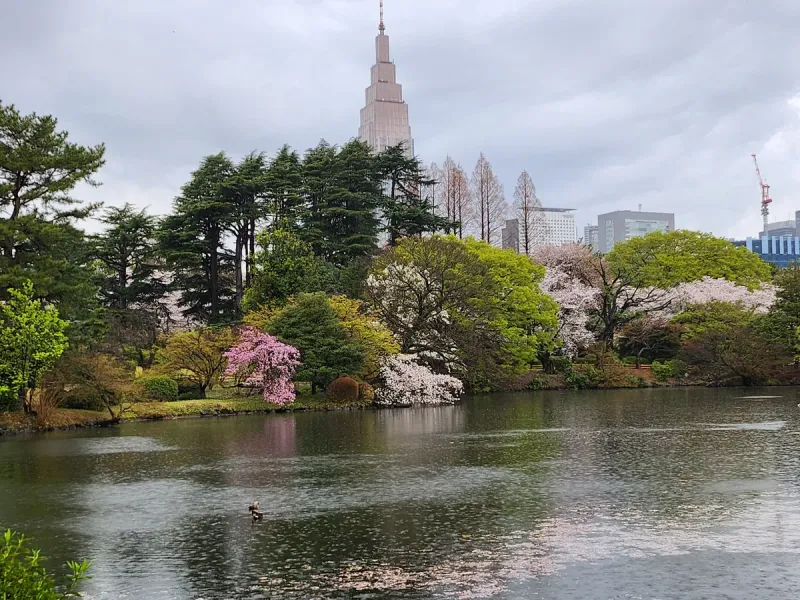
Start with the garden, because nothing else in Shinjuku is quiet and you should enjoy the peace while you can. Shinjuku Gyoen National Garden is a former imperial estate that now functions as one of Tokyo’s finest parks, split into three distinct sections: a traditional Japanese garden with ponds and teahouses, a formal French garden with symmetrical rose beds, and an English landscape garden with wide open lawns. In cherry blossom season (late March to mid-April), it’s arguably the single best hanami spot in Tokyo, because unlike Ueno Park, they don’t allow alcohol inside, which keeps the atmosphere calm rather than chaotic.

Shinjuku Gyoen National Garden
- Three distinct garden styles: Japanese, English, and French
- Tokyo's best cherry blossom viewing spot in spring
- Peaceful escape from Shinjuku's chaos
Enter from the Shinjuku Gate (closest to the station). No alcohol allowed. ¥500 entry.
"A stunning 144-acre national garden combining Japanese traditional, English landscape, and French formal garden styles."
Budget at least an hour, ideally two. The greenhouse near the centre is worth ducking into, especially if you’re visiting in winter. And if you need caffeine before or after, coffee swamp is a small specialty coffee shop nearby that takes its beans seriously. The pour-over single origins are excellent, and the whole place feels like a deliberate antidote to everything happening on the other side of Shinjuku station.
coffee swamp
- Specialty third-wave coffee in Shinjuku
- Carefully sourced single-origin beans
- A calm refuge from the surrounding chaos
Try the pour-over single origin. Small space with limited seating, so mornings are quieter.
"A tiny specialty coffee shop with an obsessive approach to bean sourcing and brewing."
Nishi-Shinjuku: Skyscrapers and Free Views
The west side of Shinjuku station opens into the skyscraper district. It’s mostly office buildings and hotels, which means it’s quiet on weekends and doesn’t have the same tourist pull as the east side. But it has one genuinely great attraction that costs exactly nothing.
The Tokyo Metropolitan Government Building has twin observation decks on the 45th floor, and they’re completely free. The North Observatory stays open until 10 PM, which means you can time your visit for dusk and watch the city light up below you. On a clear day, Mount Fuji is visible to the west. It’s not as flashy as Shibuya Sky or Tokyo Skytree, but the price (free) and the lack of crowds make it arguably the best casual viewpoint in the city. You just go through security, take the elevator up, and that’s it. No tickets, no booking.
Tokyo Metropolitan Government Building
- Free observation deck on the 45th floor
- Views of Mount Fuji on clear days
- Open until 10 PM for night views
The North Observatory is open until 10 PM. Go at dusk for both daytime and nighttime views. Completely free.
"The Tokyo Metropolitan Government Building offers free panoramic views from its twin observation decks."
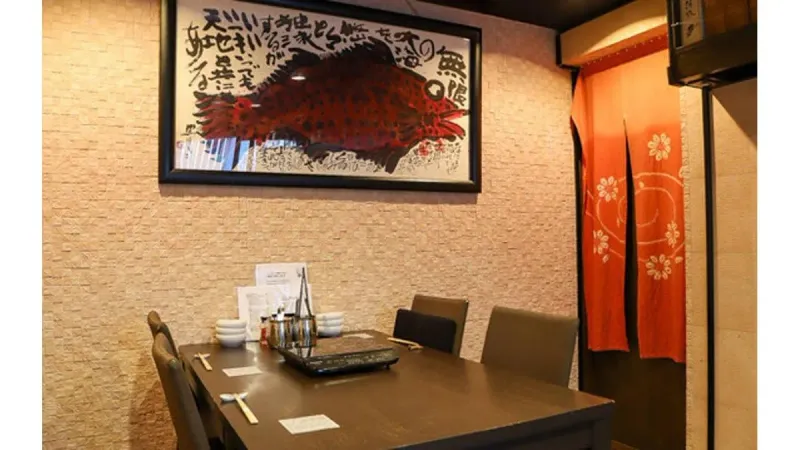
While you’re on the west side, Shishikura in Nishi-Shinjuku is one of the area’s best-kept dinner secrets. It’s a shabu shabu restaurant using premium wagyu, and the experience feels like it belongs in a quieter, more refined part of Tokyo. The beef is thinly sliced and practically dissolves in the hot broth. If you’re going to have one proper sit-down meal in Shinjuku, this is a strong contender.

Shishikura
- Outstanding shabu shabu with premium wagyu
- Refined service in Nishi-Shinjuku
- Perfect for a special dinner
Book ahead for dinner. The wagyu shabu shabu course is worth the splurge.
"Shishikura serves beautifully marbled wagyu in a refined shabu shabu setting. Reviewers highlight the melt-in-your-mouth beef and attentive service."
Omoide Yokocho (Memory Lane)
Tucked alongside the train tracks just west of Shinjuku station is a narrow alley of roughly 80 tiny restaurants that feels like it hasn’t changed since the 1940s, because in many ways it hasn’t. Omoide Yokocho, sometimes called Memory Lane (and less politely called Piss Alley, a nickname from the postwar era when there were no bathrooms), is a collection of open-air stalls serving yakitori, ramen, grilled offal, and cheap beer. The smoke hangs in the air, the seats are cramped, and your elbows will touch the person next to you. It is, without reservation, one of the most atmospheric dining experiences in Tokyo.
Omoide Yokocho
- Historic post-war alley of tiny yakitori and ramen stalls
- Known as Memory Lane or Piss Alley
- Atmospheric lantern-lit dining
Go hungry and share dishes across a few stalls. Most places are cash only. Busiest after 7 PM.
"Omoide Yokocho is a narrow alley of roughly 80 tiny open-air restaurants serving yakitori, ramen, and grilled offal."
The strategy here is simple: don’t commit to one place. Sit down, order a few skewers and a beer, then move to the next stall. Most spots are cash only. The best time is after 7 PM when the lanterns are lit and the smoke is thick. It photographs incredibly well, but more importantly, the food is genuinely good. For our broader picks on noodles in the city, check the best ramen in Tokyo guide.
Golden Gai: 200 Bars in Six Alleys
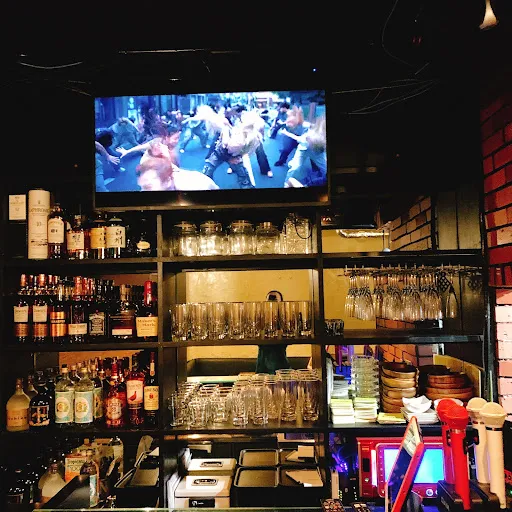
Golden Gai is the thing everyone tells you to visit in Shinjuku, and for once the hype is earned. It’s a grid of six narrow alleys crammed with over 200 bars, most of them seating somewhere between four and ten people. Each bar has its own personality: some are themed around jazz, some around punk rock, some around a specific whisky region, and some are just whatever the owner feels like playing that night. The walls are covered in stickers, posters, and decades of accumulated character. There is nothing else like it in the world.
The best approach is to wander. Peek through doors, read the signs (many now have English), and sit down wherever catches your eye. Most bars charge a small seating fee of ¥500 to ¥1,000, which is standard and covers a small snack. Don’t be put off by it. Weeknights are better than weekends if you want a more local crowd. Go after 8 PM when most bars have opened.
Alley Nuts Rock Bar
- Perfect 5.0 rating
- Rock music-themed Golden Gai bar
- Friendly English-speaking staff
Small cover charge applies. Tell the bartender what music you like and they'll play it.
"A tiny rock bar tucked into Golden Gai where the walls are covered in band posters and the bartender curates the playlist based on your taste."
If rock is your thing, Alley Nuts is the obvious pick. Walk in and the bartender will ask what bands you’re into, then adjust the playlist accordingly. It’s small, loud, and run by someone who clearly lives for music. If you’re after something quieter, Bar DOCO is a warmer, whisky-focused spot on a second floor with a bartender who makes an excellent highball and is happy to chat about Japanese whisky in English.
Bar DOCO
- Perfect 5.0 rating
- Cosy Golden Gai atmosphere
- Great whisky selection
Look for it on the second floor. The bartender makes excellent whisky highballs.
"A warm, intimate bar in Golden Gai with a welcoming owner and strong drink selection."
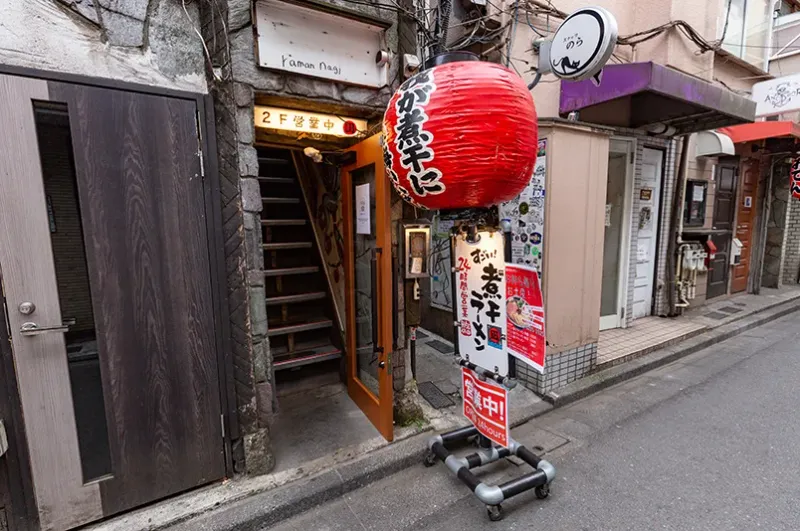
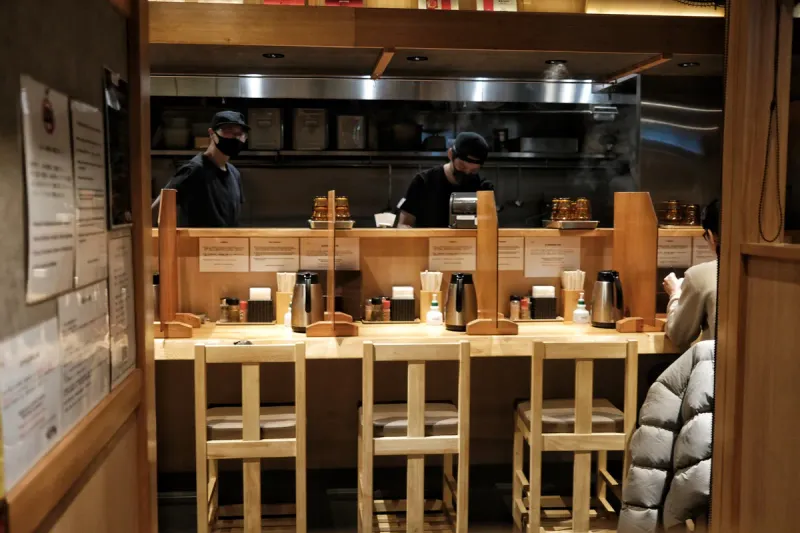
And then there’s Ramen Nagi, which is technically inside Golden Gai itself. Sugoi Niboshi Ramen Nagi serves a deeply savoury, intensely fishy niboshi (dried sardine) broth that you either love or find completely overwhelming. The ticket machine lets you customise everything from noodle thickness to broth richness. It’s the kind of ramen that makes you understand why people get obsessed with specific styles. If niboshi isn’t your thing, the best ramen in Tokyo guide has plenty of alternatives.

Sugoi Niboshi Ramen Nagi
- Famous niboshi (dried sardine) ramen
- Located inside Golden Gai
- Fully customisable bowls from the ticket machine
Customise your bowl at the ticket machine: noodle thickness, broth richness, and toppings. The extra-rich niboshi is intense.
"Nagi is known for its intensely fishy niboshi ramen, a polarising but beloved style."
For more bar recommendations across the city, check our best bars in Tokyo guide.
Kabukicho: Neon, Nightlife, and Karaoke
Kabukicho is Shinjuku’s entertainment district, and it doesn’t do subtlety. The entrance is marked by a massive red gate and an enormous Godzilla head peering over the edge of the Shinjuku Toho Building. Beyond that, it’s a maze of neon signs, host and hostess clubs, game centres, cinemas, and an ever-growing number of places aimed at tourists. The Robot Restaurant (now technically called the “Robot Show”) used to be the main draw, though it closed and reopened in various forms. The area itself is the attraction. Walking through Kabukicho at night is a sensory experience that doesn’t require you to enter any particular venue to appreciate.
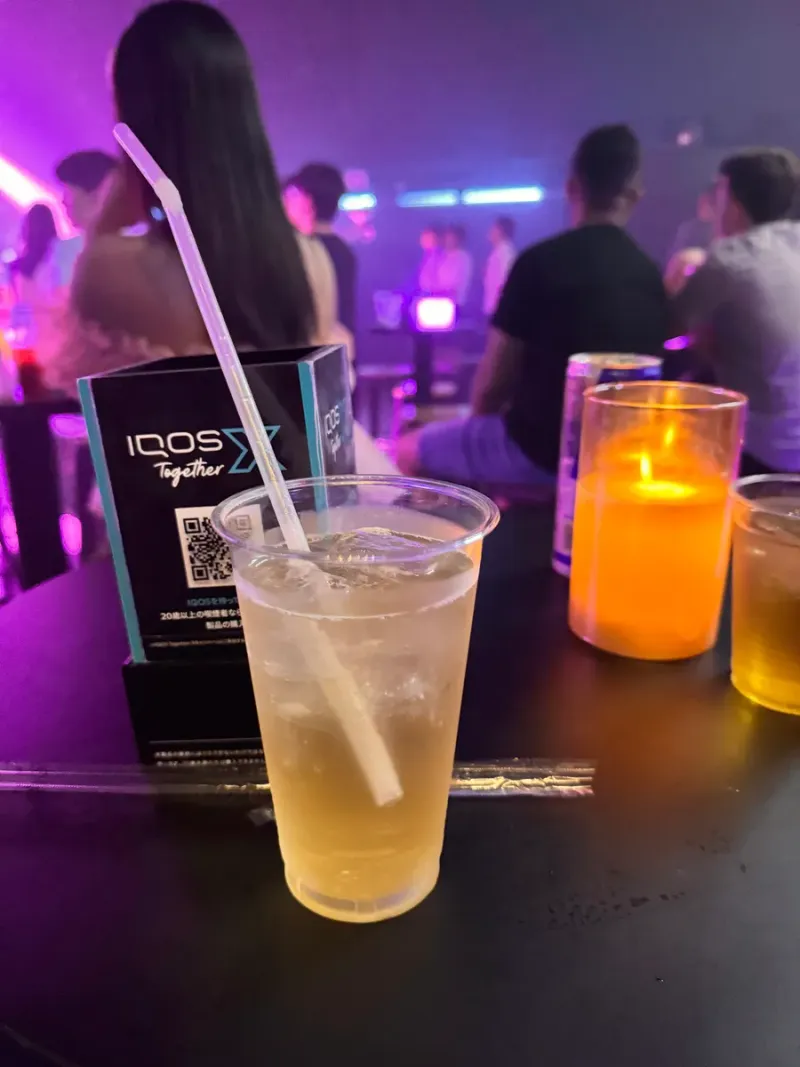
What Kabukicho does extremely well is nightlife. ATOM TOKYO is a multi-floor club where each level plays a different genre. EDM downstairs, hip-hop upstairs, and a rooftop terrace for when you need air. It’s popular with both locals and international visitors, and some nights offer free entry for foreign tourists before midnight. Check their website before you go.

ATOM TOKYO Nightclub
- Multi-floor club with different DJs on each level
- Popular with both locals and international visitors
- One of Shinjuku's biggest nightlife venues
Free entry for foreign tourists before midnight on some nights. Check their website. Multiple floors with different music.
"ATOM TOKYO is a multi-floor nightclub with each floor playing different genres. The crowd is a mix of locals and tourists."
For karaoke, skip the big chains (Big Echo, Karaoke Kan) and try one of the smaller bars instead. Karaoke Bar VAMOS is the kind of place where the staff don’t just serve you drinks; they grab a tambourine and sing along. It’s interactive, chaotic, and exactly the kind of night you came to Tokyo for.

Karaoke Bar VAMOS
- Perfect 5.0 rating
- Interactive karaoke with enthusiastic staff
- Authentic Japanese karaoke bar experience
The staff join in if you want them to. Request the tambourine.
"A lively karaoke bar where the staff are part of the entertainment, singing along and keeping the energy high."
KARAOKE BAR chakura is a smaller, more intimate option if a full-blown party isn’t your speed. It works well for couples or small groups who want the karaoke experience without the sensory assault of a massive karaoke box. The staff are friendly to international visitors and the song selection includes plenty of English-language options.
KARAOKE BAR chakura
- Perfect 5.0 rating
- Intimate karaoke bar atmosphere
- Friendly to international visitors
Smaller and more intimate than the big karaoke chains. Great for groups of 2-4.
"A small, welcoming karaoke bar in Kabukicho where the intimate setting and friendly staff create a memorable night out."
Where to Eat in Shinjuku
Shinjuku has hundreds of restaurants, but a few stand out. Beyond the ramen and yakitori stalls of Omoide Yokocho and Golden Gai, there are proper sit-down places worth seeking out.
Hinotori does yakitori the right way, using premium Daisen chicken from Tottori Prefecture. The grilling here is precise. Each skewer comes off the charcoal with crispy skin and juicy meat, and the tsukune (chicken meatball) is one of the best you’ll find in the city. It’s a local favourite rather than a tourist spot, which keeps the quality consistent and the prices reasonable.

Hinotori
- Premium Daisen chicken yakitori
- Exceptional grilling technique
- High-rated neighbourhood find
The Daisen chicken thigh and the tsukune (chicken meatball) are the must-orders.
"Hinotori specialises in yakitori using high-quality Daisen chicken from Tottori Prefecture."
Soba House Konjiki-Hototogisu is a former Michelin-starred ramen shop near Shin-Okubo (one stop north of Shinjuku on the Yamanote Line). The signature bowl uses a clam and dashi-based broth that’s more refined than the heavy tonkotsu or miso styles most visitors default to. It costs around ¥900 and the queue is long but moves at a decent pace. Arrive before 11 AM on weekdays if you want to keep your wait under 30 minutes.

Soba House Konjiki-Hototogisu
- Former Michelin-starred ramen shop
- Signature clam and dashi-based broth
- Around ¥900 for one of Tokyo's best bowls
The shio (salt) ramen is the one to get. Arrive before 11 AM on weekdays to skip the worst of the queue.
"Konjiki-Hototogisu earned a Michelin star for its refined, clam-forward ramen."
For a broader look at where to eat across the city, check the best restaurants in Tokyo guide.
Shopping: Department Store Culture
Shinjuku is home to some of Tokyo’s grandest department stores, and even if you don’t plan to buy anything, the basement food halls alone are worth a visit. Isetan Shinjuku is the crown jewel. The fashion floors are meticulously curated, but the real destination is the depachika (basement food floor), where rows of immaculate displays showcase wagyu, sushi, seasonal confections, artisan pickles, and bento boxes that look almost too beautiful to eat. Takashimaya Times Square, a few minutes’ walk south, is another enormous department store with its own excellent food hall and a Tokyu Hands for Japanese stationery and homeware obsessives.
Isetan Shinjuku
- Tokyo's most prestigious department store
- World-class basement food hall
- Incredible Japanese confectionery and bento selection
The basement food hall (depachika) is the real destination. Go hungry and sample as you browse.
"Isetan Shinjuku is the flagship of Japanese department store culture. The basement food hall is the standout."
Planning Your Shinjuku Day
A good Shinjuku itinerary starts at Shinjuku Gyoen in the morning, before the crowds build. Spend an hour or two in the gardens, then grab coffee at coffee swamp. Walk to Nishi-Shinjuku for the free views at the Tokyo Metropolitan Government Building (better at dusk, but midday works if you’re passing through). Lunch at Konjiki-Hototogisu near Shin-Okubo, or grab yakitori at Hinotori. Spend the afternoon browsing Isetan’s food hall, then head to Omoide Yokocho for an early dinner of skewers and beer as the lanterns light up. After dark, lose yourself in Golden Gai for a few bars, then wander into Kabukicho for karaoke at VAMOS or dancing at ATOM TOKYO.
If you have a second evening, do a proper dinner at Shishikura for shabu shabu, then hit the Golden Gai bars you missed the first time. Two nights in Shinjuku is not too many. There are over 200 bars in Golden Gai alone. You will not run out of options.
For more Tokyo neighbourhood guides, check our Shibuya guide. And for city-wide recommendations, browse the best restaurants, best bars, and best ramen guides.
Planning your trip to Tokyo? Save these places to your itinerary with Tourli, the app that turns travel guides into actionable day plans.
Frequently Asked Questions
How much time should I spend in Shinjuku?
Is Kabukicho safe at night?
What is Golden Gai and do I need a reservation?
Is the Tokyo Metropolitan Government Building observation deck really free?
More Tokyo Guides
3-Day Tokyo Itinerary (2026)
ItineraryThree days, three pairs of neighbourhoods. This itinerary groups Tokyo by geography so you spend less time underground and more time eating, photographing, and getting properly lost.
5-Day Tokyo Itinerary (2026)
ItineraryFive days, five neighbourhoods. This itinerary groups Tokyo by geography so you spend less time on trains and more time eating, exploring, and getting lost in the right way.
Things to Do in Asakusa, Tokyo (2026 Neighbourhood Guide)
GuideAsakusa is Tokyo at its most traditional. While most of the city rebuilt itself into glass and steel after the war, this neighbourhood held onto its wooden shopfronts, its temple rituals, and its open-air drinking culture. Senso-ji has been standing here since the seventh century. Nakamise has been selling rice crackers and souvenirs since the Edo period. And Hoppy Street has been serving cheap beer alternatives to salarymen since the 1940s. It's the part of Tokyo that still feels like old Tokyo, and it's one of the few neighbourhoods where you can spend an entire day without running out of things to see, eat, and do.
Best Breakfast in Tokyo (2026) - From 6AM Sushi to Kissaten Toast
VibeTokyo is one of the few cities where eating sushi at 6 AM is completely normal. Breakfast here spans everything from a three-piece sashimi set at a Tsukiji fish stall to a ¥500 kissaten morning set with toast so thick it could double as a pillow. This guide covers 11 ways to start your day, from the traditional to the trendy.
11 Best Brunch Spots in Tokyo (2026)
VibeTokyo takes breakfast seriously, just not in the way you might expect. The city runs on kissaten morning sets, fluffy souffle pancakes that take 20 minutes to cook, and hotel buffets that could double as Michelin-level tasting menus. This guide covers all of it.
15 Best Cafes in Tokyo (2026)
GuideTokyo has over 550 cafes in our database alone, ranging from century-old kissaten to cafes where a capybara sits in your lap. These 15 cover matcha specialists, third-wave roasters, themed experiences, and traditional tea shops.
Save these places to your Tokyo trip
Tourli turns travel guides into actionable day plans. Save places, get walking directions, and share your itinerary — all in one app.