
Skip to content
MICHELIN Guide Tokyo 2026

13 Michelin Restaurants in Tokyo: Stars and Bib Gourmands (2026)

Where to eat at Tokyo's Michelin restaurants, from three-star kaiseki at RyuGin and Kagurazaka Ishikawa to a ¥28,000 weekend lunch at Joël Robuchon and ¥1,200 Bib Gourmand ramen in Ginza, with how each one takes bookings.

13
places
4.5
avg Google rating
Tokyo
Japan
── michelin · tokyo

Michelin restaurants in Tokyo From three-star kaiseki to ¥1,200 Bib Gourmand ramen

If you can book one three-star dinner in Tokyo, make it Japanese: RyuGin in Hibiya or Kagurazaka Ishikawa for kaiseki, the seasonal tasting menu Japan does better than anywhere. If you want the stars for less, Joël Robuchon in Ebisu serves a ¥28,000 three-star lunch at weekends, and Florilège's two-star lunch is ¥12,000. And for far less, the Bib Gourmand list includes Ginza Hachigou, where a bowl of ramen costs ¥1,200.

The current guide is the MICHELIN Guide Tokyo 2026, announced in September 2025; the 2027 edition comes out on 16 February 2027, so stars can change after that. The hard part is booking. Most of these restaurants open their calendars on a set day, often a month or two ahead, and fill fast, so put the date in your diary before you book flights. For more of the city's food, see the best restaurants in Tokyo and the best sushi in Tokyo.

Nihonryori RyuGin

Three stars: kaiseki. RyuGin is Seiji Yamamoto's restaurant on the seventh floor of Tokyo Midtown Hibiya, and it's the one I'd pick if you want to understand why Japanese chefs dominate the guide. The omakase is ¥77,000 including tax, plus 10% service at a table. All 40 seats are at tables, with no counter or tatami, so it's easier for a group than the counter places.

Plan around the season: from January to March 2027 it serves only its fugu (pufferfish) course, a different menu each month, so skip that window if pufferfish isn't for you. The catch is the rules: no phones at the table, and it won't book anyone who can't eat seafood at all. Bookings open at noon on the 1st for the month after next, and it will seat same-day callers if there's space, so a phone call on the day is worth a try.

kaiseki · Hibiya
Nihonryori RyuGin
4.0 Google (555)
Tokyo Midtown Hibiya 7F, 1-1-2 Yurakucho, Chiyoda City, Tokyo 100-0006, Japan
Price: Omakase ¥77,000 including tax, plus 10% service at tables (15% in private and semi-private rooms). January to March 2027: the fugu (pufferfish) course only Hours: 6pm to 11pm, last entry 7.30pm; irregular closing days on its calendar
  • Three MICHELIN stars (Tokyo 2026)
  • Seiji Yamamoto's modern kaiseki
  • A winter of fugu, January to March
Tip

Bookings open at noon on the 1st of each month for the month after next (on 1 December, for all of February). Phone 03-6630-0007 between noon and 5pm.
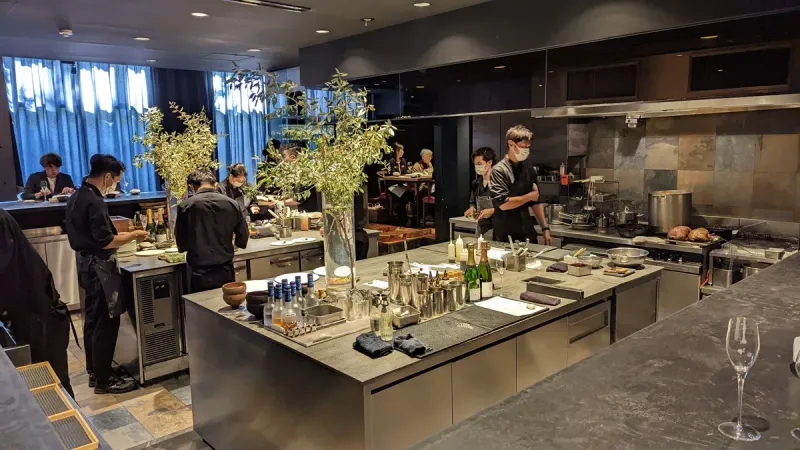
Kagurazaka Ishikawa

Kagurazaka Ishikawa is Hideki Ishikawa's restaurant in Kagurazaka, open under that name since 2008 and serving understated, seasonal kaiseki at a seven-seat counter and in a few private rooms. Rice from his home prefecture, Niigata, is cooked fresh and served at the end. It's the most traditional of the three-star kaiseki rooms, and the one to book if you'd rather sit at a counter than at RyuGin's tables. The catch is the size: seven counter seats fill fast.

It's open Tuesday to Saturday evenings, plus lunch on Saturdays. Check the course price when you book, through the 'Reserve a table' button on its MICHELIN Guide page. For the rest of the neighbourhood, see my Kagurazaka guide.

kaiseki · Kagurazaka
Kagurazaka Ishikawa
4.6 Google (317)
Takamura Building 1F, 5-37 Kagurazaka, Shinjuku City, Tokyo 162-0825, Japan
Price: Prices aren't listed on its website Hours: Tuesday to Friday 5pm to 10pm; Saturday noon to 3pm and 5pm to 10pm; closed Sundays, Mondays and public holidays
  • Three MICHELIN stars (Tokyo 2026)
  • Seasonal kaiseki on a Kagurazaka backstreet
  • Saturday lunch as well as dinner
Tip

Seven counter seats plus private rooms. Five minutes' walk from Ushigome-Kagurazaka station (Oedo line), exit A3.

Myojaku

Myojaku is the newest three-star in Tokyo, promoted in the 2026 guide. Chef Hidetoshi Nakamura opened it in Nishiazabu in 2022, and his cooking is about restraint: he seasons with little more than water and sea salt and lets the ingredient do the rest. There are eight seats at the main counter, six at a second one and two private rooms.

Book it if you want the most stripped-back version of the meal: the omakase is ¥49,500, booked through OMAKASE from its site. The fees bite early, 50% from seven days out and 100% from two, so fix your dates before you book.

kaiseki · Nishiazabu
Myojaku
4.7 Google (151)
B1F, 3-2-34 Nishiazabu, Minato City, Tokyo 106-0031, Japan
Price: Omakase ¥49,500 (price from April 2026) Hours: 5pm to 11pm; closed Sundays and on irregular days
  • Promoted to three MICHELIN stars in the 2026 guide
  • An eight-seat main counter
  • Seasoned with little more than water and sea salt
Tip

Cancel seven or more days ahead to avoid a fee: it's 50% from seven days out and 100% from two. Smart casual, no perfume, and junior-high age and up only.

Sazenka

Three stars: not Japanese. Sazenka is Tomoya Kawada's Chinese restaurant in Minami-Azabu; the name means 'tea, Zen, Chinese'. He trained in China, and his cooking is Japanese spirit with Chinese technique. It's the only Chinese restaurant with three stars in Tokyo, and the one I'd book if you've already done kaiseki.

Come in winter and you'll get crab: from mid-October to mid-January it serves only Shanghai crab courses, from ¥71,500, and the rest of the year the seasonal omakase starts at ¥55,000. Bookings open on the 1st for the whole month two months ahead. The catch is the crab season itself: if you don't want crab, you can't eat anything else here from mid-October to mid-January. Children 10 and over in the main room.

chinese · Minami-Azabu
Sazenka
4.7 Google (330)
4-7-5 Minamiazabu, Minato City, Tokyo 106-0047, Japan
Price: Seasonal omakase from ¥55,000; mid-October to mid-January, Shanghai crab courses only, from ¥71,500 (tax included, plus 10% service in the main dining room, 15% in private rooms) Hours: Closed Mondays; check its site for current hours
  • Three MICHELIN stars (Tokyo 2026)
  • The only three-star Chinese restaurant in Tokyo
  • Shanghai crab season, mid-October to mid-January
Tip

Bookings open on the 1st of each month for the whole month two months ahead (1 March for May). The web booking runs 24 hours; the phone line, 050-3188-8819, is staffed 10am to 4pm.

L'Effervescence

L'Effervescence is Shinobu Namae's restaurant in Nishiazabu: French technique, Japanese produce, and a meal that ends with a bowl of weak matcha. The signature dish is a plate of vegetables from the farmers he works with, and the restaurant publishes a yearly report on its waste and emissions.

Book it for lunch if you want three stars in daylight, Tuesday to Saturday. There's one menu, the chef's omakase, at ¥49,500 including tax plus 15% service, booked on OMAKASE. Answer the reconfirmation call or email about a week ahead: if they can't reach you three days before, they may cancel.

french · Nishiazabu
L'Effervescence
4.6 Google (1,000)
2-26-4 Nishiazabu, Minato City, Tokyo 106-0031, Japan
Price: Chef's omakase ¥49,500 including tax, plus 15% service Hours: Lunch and dinner, Tuesday to Saturday
  • Three MICHELIN stars and a MICHELIN Green Star (Tokyo 2026)
  • Shinobu Namae's French cooking with Japanese produce
  • Serves lunch as well as dinner
Tip

The restaurant reconfirms about a week before. If it can't reach you three days before, it may cancel the booking, so answer that call or email.

Joël Robuchon

Three stars for less. Joël Robuchon is the grand French dining room in the château at Yebisu Garden Place, all gold and black, with a trolley service and the house caviar dish. It's the most formal of the six three-stars I've picked, and the only one where lunch costs under ¥30,000.

The ¥28,000 prix fixe is the way in, not the full show: it's lunch only, on Saturdays, Sundays and holidays, and dinner starts at ¥33,000. There's a ¥38,000 vegetarian menu if you book it ahead (it isn't vegan). Don't confuse it with LA TABLE de Joël Robuchon, the cheaper restaurant at the same address.

french · Ebisu
Joël Robuchon
4.5 Google (1,066)
Yebisu Garden Place, 1-13-1 Mita, Meguro City, Tokyo 153-0062, Japan
Price: Prix fixe ¥28,000 (weekend lunch only), ¥33,000 or ¥38,000; vegetarian menu ¥38,000; Menu Dégustation ¥58,000; Menu Spécialité ¥78,000. Tax included, plus 12% service Hours: Lunch Saturdays, Sundays and holidays only (last entry 12.30pm); dinner weekdays from 5.30pm, weekends and holidays from 6pm (last order 8pm)
  • Three MICHELIN stars (Tokyo 2026)
  • The cheapest way into a three-star room: ¥28,000 at weekend lunch
  • A vegetarian menu (not vegan), booked ahead
Tip

Men need a jacket or a collared shirt; T-shirts, shorts and sandals are turned away. From JR Ebisu's east exit it's about five minutes along the Ebisu Skywalk.

Florilège

Two stars. Florilège is Hiroyasu Kawate's French restaurant, now in Azabudai Hills, where dinner is served around one long shared table. It holds two stars and a Green Star for its sustainability work, and the menu leans on vegetables: you choose meat or vegetables as your main course when you book. It was 36th on The World's 50 Best Restaurants 2025 list.

It's good value at lunch: ¥12,000 for the lunch course, and you can order the ¥24,000 dinner course at lunch too, both including tax plus 10% service. The catch is diets: it can't cater for vegan, gluten-free, dairy allergies or halal.

Florilège
french · Azabudai
Florilège
4.4 Google (737)
Azabudai Hills Garden Plaza D 2F, 5-10-7 Toranomon, Minato City, Tokyo 105-0001, Japan
Price: Lunch course ¥12,000; dinner course ¥24,000 (also served at lunch); drinks pairings from ¥6,600. Tax included, plus 10% service Hours: Lunch from noon (last order 12.30pm), dinner from 6pm (last order 6.30pm); closed Sunday dinner, all day Monday and Tuesday lunch, plus irregular days
  • Two MICHELIN stars and a MICHELIN Green Star (Tokyo 2026)
  • Choose meat or vegetables as your main course
  • Two-star lunch for ¥12,000
Tip

Bookings open online at midnight Japan time, one month ahead to the day. Up to four per group, junior-high age and up. Free to cancel until the day before.

NARISAWA

NARISAWA in Aoyama is Yoshihiro Narisawa's 'innovative satoyama' cooking, about the farmland and forests of rural Japan, served with traditional crafts like lacquerware and washi paper. It holds two stars and a Green Star in the 2026 guide.

Book it if you want a meal about place as much as food, or if anyone in your party is vegetarian or vegan: it does both, and works around dislikes and allergies. The ¥68,000 omakase includes tax and service, so there are no surprises on the bill. Bookings are in the diner's own name only.

innovative · Aoyama
NARISAWA
4.6 Google (720)
2-6-15 Minamiaoyama, Minato City, Tokyo 107-0062, Japan
Price: Omakase ¥68,000 at lunch or dinner, tax and service included Hours: Lunch from noon (closes 2.30pm), dinner from 5.30pm (closes 8pm); closed Sundays and Mondays, plus some irregular days
  • Two MICHELIN stars and a MICHELIN Green Star (Tokyo 2026)
  • Yoshihiro Narisawa's 'satoyama' cooking, about forests and farmland
  • Vegetarian and vegan versions on request
Tip

Bookings normally open at 10am on the 1st of each month for the following month. No under-17s, and bookings only from the diner.

Den

Den is Zaiyu Hasegawa's two-star in Jingumae, and it's the warmest of the starred rooms I'd send you to: Japanese cooking with jokes in it, like the 'Dentucky' chicken wing stuffed with sticky rice, and a salad where every vegetable is cooked differently. The menu is omakase only and changes daily.

It's also the hardest to book. Den takes no online bookings at all: you phone 03-6455-5433 between noon and 5pm, up to two months ahead, and the line is often busy, so ask the price while you're on the phone. Check its closures before you call, as it shuts for several stretches in November and December 2026 and from 29 December to 11 January.

japanese · Jingumae
Den
4.4 Google (337)
JIA Building, 2-3-18 Jingumae, Shibuya City, Tokyo 150-0001, Japan
Price: Omakase only; prices aren't listed on its website Hours: Evenings, 6pm to 8pm; closed Sundays. Also closed 15 to 18 Nov, 23, 26 and 30 Nov, 4 to 8 Dec, 17 to 19 Dec, 23 to 25 Dec and 29 Dec 2026 to 11 Jan 2027
  • Two MICHELIN stars and a MICHELIN Green Star (Tokyo 2026)
  • Zaiyu Hasegawa's playful Japanese cooking
  • The 'Dentucky' stuffed chicken wing
Tip

Phone bookings only, on 03-6455-5433 between noon and 5pm, up to two months ahead to the date. Ten minutes' walk from Gaienmae station (Ginza line); the door is on Gaien-nishi-dori.

Tempura Kondo

Tempura Kondo in Ginza is the two-star counter of Fumio Kondo, who made vegetables a serious part of tempura. His best-known piece is a thick round of sweet potato fried slowly for about half an hour. There are two counters, of 12 and 8 seats.

Book Kondo if you want a two-star meal you can finish in two hours between Ginza shopping: lunch is from ¥13,200, in fixed seatings. Overseas visitors book through My Concierge Japan, the restaurant's official desk for foreign guests; the phone line is Japanese only. The catch is those seatings: you eat when the counter does, so don't squeeze it in before a tight train.

tempura · Ginza
Tempura Kondo
4.4 Google (994)
Sakaguchi Building 9F, 5-5-13 Ginza, Chuo City, Tokyo 104-0061, Japan
Price: Lunch ¥13,200 or ¥16,500; dinner ¥22,000, ¥27,500 or ¥33,000 (tax included) Hours: Lunch seatings 11.30am and 1.30pm (two hours each); dinner seatings 5pm and 7.30pm (two and a half hours); closed Sundays, and Mondays that are public holidays
  • Two MICHELIN stars (Tokyo 2026)
  • Fumio Kondo's vegetable tempura
  • A sweet potato fried slowly for about 30 minutes
Tip

Phone bookings are in Japanese only. Visitors from abroad book through My Concierge Japan, the restaurant's official desk for overseas guests. Five minutes' walk from Ginza station.

Ginza Hachigou

Bib Gourmand: good food for normal money. The Bib list is where the guide gets useful for most trips. Ginza Hachigou is a ramen counter run by a chef with a French background. The broth is made like a consommé and seasoned with cured ham rather than a soy tare, so it's clear and delicate. A bowl is ¥1,200, or ¥1,600 with the toppings.

The splurge is the ¥2,200 Ravioli Gourmandise bowl, with foie gras and truffle wontons, limited to 30 a day. The catch is the queue, which starts at 11am, so book a noon-or-later slot on TableCheck instead. It closes when the soup runs out and shuts on Mondays and Tuesdays. For more bowls, see the best ramen in Tokyo.

ramen · Ginza
Ginza Hachigou
4.3 Google (2,210)
Daiichi Hanabusa Building 1F, 3-14-2 Ginza, Chuo City, Tokyo 104-0061, Japan
Price: Chukasoba ¥1,200; with egg ¥1,400; special ¥1,600; Ravioli Gourmandise chukasoba ¥2,200 (30 a day); meat rice ¥500 (tax included) Hours: Queue from 11am in order of arrival; reserved guests from noon; closes when the day's soup runs out; closed Mondays and Tuesdays (irregular)
  • Bib Gourmand (Tokyo 2026)
  • A clear, consommé-style broth with no tare
  • Foie gras and truffle wontons in the top bowl
Tip

Book a noon-or-later slot on TableCheck to skip the queue.

Yaesu Unagi Hashimoto

Yaesu Unagi Hashimoto is an eel house by Tokyo Station, run by a fourth-generation chef. The eel is done the Kanto way, steamed before it's grilled. An unaju (grilled eel on rice) is ¥4,500, ¥6,000 or ¥8,000 depending on the size of the eel.

Come at lunch: it's a good meal before a train, and walk-ins join a queue. The dinner courses, with eel skewers and umaki (eel omelette), have to be booked by noon the day before, on TableCheck.

unagi · Yaesu
Yaesu Unagi Hashimoto
4.3 Google (952)
1-5-10 Yaesu, Chuo City, Tokyo 103-0028, Japan
Price: Unaju (eel on rice) ¥4,500, ¥6,000 or ¥8,000 by size; dinner courses ¥11,000 and ¥14,000, service included (tax included) Hours: Lunch and dinner on weekdays, lunch only on Saturdays, closed Sundays
  • Bib Gourmand (Tokyo 2026)
  • Edo-style eel, steamed then grilled, from a fourth-generation chef
  • A few minutes from Tokyo Station
Tip

Bookings open two months ahead on TableCheck. Courses are dinner only and must be booked by noon the day before.

Yakitori SANKA

Yakitori SANKA is a small counter near Kagurazaka station that has held a Bib Gourmand for three years running. The owner is from Kochi and uses its chicken, salt and binchotan charcoal, including the local Tosa Jiro breed. He used to be a hairdresser, and it shows in how neatly the skewers are cut.

Book it for a yakitori night out on a budget: courses start at ¥7,260. The catch: it's courses only, so you can't drop in for a few skewers. Book on TableCheck. For more skewers at every price, see the best yakitori in Tokyo.

yakitori · Kagurazaka
Yakitori SANKA
4.4 Google (108)
DEAR Kagurazaka 2F, 64-4 Yaraicho, Shinjuku City, Tokyo 162-0805, Japan
Price: Yakitori courses ¥7,260 (six grilled courses), ¥8,360 (eight) or ¥9,460 (ten); Sanka course ¥10,780 (tax included) Hours: Tuesday to Saturday evenings; closed Sundays and Mondays
  • Bib Gourmand three years running (2024 to 2026)
  • Chicken from Kochi, including Tosa Jiro
  • A full yakitori course for under ¥8,000
Tip

A counter only, near Kagurazaka station (Tozai line). The owner is a sommelier, so ask for a glass to match.

── the quick answer

Which Michelin restaurant, for which trip

One big Japanese dinner: RyuGin (fugu from January to March) or Kagurazaka Ishikawa. Kanda, by Toranomon Hills, is the other long-standing three-star kaiseki room.

Three stars on a budget: Joël Robuchon's ¥28,000 weekend lunch.

Two stars at lunch: Florilège (¥12,000) or Tempura Kondo (¥13,200).

Vegetarian: NARISAWA does vegetarian and vegan versions; Joël Robuchon has a vegetarian menu; Florilège lets you choose a vegetable main, but its courses aren't fully vegetarian.

Under ¥10,000: Ginza Hachigou (ramen from ¥1,200), Yaesu Unagi Hashimoto (unaju from ¥4,500) and Yakitori SANKA (courses from ¥7,260).

A date: see my date night guide for more ideas.

── kaiseki

Kaiseki: the meal to save up for

Kaiseki is Japan's seasonal tasting menu: a run of small dishes built around what's at its best that week, usually with a clear soup, sashimi, something grilled and a rice course to finish. Restaurants often just call it nihon ryori, Japanese cuisine. It's the meal where the guide's stars make the most sense.

Five of Tokyo's 11 three-star restaurants are listed by the guide as Japanese cuisine: RyuGin, Kagurazaka Ishikawa, Myojaku, Kanda and Azabu Kadowaki. For Kyoto-style kaiseki without leaving Tokyo, Akasaka Kikunoi holds two stars and offers tatami as well as counter seating. Myojaku's omakase is ¥49,500 and RyuGin's ¥77,000, before drinks, and most add 10% to 15% service on top.

── booking

How to book a Michelin restaurant in Tokyo

Use the official route. That means the restaurant's own website or phone line, or the 'Reserve a table' button on its MICHELIN Guide page, which links to the booking partner the restaurant uses (usually OMAKASE or TableCheck). Some have their own desk for overseas guests: Tempura Kondo uses My Concierge Japan. Skip anyone reselling seats; NARISAWA, for one, only accepts bookings from the person dining.

Know the release day. Most open their calendar on a fixed date. RyuGin opens at noon on the 1st for the month after next, Sazenka on the 1st for two months ahead, NARISAWA at 10am on the 1st for the next month, and Florilège at midnight Japan time every day for the same date a month later. Den takes phone calls only, up to two months ahead.

Expect paperwork. You'll be asked for a phone number, your allergies and dislikes (often everyone's in the party), and you'll get a reconfirmation call or email a few days before. Cancellation fees are usually 50% from a few days out and 100% on the day. Several restaurants ban perfume, and some have dress codes and minimum ages: RyuGin 10 and over, NARISAWA 17 and over.

Mind the extras. Many quote prices including tax but add 10% to 15% service. NARISAWA includes both. Tipping isn't expected in Japan.

If you can't get in: your hotel concierge can sometimes help, and the Bib Gourmand places rarely need more than a TableCheck booking or a queue. For more of the food scene, see cheap eats in Tokyo, and for the Ginza restaurants, my Ginza guide.

── frequently asked

Frequently asked questions.

How many Michelin-starred restaurants are there in Tokyo?
The MICHELIN Guide Tokyo 2026, announced in September 2025, launched with 12 three-star, 26 two-star and 122 one-star restaurants, plus 114 Bib Gourmand places. The listing has shrunk a little since, to 11 three-stars, 26 two-stars, 119 one-stars and 111 Bib Gourmands. The next edition, Tokyo 2027, is due on 16 February 2027.
What is the cheapest Michelin-starred meal in Tokyo?
Among the restaurants here, Florilège's two-star lunch is the cheapest starred meal, at ¥12,000 (tax included, plus 10% service), followed by Tempura Kondo's ¥13,200 lunch. For three stars, Joël Robuchon in Ebisu has a ¥28,000 prix fixe (plus 12% service), served only at lunch on Saturdays, Sundays and holidays. For far less, the Bib Gourmand list has places like Ginza Hachigou, where a bowl of ramen is ¥1,200.
How do I book a Michelin-starred restaurant in Tokyo?
Use the restaurant's own booking route: its website, its phone line, or the 'Reserve a table' button on its MICHELIN Guide page, which links to the restaurant's booking partner (often OMAKASE or TableCheck). Most open bookings on a fixed day, such as the 1st of the month for one or two months ahead, and seats go fast. Expect to give a phone number, list allergies when you book, take a reconfirmation call a few days before, and pay a cancellation fee of 50% to 100% if you cancel late. Some, like Den, take phone bookings only, and NARISAWA accepts bookings only from the diner.
What is the Bib Gourmand?
The MICHELIN Guide's award for good quality, good value cooking. It isn't a star. In Tokyo it covers ramen shops, unagi houses, yakitori counters, soba and tonkatsu places, bistros and more, and the guide puts almost all of them in its two lowest price bands. The 2026 Tokyo guide has more than 100 of them.
What is kaiseki, and where can I eat it in Tokyo?
Kaiseki is the Japanese multi-course meal built around the season, served as a sequence of small dishes, usually with a clear soup, sashimi, a grilled course and rice at the end. Restaurants often call it nihon ryori (Japanese cuisine). Of Tokyo's three-star restaurants, RyuGin, Kagurazaka Ishikawa, Myojaku, Kanda and Azabu Kadowaki are all Japanese restaurants in this tradition, and Akasaka Kikunoi (two stars) brings Kyoto-style kaiseki to Tokyo.
Do Michelin restaurants in Tokyo have a dress code?
Many do. RyuGin asks for semi-formal dress and turns away T-shirts, and men in shorts or sandals. Joël Robuchon asks men to wear a jacket or a collared shirt. Myojaku and Sazenka ask for smart casual, and Florilège asks men not to wear shorts, sleeveless tops or sandals. RyuGin and Myojaku ban perfume, and Florilège asks you to avoid strong scents.
── save these to your tokyo trip

Stop reading lists.
Start the trip.

Tourli turns any guide into an actionable day plan — pinned to a map, walking directions and offline access included. One tap to save every place on this page.

── travel inspiration, weekly

One short email, every Sunday.

New guides, off-the-radar places and the occasional discount. No spam, unsubscribe anytime.