Skip to content
harajuku · omotesando

Harajuku and Omotesando Guide (2026): Takeshita Street, Meiji Jingu, Cat Street and Omotesando Hills (2026)

Harajuku and Omotesando in an afternoon: Meiji Jingu's shrine forest (it shuts at sunset), Takeshita Street, Cat Street, Omotesando's buildings by Tadao Ando, Herzog & de Meuron and Toyo Ito, a woodblock-print museum, and a bath in a shopping mall to finish.

16
places
4.2
avg Google rating
Tokyo
Japan
── harajuku · omotesando · tokyo

Harajuku and Omotesando a shrine forest, Takeshita Street, and Tokyo's best street for buildings

Harajuku packs three very different places into a 15-minute walk. On one side of the station is Meiji Jingu, a shrine in 70 hectares of forest planted in 1920. On the other is Takeshita Street, the narrow, crowded strip of crepe stands and teenage fashion that most people picture when they hear the word Harajuku. And running downhill from it is Omotesando, a wide avenue of zelkova trees lined with flagship stores by Tadao Ando, Herzog & de Meuron and Toyo Ito, with a museum of woodblock prints tucked down a side street.

The short version: do Meiji Jingu first, because it closes between 4pm and 5pm from November to February. Walk Takeshita Street on a weekday if you can. Then cross to Cat Street or walk down Omotesando, and finish with a bath at Kosugi-yu in Harakado (closed on Thursdays). For Shibuya Crossing and the nightlife to the south, see our Shibuya guide; for the rest of the city, things to do in Tokyo.

Meiji Jingu

Meiji Jingu and Yoyogi Park

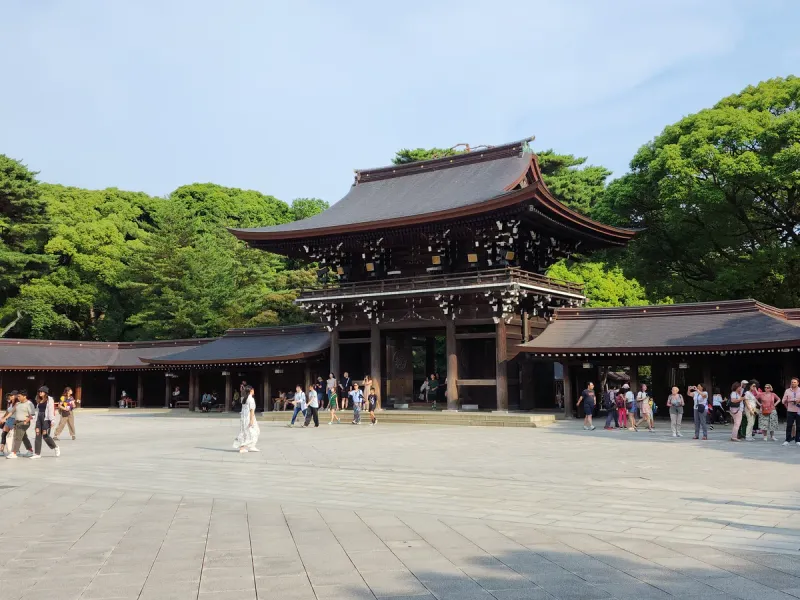
Meiji Jingu is the reason to come to Harajuku even if you don't care about fashion. It was established in 1920 to honour Emperor Meiji and Empress Shoken, and its forest, planted the same year by 110,000 volunteers with trees sent from all over Japan, now covers 70 hectares and 234 kinds of tree. The south entrance is right by the station, and the walk to the main hall is all under trees. Our best temples and shrines in Tokyo page has the shrine's full story and etiquette; it gets its own card here too because the whole neighbourhood is laid out around it.

When: the shrine opens at sunrise and closes at sunset, every day, so the times move each month: 6:10am to 4:10pm in November, 6:40am to 4pm in December, 6:40am to 4:20pm in January, 6:20am to 4:50pm in February, and as late as 6:30pm in June. Some facilities inside close earlier, mainly 9am to 4pm. Cost: free. The Inner Garden, with Kiyomasa's Well and irises in June, asks for a ¥500 maintenance contribution. Getting there: the south entrance is next to JR Harajuku Station; Meiji-jingumae (Harajuku) on the Chiyoda and Fukutoshin lines is a minute further.

The catch: on a winter afternoon you have less time than you think. If you arrive at 3:30pm in December, you get half an hour.

Meiji Jingu
attraction · Harajuku · west of the station
Meiji Jingu
4.7 Google (54,375) 1 hour
1-1 Yoyogikamizonocho, Shibuya City, Tokyo 151-8557, Japan
Price: Free; Inner Garden ¥500 maintenance contribution Hours: Opens at sunrise, closes at sunset: Nov 6:10-16:10, Dec 6:40-16:00, Jan 6:40-16:20, Feb 6:20-16:50. Some facilities inside keep shorter hours, mainly 9:00-16:00
Tip

Go before the shops, not after: in winter the gates shut before 4:30pm.

Meiji Jingu Museum

Just inside the south entrance, the Meiji Jingu Museum shows the shrine's treasures in a low building by Kengo Kuma, the architect of Tokyo's New National Stadium, opened in 2019. It's a short, quiet visit and the most interesting building in the shrine grounds.

Cost: ¥1,000 for adults, ¥900 for high school students and younger. Open: 10am to 4:30pm, last entry 4pm. Closed: Thursdays. If you want to see the museum and the shrine on a winter afternoon, do the museum second only if you're out of the main hall by about 3:30pm.

museum · Meiji Jingu · south entrance
Meiji Jingu Museum
4.2 Google (512) 45 mins
1-1 Yoyogikamizonocho, Shibuya City, Tokyo 151-0052, Japan
Price: ¥1,000 adults; ¥900 high school students and younger Hours: 10:00-16:30 (last entry 16:00); closed Thursdays
Tip

Designed by Kengo Kuma and opened in 2019; it's just inside the south entrance, near Harajuku Station.

Yoyogi Park

Yoyogi Park is the open, grassy half of the green space west of the station, and unlike the shrine it never closes. Its history is a short course in modern Tokyo: an Imperial Army parade ground, then Washington Heights, the US military housing area after the war, then the athletes' village for the 1964 Olympics, and only then a park. One building from the Olympic village survives near the Harajuku Gate. It housed the Dutch team in 1964, and it opened as a café on 9 April 2026.

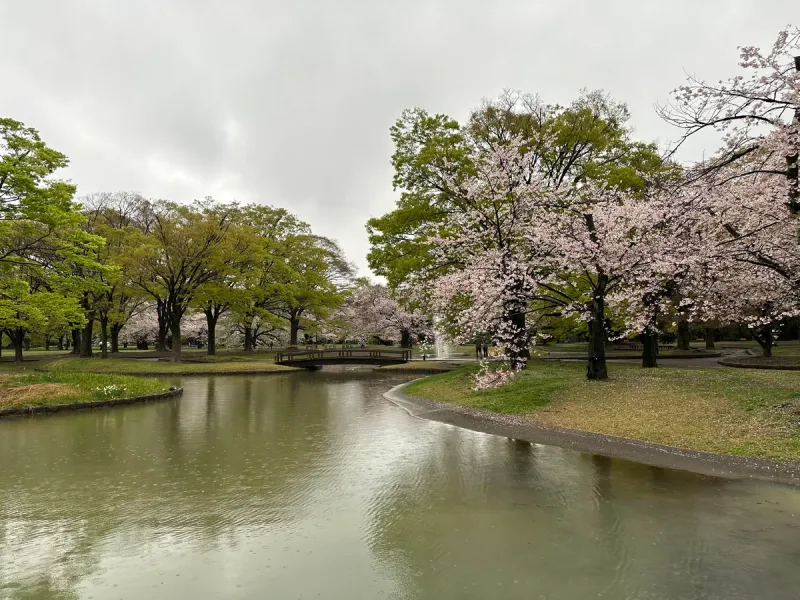
Cost: free, though some facilities charge. Getting there: about 3 minutes on foot from JR Harajuku or Meiji-jingumae. It's the city's big picnic lawn and one of its best-loved cherry blossom spots in late March and early April: see the cherry blossom guide. Bikes can be hired at the cycling centre, open 9am to 4:30pm; it closes on Mondays (the Tuesday when Monday is a holiday) and from 29 December to 3 January, and the park has announced it will also be shut on 12 November 2026.

Yoyogi Park
park · Harajuku · west of the station
Yoyogi Park
4.4 Google (27,831) 30-60 mins
2-1 Yoyogikamizonocho, Shibuya City, Tokyo 151-0052, Japan
Price: Free (some facilities charge) Hours: Open at all times; the service centre and facilities close over New Year
Tip

About 3 minutes on foot from JR Harajuku or Meiji-jingumae station. The cycling centre (bike hire) opens 9:00-16:30; closed Mondays (Tuesday when Monday is a holiday), 29 Dec-3 Jan, and on 12 November 2026.

Yoyogi National Gymnasium (Yoyogi National Stadium)

Walk out of the park's south side and you're at Yoyogi National Gymnasium, Kenzo Tange's arena for the 1964 Olympics. The sports council that runs it calls its suspension roof Tange's masterpiece, and in 2021 it became a nationally designated Important Cultural Property. It's a working arena, so the inside is for ticket-holders at events, but the curve of the roof is the thing to see, and that's free from the pavement. It sits on the way from Harajuku Station to Shibuya if you go by the main road rather than Cat Street.

attraction · Jinnan · south of Yoyogi Park
Yoyogi National Gymnasium (Yoyogi National Stadium)
4.2 Google (3,529) 15 mins (outside)
2-1-1 Jinnan, Shibuya City, Tokyo 150-0041, Japan
Price: Free to see from outside; events are ticketed
Tip

Kenzo Tange's suspension-roof arena, built for the 1964 Olympics and now a nationally designated Important Cultural Property.

Takeshita Street

Takeshita Street and the back lanes

Takeshita Street starts right outside Harajuku Station's Takeshita Exit and runs downhill to Meiji-dori: crepe stands, candy shops, character goods and cheap, loud fashion, packed shoulder to shoulder at weekends. It's busy enough that the shopkeepers' association asks everyone to keep left and walk in one direction. From 11am to 6pm it's pedestrian-only, with retractable bollards raised to keep cars out.

Two rules worth knowing. Touting is banned on the street, and the association tells visitors not to stop, not to answer, not to shake hands and not to take a catalogue if a salesperson approaches; call the police if you need help. And this is a crowd you work around, not through: walk it before 11am or on a weekday if you want to see the shops rather than the backs of heads.

What to eat: Takeshita Street is famous for its rolled crepes; our Tokyo street food guide explains what to order. The hedgehog and cat cafés just off it are on Tokyo's themed cafés page, with the welfare caveats.

attraction · Harajuku · opposite the station's Takeshita Exit
Takeshita Street
4.2 Google (1,831) 30-60 mins
1-16-6 Jingumae, Shibuya City, Tokyo 150-0001, Japan
Price: Free to walk Hours: Pedestrian-only 11:00-18:00; shops set their own hours
Tip

Keep left and walk in one direction, as the association asks. Touting is banned on the street: ignore anyone who stops you to sell something.

Togo Shrine

Togo Shrine is the quiet surprise a few steps from Takeshita Street: a shrine dedicated to Admiral Togo Heihachiro, whom it calls a god of victory and sincerity. It's 3 minutes from the Takeshita Exit; the shrine itself asks visitors not to come along Takeshita Street because it's so crowded, and shows a side route on its map.

Open: from 6am (April to October) or 6:30am (November to March) until 5pm, and later over New Year. Cost: free. It closes later than Meiji Jingu in winter, so it's the shrine to fit in if you ran out of time at the big one.

attraction · Harajuku · just off Takeshita Street
Togo Shrine
4.3 Google (2,957) 20 mins
1-5-3 Jingumae, Shibuya City, Tokyo 150-0001, Japan
Price: Free Hours: Opens 6:00 (April-October) or 6:30 (November-March); closes 17:00 (18:00 on 1-3 January)
Tip

3 minutes from Harajuku Station's Takeshita Exit. The shrine asks visitors to avoid Takeshita Street on the way and use the side road shown on its map.

Ota Memorial Museum of Art

Around the Jingumae crossing

Down a lane off Meiji-dori just behind Laforet, the Ota Memorial Museum of Art is the best small museum in the area: a collection of ukiyo-e woodblock prints shown in changing exhibitions. It's the calm hour that Harajuku otherwise lacks.

Showing: Katsushika Ōi, "Night Scene in the Yoshiwara": The Lineage of Nightscapes, to 6 December 2026, in two parts; the second runs 7 November to 6 December, after a changeover closure on 4 to 6 November. Ōi was Hokusai's daughter and a painter in her own right. Next: Lesser-Known Masters of Ukiyo-e, 12 December 2026 to 17 January 2027. Cost: ¥1,200 for adults for the Ōi show, ¥800 for university and high school students, free for under-15s; the January show is ¥1,000 and ¥700. Cash only.

Open: 10:30am to 5:30pm, last entry 5pm. Closed: Mondays (the next working day when Monday is a holiday) and between shows. Through the winter that means 4 to 6, 9, 16, 24 and 30 November, 7 to 11 December, 14 and 21 December, and 24 December to 5 January; then 12 January, and 18 to 25 January after the show ends. The catch: no photos inside, and it's a small museum, so allow an hour, not an afternoon.

museum · Harajuku · just off Omotesando
Ota Memorial Museum of Art
4.3 Google (2,334) 45-60 mins
1-10-10 Jingumae, Shibuya City, Tokyo 150-0001, Japan
Price: Katsushika Ōi show (to 6 Dec 2026): ¥1,200 adults, ¥800 university and high school students, under-15s free. 12 Dec 2026-17 Jan 2027 show: ¥1,000 / ¥700 / free Hours: 10:30-17:30 (last entry 17:00); closed Mondays (the next weekday if Monday is a holiday) and between exhibitions. Closed 4-6, 9, 16, 24 and 30 Nov; 7-11 Dec; 14 and 21 Dec; 24 Dec-5 Jan; 12 Jan; 18-25 Jan
Tip

Cash only, and no photos inside.

Laforet Harajuku

Three shopping buildings sit at the Jingumae crossing, where Omotesando meets Meiji-dori. Laforet Harajuku, opened in 1978, is the one that made Harajuku a fashion district, and it's still packed with young Japanese labels and pop-ups, with Laforet Museum Harajuku on the 6th floor for exhibitions. Open: 11am to 8pm. It's 1 minute from Meiji-jingumae exit 5 and 5 minutes from JR Harajuku's Omotesando gate.

Useful to know: there are coin lockers on floor 2.5 (¥400 small, ¥500 medium, ¥700 large) for the length of the opening hours, and smoking is only allowed on the 4th-floor terrace.

shopping · Jingumae crossing
Laforet Harajuku
4.0 Google (4,255) 30-60 mins
1-11-6 Jingumae, Shibuya City, Tokyo 150-0001, Japan
Hours: 11:00-20:00
Tip

Coin lockers on floor 2.5 (¥400 small, ¥500 medium, ¥700 large) are handy if you're carrying bags. 1 minute from Meiji-jingumae exit 5.

Tokyu Plaza Harajuku "Harakado"

Across the crossing, Harakado is the newest of the three, and the reason to go in is in the basement: Kosugi-yu Harajuku, a branch of a public bath that opened in Koenji in 1933. It has white tiles, round mirrors, its signature milk bath at 41°C, and a 44°C hot bath next to a cold-water bath for alternating hot and cold. It's the cheapest way in Harajuku to sit down for an hour.

Cost: ¥600 for adults, ¥200 for primary school children, ¥100 for preschoolers; face towel ¥100, bath towel ¥200, hairdryer ¥20 for 3 minutes. Open: 7am to 11pm, last entry 10:15pm. Closed: Thursdays. Above it, the shops are open 11am to 9pm and the three food floors (5F to 7F, Harajuku Central Shokudo) until 11pm. The catch: Japanese bath etiquette applies, so wash before you get in, and towels stay out of the water.

shopping · Jingumae crossing
Tokyu Plaza Harajuku "Harakado"
4.3 Google (1,278) 1 hour (with a bath)
6-31-21 Jingumae, Shibuya City, Tokyo 150-0001, Japan
Price: Kosugi-yu Harajuku bath ¥600 adults, ¥200 primary school, ¥100 preschool; face towel ¥100, bath towel ¥200 Hours: Shops (B1F-4F) 11:00-21:00; food floors (5F-7F) 11:00-23:00; Kosugi-yu (B1F) 7:00-23:00, last entry 22:15, closed Thursdays. Closed 1 January
Tip

The bath is the reason to come: a branch of Koenji's Kosugi-yu, with its milk bath and a 44°C hot bath next to a cold one.

Tokyu Plaza Omotesando "OMOKADO"

The third, OMOKADO (Tokyu Plaza Omotesando), faces Harakado across the crossing. Go up to the 6th-floor terrace, Omohara no Mori, a roof planted with trees, with a Starbucks and seats looking down on the junction. It's open 8:30am to 10:30pm, longer than the shops below (11am to 8pm), and bills, the breakfast restaurant, is on the 7th floor from 8:30am. For more breakfasts nearby, see our best breakfast in Tokyo page.

shopping · Jingumae crossing
Tokyu Plaza Omotesando "OMOKADO"
4.1 Google (3,720) 30 mins
4-30-3 Jingumae, Shibuya City, Tokyo 150-0001, Japan
Price: Free to visit the 6F terrace Hours: Shops (B1F-5F) 11:00-20:00; 6F terrace (Omohara no Mori) 8:30-22:30; Starbucks (6F) 8:00-22:30; bills (7F) 8:30-22:00. Irregular closures
Tip

The tree-planted terrace on the 6th floor is open from 8:30am, before the shops.

Cat Street

Cat Street

Cat Street crosses Omotesando a little below the Jingumae crossing and winds south to Shibuya, on a mostly car-free path laid over the old Shibuya River, which was put underground in the 1960s. In the 1990s it was the centre of 'Ura-Harajuku' street fashion, and it's still the place for streetwear labels, sneaker shops and independent boutiques, in a calmer mood than Takeshita Street. North of Omotesando it continues into the back lanes towards Sendagaya.

It's also the best walk between Harajuku and Shibuya: allow 15 to 20 minutes, longer with shopping. For the vintage and used-clothing shops on and around it, see our vintage shopping in Tokyo guide.

attraction · Ura-Harajuku
Cat Street
30-60 mins
Cat Street, Jingumae, Shibuya City, Tokyo, Japan
Price: Free to walk
Tip

Mostly traffic-free, and the easiest walk between Harajuku and Shibuya.

Kiddy Land Harajuku

Omotesando avenue

Omotesando is the avenue built as the approach to Meiji Jingu, running about a kilometre from the Harajuku end down to Aoyama-dori, under two rows of zelkova trees. It's the place for flagship stores, but it's also the best street in Tokyo for modern architecture, and you don't have to buy anything to enjoy it.

Near the top, Kiddy Land is the big toy and character shop: floors of character goods, with Rilakkuma, Sumikko Gurashi and Miffy among the regulars and anime pop-ups that change through the year. Open: 11am to 8pm for now; the shop warns hours can change without notice. A second Kiddy Land opened inside OMOKADO in April 2026.

shopping · Omotesando
Kiddy Land Harajuku
4.3 Google (5,564) 30-45 mins
6-1-9 Jingumae, Shibuya City, Tokyo 150-0001, Japan
Hours: 11:00-20:00 for the time being; hours and closing days can change without notice
Tip

Character goods on several floors, with Rilakkuma, Sumikko Gurashi and Miffy among the regular shop-in-shops.

Oriental Bazaar

A few doors down, Oriental Bazaar sells things that, in its own words, let you experience Japanese culture and tradition, from affordable souvenirs to rare antiques. It's the classic stop for gifts to take home. Open: 11am to 6:30pm. Closed: Wednesdays and Thursdays. It's about 8 minutes from JR Harajuku's Omotesando gate, or 5 from Omotesando exit A1.

shopping · Omotesando
Oriental Bazaar
4.2 Google (1,034) 30 mins
5-9-8 Jingumae, Shibuya City, Tokyo 150-0001, Japan
Hours: 11:00-18:30; closed Wednesdays and Thursdays
Tip

Closed two days a week, so check the day. About 5 minutes from Omotesando exit A1 or Meiji-jingumae exit 4.

Omotesando Hills

Omotesando Hills is Tadao Ando's rebuilding of the Dojunkai Aoyama Apartments, the 1927 blocks that had lined the avenue since the rebuilding after the Great Kanto Earthquake. It opened on 11 February 2006 with a 250-metre façade, about a quarter of the length of Omotesando. To keep it no taller than the zelkova trees, Ando buried more than half the building underground. Inside, a 700-metre spiral slope wraps a six-storey atrium at about the same 3-degree gradient as the street outside, so the shopping floors work as a second Omotesando. One section, Dojunkan, rebuilds part of the old apartments.

Open: shops and cafés 11am to 8pm; restaurants 11am to 10:30pm (11pm on Friday and Saturday). It has about 100 shops. The catch: the shops are mostly luxury and high fashion, so this is a building to walk through rather than a place to bargain-hunt.

shopping · Omotesando
Omotesando Hills
4.0 Google (8,569) 30-60 mins
4-12-10 Jingumae, Shibuya City, Tokyo 150-0001, Japan
Hours: Shops and cafés 11:00-20:00; restaurants 11:00-22:30 (to 23:00 on Friday and Saturday, and on a Sunday before a Monday holiday). Irregular closures
Tip

Walk the spiral slope inside rather than taking the escalators: that's the building.

Prada Aoyama

Keep going downhill and the buildings get better. TOD'S Omotesando, by Toyo Ito, wraps its narrow L-shaped site in nine tree-shaped patterns of 30cm-thick concrete, a nod to the zelkovas outside, which are the structure and the façade at once. Louis Vuitton Omotesando, by Jun Aoki, opened in 2002 as a stack of boxes that echo the brand's trunks.

Across Omotesando Station's crossing in Minami-Aoyama, Prada Aoyama by Herzog & de Meuron, opened in 2003, is the one everyone photographs: a crystal-shaped tower wrapped in a diamond grid of glass panels that look in on the bags and out over the city. It's at its best after dark. Two more are a short walk on: SunnyHills, a pineapple-cake shop that Kengo Kuma built from a cloud of interlocking timber, and the Nezu Museum, also by Kuma, with its garden; the museum is on our best museums in Tokyo list.

Hungry at this end? Maisen Aoyama, in a converted bathhouse just off the avenue, is on our best tonkatsu list.

attraction · Aoyama · the Omotesando Station end
Prada Aoyama
4.2 Google (458) 15 mins
5-2-6 Minami-Aoyama, Minato City, Tokyo 107-0062, Japan
Price: Free to look
Tip

Best seen from across the street, and best after dark when it's lit from inside.

── afternoon route · harajuku

An afternoon in Harajuku and Omotesando

This route is about 5 km on foot and takes about five hours, finishing at dusk at the Aoyama end. It's built for the short winter days, when Meiji Jingu shuts between 4pm and 5pm; in summer, when the gates close after 6pm, you can start later or swap the order. Check the day first: the Ota Memorial Museum is closed on Mondays (the Tuesday after a holiday Monday) and while it changes shows, so check the dates in its card above; the Meiji Jingu Museum and Kosugi-yu on Thursdays, and Oriental Bazaar on Wednesdays and Thursdays.

12:30. Meiji Jingu. From JR Harajuku, walk into the forest to the main hall and back out again: about 2 km there and back, so allow an hour. Adding the Meiji Jingu Museum by the south entrance takes another 45 minutes; if you do, push every time below back by 45 minutes, which still fits in winter because the shrine is the only stop with an early closing time. 13:30. Takeshita Street and Togo Shrine. Cross to the Takeshita Exit and walk down Takeshita Street, then step sideways to Togo Shrine for a quiet ten minutes.

14:15. The Ota Memorial Museum. A few minutes' walk to the lane behind Laforet for an hour of woodblock prints (last entry 5pm). 15:15. The Jingumae crossing. Have a look round Laforet, then go up to OMOKADO's 6th-floor terrace for the view down the avenue. 16:00. Omotesando. Walk down the avenue past Kiddy Land, Oriental Bazaar and Omotesando Hills, then on past TOD'S and Louis Vuitton to Prada Aoyama, about 1.2 km, which looks best once it's dark. If you'd rather shop than look at buildings, walk Cat Street south towards Shibuya instead.

17:30. Evening. Take the train home from Omotesando Station, or walk back up the avenue (about 15 minutes) to Harakado for a soak at Kosugi-yu, open until 11pm, and dinner on its food floors upstairs. For a longer walk that joins Harajuku to Shibuya, see Tokyo's best walks; to fit this into a trip, see the 3-day Tokyo itinerary.

Planning your trip? Save these places into a day-by-day plan with Tourli, the app that turns travel guides into actionable itineraries.

── eating and drinking

Where to eat in Harajuku and Omotesando

Harajuku has plenty of food, and our food pages already cover the best of it, so rather than repeat them here: crepes on Takeshita Street are on Tokyo street food; matcha at THE MATCHA TOKYO Harajuku is on the best cafés in Tokyo; pancakes and brunch near Omotesando are on best brunch and best breakfast; udon between the shrine and Takeshita Street is on the best udon in Tokyo; a cheap coffee from a bear's paw is on cheap eats; and wagyu sukiyaki at GOKU, a Harajuku sit-down dinner, is on the best restaurants in Tokyo.

── before you go

Tips for Harajuku and Omotesando

Stations: JR Harajuku's Takeshita Exit is for Takeshita Street and its Omotesando gate is for the avenue and the shrine. Meiji-jingumae (Harajuku), on the Chiyoda and Fukutoshin lines, comes up at the Jingumae crossing; Omotesando, on the Ginza, Chiyoda and Hanzomon lines, is at the Aoyama end. Walk the avenue downhill from Harajuku and take the train home from Omotesando.

Crowds: Takeshita Street is at its worst on weekend afternoons. Before 11am the shops are only just opening, but you can walk it. Meiji Jingu is calmest early in the morning; over New Year it's packed for hatsumode, the first shrine visit of the year, so plan around the first days of January.

Cash and bags: the Ota Memorial Museum takes cash only. If you're carrying shopping, Laforet's lockers on floor 2.5 run from ¥400.

Shopping: for the vintage and used-clothing shops of Harajuku and Cat Street, see vintage shopping in Tokyo. For Shibuya Crossing, a 15-minute walk south down Cat Street, see the Shibuya guide.

── frequently asked

Frequently asked questions.

What is the difference between Harajuku and Omotesando?
They run into each other. Harajuku is the area around JR Harajuku Station: Takeshita Street, the back lanes and the entrances to Meiji Jingu and Yoyogi Park. Omotesando is the wide avenue of zelkova trees that runs downhill from Harajuku to Omotesando Station, lined with flagship stores and buildings by famous architects. Both are in Shibuya ward, and you can walk the whole area in an afternoon.
How do you get to Harajuku?
Take the JR Yamanote Line to Harajuku Station: the Takeshita Exit opens straight onto Takeshita Street, and the Omotesando gate is the one for the avenue and Meiji Jingu. Tokyo Metro's Chiyoda and Fukutoshin lines stop at Meiji-jingumae (Harajuku), at the Harajuku end of Omotesando, and the Ginza, Chiyoda and Hanzomon lines stop at Omotesando Station at the Aoyama end.
When is Takeshita Street car-free?
From 11am to 6pm, when the street becomes pedestrian-only and retractable bollards are raised to keep vehicles out, according to the Takeshita Street shopkeepers' association. It asks visitors to keep left and walk in one direction because the street gets so crowded, and it reminds you that touting is banned there: if someone tries to sell you something, keep walking.
Is Meiji Jingu free, and what time does it close?
Yes, the shrine is free and open every day. Its gates open at sunrise and close at sunset, so the times change every month: 6:10am to 4:10pm in November, 6:40am to 4pm in December, 6:40am to 4:20pm in January. The Inner Garden asks for a ¥500 maintenance contribution, and the Meiji Jingu Museum costs ¥1,000 for adults and is closed on Thursdays.
Can you take photos in the Ota Memorial Museum of Art?
No. The museum says photography is not allowed inside. It also takes only cash for tickets and shop goods, and it closes on Mondays and while it changes exhibitions.
── save these to your tokyo trip

Stop reading lists.
Start the trip.

Tourli turns any guide into an actionable day plan — pinned to a map, walking directions and offline access included. One tap to save every place on this page.

── travel inspiration, weekly

One short email, every Sunday.

New guides, off-the-radar places and the occasional discount. No spam, unsubscribe anytime.