13 Best Free Things to Do in Tokyo (2026)

Tokyo is one of those rare megacities where you can fill an entire week without paying a single admission fee. The temples are free. The shrines are free. The parks, the markets, the rooftop gardens, the observation decks. Even the best people-watching intersection on the planet doesn't charge a cover.

Places
13
Avg Rating
4.5
City
Tokyo

Free Things to Do in Tokyo

Tokyo has this reputation as an expensive city, and honestly, parts of it are. A night out in Ginza can drain your wallet faster than you’d think possible. But here’s the thing most travel guides won’t tell you: some of the best experiences in this city cost absolutely nothing. The temples don’t charge admission. The shrines are open to everyone. The parks, the markets, the rooftop gardens, the people-watching. All free. You could spend three full days in Tokyo without paying a single entry fee and still come home with stories worth telling.

The city is built on layers of history, and most of that history is accessible to anyone who shows up. A 7th-century Buddhist temple with a towering pagoda? Free. A 170-acre forest surrounding Tokyo’s most sacred Shinto shrine? Free. The busiest pedestrian crossing on earth, where 3,000 people somehow avoid colliding every two minutes? Extremely free, and better entertainment than most things you’d pay for.

This guide covers 13 of the best free things to do in Tokyo, from ancient temples in Asakusa to a contemporary art gallery hidden inside a luxury fashion house in Ginza. If you’re looking for more general sightseeing, check out our things to do in Tokyo guide, and if you want to eat well on a budget, our cheap eats guide has you covered.

1. Senso-ji

Senso-ji is Tokyo’s oldest temple, founded in 645 AD, and it remains the city’s most visited attraction for good reason. The experience really starts at the Kaminarimon, the massive Thunder Gate with its iconic red lantern that weighs about 700 kilograms. From there you walk up Nakamise-dori, a shopping street that’s been operating since the 1600s, and arrive at the main hall and its striking five-story pagoda. The temple grounds are open 24 hours, which means you can visit at 6 AM when the place is practically empty and the incense smoke curls through morning light, or at 10 PM when the buildings are lit up and the crowds have vanished. Both versions of Senso-ji are worth experiencing. During the day, join the locals wafting incense smoke over themselves at the giant cauldron in front of the main hall. It’s said to have healing properties. Whether or not you believe that, the ritual is oddly calming.

1

Senso-ji

temple Asakusa
4.5 Google 2-3-1 Asakusa, Taito City, Tokyo
  • Tokyo's oldest and most visited Buddhist temple
  • Stunning Kaminarimon Thunder Gate and five-story pagoda
  • Completely free to enter day or night
Tip

Visit before 7 AM to experience the temple grounds nearly empty. The Kaminarimon gate is lit up beautifully at night too.

"Senso-ji is Tokyo's most iconic temple, drawing millions of visitors each year. The approach through Kaminarimon gate and along Nakamise shopping street is as much a part of the experience as the temple itself."

2. Meiji Jingu

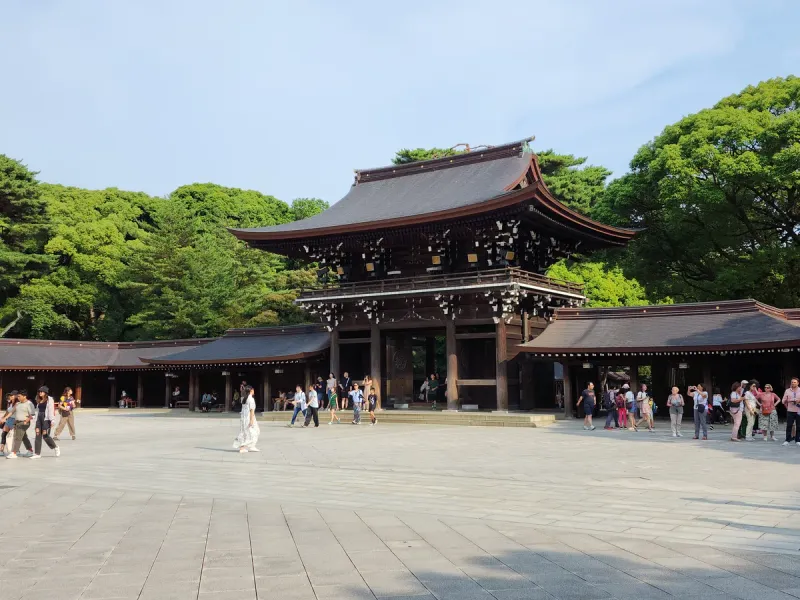
Walking from the chaos of Harajuku into the forest surrounding Meiji Jingu is one of the most disorienting transitions in Tokyo. One minute you’re surrounded by crepe shops and teenagers in elaborate outfits, and the next you’re on a gravel path through 170 acres of towering trees that block out the city entirely. The shrine was built in 1920 to honour Emperor Meiji and Empress Shoken, and the surrounding forest was planted by volunteers who donated around 100,000 trees from across Japan. It’s now a mature, old-growth-feeling woodland right in central Tokyo. The main shrine complex is understated compared to the gilded temples of Kyoto, but that restraint is part of the appeal. If you visit on a weekend, there’s a decent chance you’ll see a traditional Shinto wedding procession. The bride in white, the priests chanting, the slow processional walk across the courtyard. It’s genuinely moving to witness, and completely free.

Meiji Jingu
2

Meiji Jingu

shrine Harajuku
4.6 Google 1-1 Yoyogikamizonocho, Shibuya City, Tokyo
  • Tokyo's most important Shinto shrine surrounded by 170-acre forest
  • Peaceful escape from city noise just steps from Harajuku
  • Free to enter including the inner garden area
Tip

Enter from the Harajuku side for the full tree-lined approach. Check the schedule for traditional wedding processions on weekends.

"Meiji Jingu is a tranquil oasis in the heart of Tokyo. The 10-minute walk through towering trees feels like entering another world entirely. Visitors frequently spot traditional Shinto wedding ceremonies on weekends."

3. Shibuya Crossing

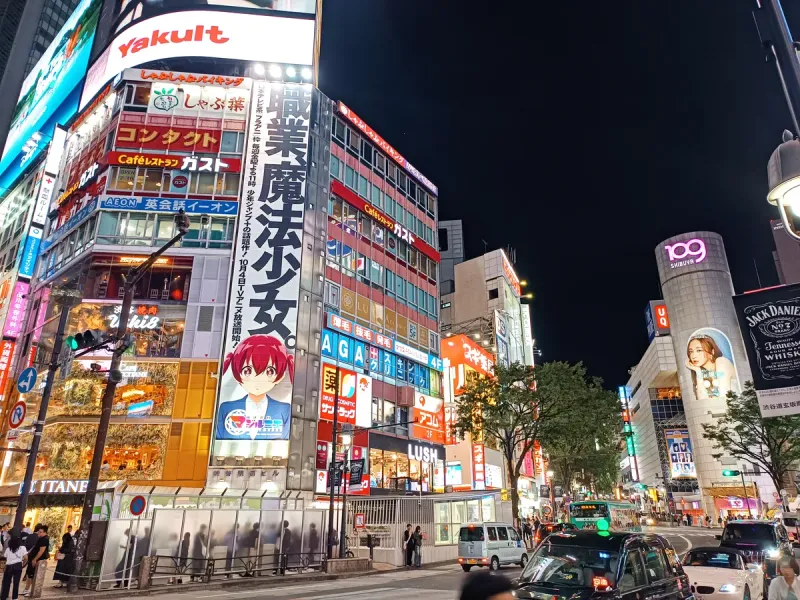
There’s no admission fee to watch 3,000 people cross an intersection simultaneously, and frankly there shouldn’t be, because you’ll be one of them. Shibuya Crossing is pure organized chaos. The traffic lights turn red in all directions, the walk signal beeps, and pedestrians pour in from every corner at once. It somehow works. Nobody collides. The whole thing resets every two minutes. The best time to experience it is after dark, when the neon signs and giant video screens turn the crossing into something that looks like every movie set in Tokyo ever made. For a free elevated view, head to the second-floor Starbucks in the Tsutaya building right at the crossing. You’ll need to buy a coffee, but the view is worth the ¥500. Pair this with a quick visit to the Hachiko statue right outside Shibuya Station.

Shibuya Crossing
3

Shibuya Crossing

landmark Shibuya
4.5 Google 2-2-1 Dogenzaka, Shibuya City, Tokyo
  • The world's busiest pedestrian crossing
  • Up to 3,000 people cross at once during peak times
  • Totally free to watch and walk
Tip

For the best overhead view, head to the Shibuya Sky observation deck or the free Starbucks on the second floor of Tsutaya building at the crossing.

"Shibuya Crossing is an experience that never gets old. Watching thousands of people navigate the scramble from multiple directions is mesmerizing, especially after dark when the neon lights are blazing."

4. Imperial Palace East Gardens

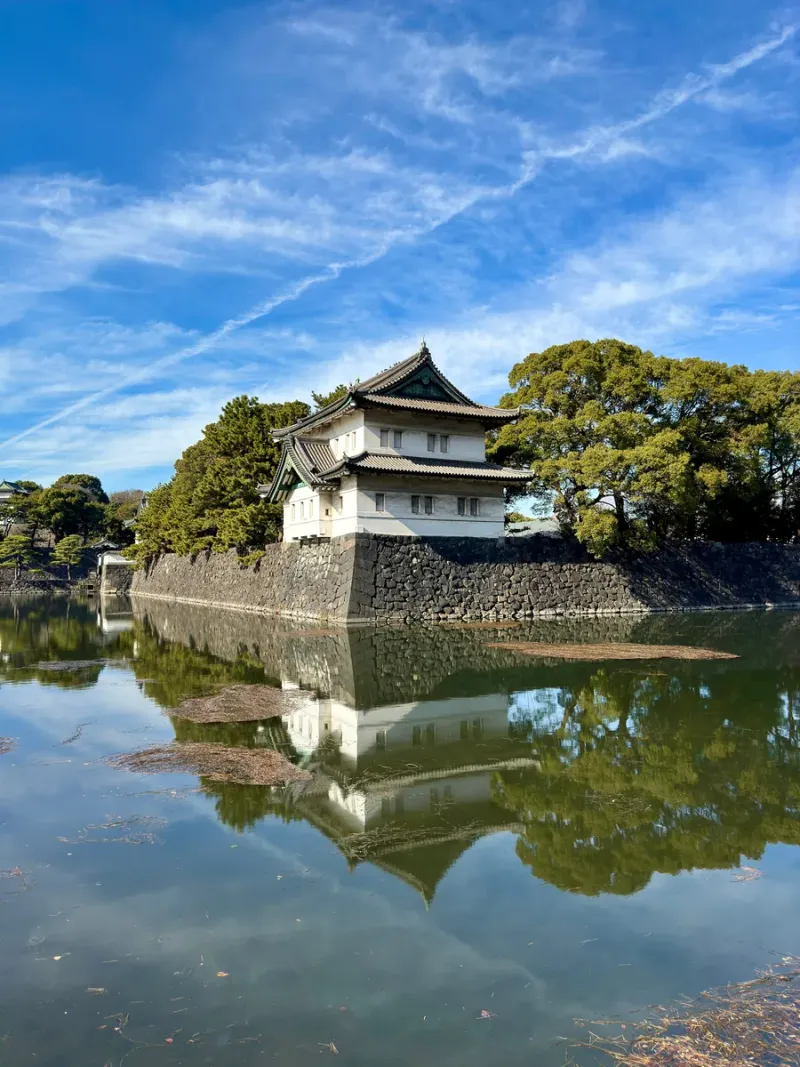
The Imperial Palace itself is off-limits most of the year, but the East Gardens are open to the public and completely free. This was the site of Edo Castle, the seat of the Tokugawa shoguns for over 250 years, and you can still see the massive stone walls and deep moat that once protected it. The gardens themselves are immaculately maintained, shifting dramatically with the seasons. Cherry blossoms in spring, irises in early summer, fiery maples in autumn. The Ninomaru Garden is the highlight, a traditional Japanese garden with a pond, sculpted pine trees, and a stillness that makes you forget you’re surrounded by one of the world’s biggest cities. The gardens are closed on Mondays and Fridays, so plan accordingly. Enter through the Otemon Gate, which is a short walk from Tokyo Station.

Imperial Palace East Gardens
4

Imperial Palace East Gardens

park Chiyoda
4.4 Google 1-1 Chiyoda, Chiyoda City, Tokyo
  • Free public gardens on the grounds of the Imperial Palace
  • Beautiful seasonal flowers and traditional Japanese landscaping
  • Remains of Edo Castle including the stone walls and moat
Tip

Enter through the Otemon Gate. Closed Mondays and Fridays. Bring your passport as ID is sometimes checked.

"The East Gardens offer a peaceful retreat in the centre of Tokyo with well-maintained Japanese gardens, seasonal blooms, and fascinating Edo Castle ruins."

5. Tsukiji Outer Market

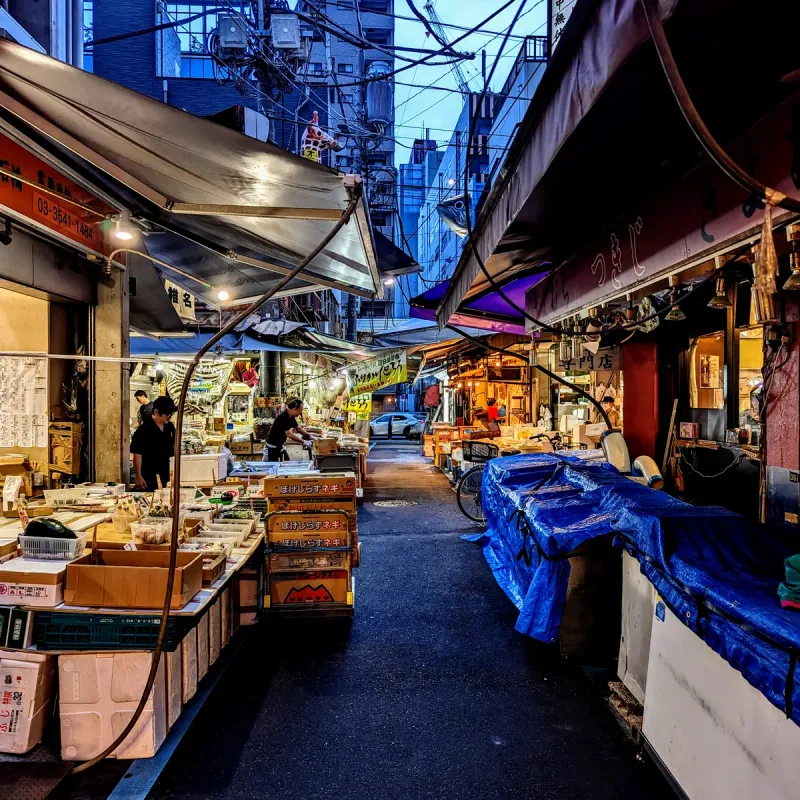
The inner wholesale market moved to Toyosu in 2018, but the Tsukiji Outer Market is still very much alive and still very much free to wander. This is where chefs and locals have come to buy fish, vegetables, and kitchen tools for decades, and the energy hasn’t faded. The narrow lanes are packed with vendors grilling scallops, slicing sashimi, and rolling tamagoyaki (Japanese omelette) on long rectangular pans right in front of you. You could technically walk through without spending anything, but let’s be realistic. A piece of fresh tuna on a stick for ¥500 or a warm tamagoyaki for ¥200 is going to be very hard to refuse. Even so, the atmosphere and the spectacle are the real draw. Go early, between 7 and 10 AM, for the best energy. Most vendors are cash only. If you’re eating here on a budget, check our cheap eats in Tokyo guide for more recommendations nearby.

Tsukiji Outer Market
5

Tsukiji Outer Market

market Tsukiji
4.2 Google 4-16-2 Tsukiji, Chuo City, Tokyo
  • Hundreds of food stalls and vendors in Tokyo's famous market district
  • Free to walk around and browse
  • Fresh seafood, tamagoyaki, and street snacks at stall prices
Tip

Go between 7 AM and 10 AM for peak atmosphere. Most vendors are cash only.

"Even after the inner wholesale market moved to Toyosu, the outer market remains a vibrant food destination. The energy of vendors calling out to customers and the smell of fresh seafood grilling make it worth visiting."

6. Nakamise Shopping Street

Nakamise-dori has been the approach to Senso-ji since the 1600s, making it one of Japan’s oldest shopping streets. It stretches about 250 metres from the Kaminarimon gate to the temple, lined on both sides with around 90 stalls selling rice crackers, traditional fans, wooden sandals, and enough souvenir chopsticks to stock a small warehouse. The trick is knowing that the best stuff isn’t always on the main drag. Duck into the side streets (especially Denpoin-dori to the west) for smaller shops with less markup and more interesting finds. The ningyo-yaki, little cake-like sweets shaped like temples and lanterns, are the signature snack here and cost almost nothing. Even if you don’t buy a thing, the walk itself is a sensory overload of colour, smell, and noise that captures something essential about Tokyo.

6

Nakamise Shopping Street

market Asakusa
4.3 Google 1-36-3 Asakusa, Taito City, Tokyo
  • One of Japan's oldest shopping streets dating to the 1600s
  • Connects Kaminarimon gate to Senso-ji temple
  • Free to walk with affordable street food and souvenirs
Tip

The shops closest to the temple gate are the most touristy. Wander the side streets for better finds.

"Nakamise-dori is a colourful, bustling shopping street lined with around 90 stalls selling traditional crafts, snacks, and souvenirs."

7. Ueno Park

Ueno Park is not just a park. It’s an entire cultural district disguised as green space. Within its borders you’ll find the Tokyo National Museum, the National Museum of Western Art, the Ueno Zoo, several temples, a massive lotus pond, and enough cherry trees to make late March feel like a pink-tinted dream. The park itself is always free, and several of the museums offer free admission days throughout the year (the National Museum of Western Art has a free permanent collection). Shinobazu Pond is the sleeper highlight. In summer, the entire surface is covered in lotus flowers so dense you can barely see the water. In winter, migratory birds take over. The Toshogu Shrine inside the park, with its gold-leafed gate, is worth a detour. Ueno is also a great jumping-off point for exploring Yanaka, the old-town neighbourhood to the north that feels like Tokyo from 50 years ago.

Ueno Park
7

Ueno Park

park Ueno
4.4 Google Uenokoen, Taito City, Tokyo
  • Tokyo's most famous park with temples, shrines, and a pond
  • Home to several museums (some with free admission days)
  • Prime cherry blossom viewing spot
Tip

Cherry blossom season (late March to mid-April) transforms the park, but it's gorgeous year-round. The Shinobazu Pond lotus blooms peak in August.

"Ueno Park is a sprawling green space that combines nature, culture, and history. The Shinobazu Pond, Toshogu Shrine, and multiple museums make it easy to spend half a day here."

8. Nezu Shrine

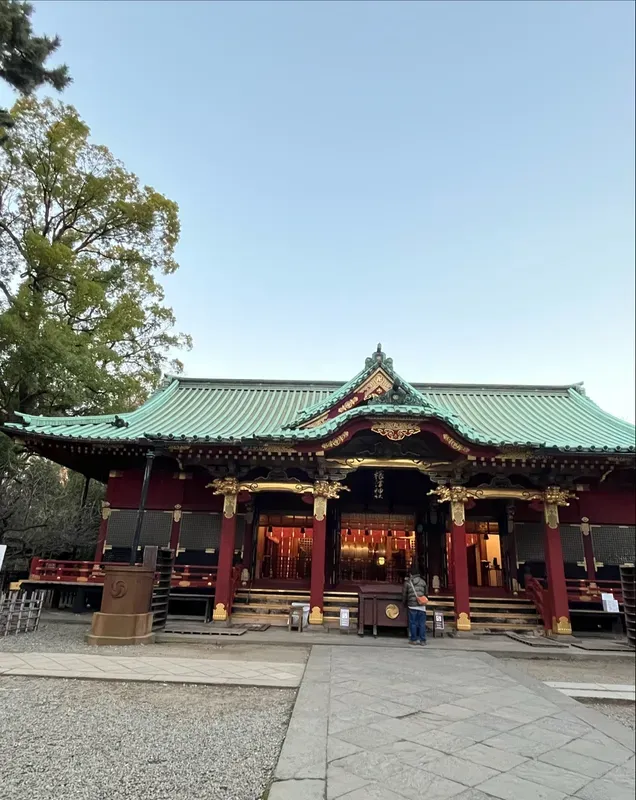
If you’ve seen photos of the famous red torii gate tunnels at Kyoto’s Fushimi Inari and thought “I want that, but without 10,000 other tourists,” Nezu Shrine is your answer. This 300-year-old shrine in the quiet Bunkyo ward has its own corridor of vermillion torii gates winding up a hillside, and on most days you’ll share it with maybe a dozen other visitors. The shrine dates to 1706 and is one of the oldest in Tokyo, with gorgeous traditional architecture that somehow survived the firebombing of World War II. The real magic happens in April and May during the azalea festival, when around 3,000 azalea bushes of 100 different varieties bloom simultaneously across the hillside. It’s one of the most spectacular free sights in the city, and most tourists don’t even know it exists.

Nezu Shrine
8

Nezu Shrine

shrine Nezu
4.4 Google 1-28-9 Nezu, Bunkyo City, Tokyo
  • Stunning tunnel of vermillion torii gates rivalling Kyoto's Fushimi Inari
  • One of Tokyo's oldest shrines dating to 1706
  • Far fewer tourists than comparable Kyoto shrines
Tip

Visit in April/May for the famous azalea festival when thousands of bushes bloom across the hillside.

"Nezu Shrine is a hidden gem that offers a torii gate tunnel experience without the crowds of Kyoto."

9. Yoyogi Park

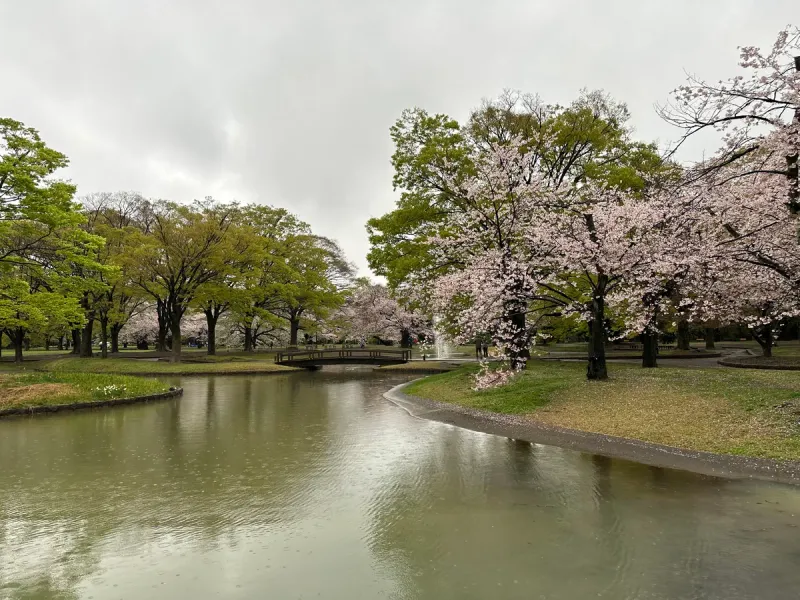
Yoyogi Park is where Tokyo goes to be itself. On weekdays it’s a calm green space popular with joggers and dog walkers. On Sundays it transforms into an open-air variety show. Near the Harajuku entrance you’ll find rockabilly dancers in full 1950s pompadours and leather jackets doing choreographed routines to Elvis. Deeper in, drummers form circles, musicians busk, and cosplayers pose for photos. It’s free entertainment that you genuinely could not pay for anywhere else. The park sits right next to Meiji Jingu, so the natural move is to visit the shrine first, then wander into Yoyogi afterwards. In cherry blossom season, the park fills with picnicking groups doing hanami (flower viewing), which is one of the most purely joyful things you can witness in Japan. Grab a bento from a convenience store and join in. Nobody will mind.

Yoyogi Park
9

Yoyogi Park

park Harajuku
4.4 Google 2-1 Yoyogikamizonocho, Shibuya City, Tokyo
  • Huge green space next to Meiji Jingu and Harajuku
  • Weekend performers, musicians, and cosplayers
  • Perfect for picnics and people-watching
Tip

Sunday afternoons bring out rockabilly dancers near the entrance, plus musicians and performers throughout the park.

"Yoyogi Park is where Tokyo comes to relax. On weekends it transforms into an open-air performance venue with musicians, dancers, and cosplayers."

10. Hachiko Statue

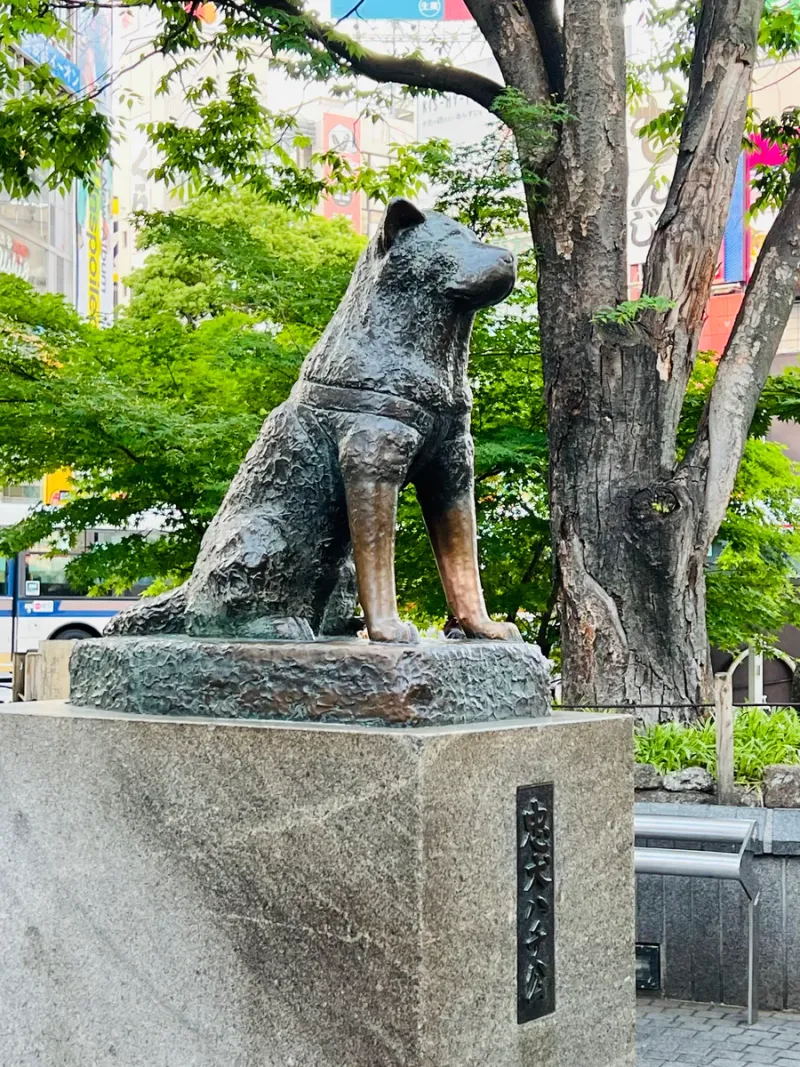
Let’s be honest: the Hachiko statue is small. It’s a bronze dog on a pedestal outside Shibuya Station, and it’s always surrounded by people taking selfies. But the story behind it is the reason you stop. Hachiko was an Akita who walked his owner to Shibuya Station every morning and returned every evening to greet him. When the owner died suddenly in 1925, Hachiko kept coming back to the station every single day for nearly 10 years, waiting for someone who would never return. The statue went up in 1934, and it’s been Tokyo’s most famous meeting spot ever since. Take your photo, appreciate the story, and then walk to Shibuya Crossing, which is literally steps away. The two make a natural free pairing.

Hachiko Statue
10

Hachiko Statue

landmark Shibuya
4.4 Google 2-1 Dogenzaka, Shibuya City, Tokyo
  • Tokyo's most famous meeting spot honouring the loyal dog Hachiko
  • Iconic photo opportunity right outside Shibuya Station
  • Free and accessible 24/7
Tip

Snap a photo quickly and move on. The real value is pairing this with Shibuya Crossing, which is steps away.

"The bronze statue of Hachiko is small but carries enormous sentimental weight. It's always surrounded by people taking photos and using it as a meeting point."

11. Ginza Six Rooftop Garden

Most people come to Ginza to spend money. The Ginza Six Rooftop Garden is the exception. Take the elevator to the top of this luxury shopping complex and you’ll find a beautifully landscaped garden with benches, greenery, and views across the Ginza skyline. It’s open from 7 AM to 11 PM, it’s completely free, and hardly anyone knows about it. The garden is surprisingly spacious and well-maintained, with enough seating to actually sit and enjoy the view rather than just snap a photo and leave. On the way up, the building also hosts rotating contemporary art installations in its common spaces, all free. It’s the kind of place that makes you feel like you’ve found a secret, even though it’s on top of one of the most visible buildings in the neighbourhood. For more free views, the Tokyo Metropolitan Government Building in Shinjuku has a 45th-floor observation deck that’s open to the public at no charge, with panoramic views that stretch to Mount Fuji on clear days. Check out our best views in Tokyo guide for the full rundown.

11

Ginza Six Rooftop Garden

park Ginza
4.8 Google 6-10-1 Ginza, Chuo City, Tokyo
  • Stunning rooftop garden above Ginza's luxury shopping district
  • Free entry with excellent city views
  • Quiet escape from the busy streets below
Tip

Take the elevator to the roof. Open 7 AM to 11 PM. Combine with a browse of the free art installations inside the building.

"The rooftop garden at Ginza Six is a surprisingly peaceful spot with manicured greenery, benches, and views across the Ginza skyline."

12. Maison Hermes Le Forum

A free contemporary art gallery inside a luxury fashion house sounds like it should have a catch, but it doesn’t. Le Forum occupies the upper floors of the Hermes flagship in Ginza, a building designed by Pritzker Prize-winning architect Renzo Piano using 13,000 custom glass blocks that glow like a lantern at night. The gallery space is intimate and beautifully lit, with rotating exhibitions that lean toward conceptual and installation art. Past shows have featured everything from immersive light installations to delicate paper sculptures. The quality is genuinely high. This isn’t a marketing exercise with some art tacked on. It’s a proper gallery that happens to be funded by a fashion house. Exhibitions change every few months, so check what’s on before you go. Enter through the side entrance and take the elevator to the 8th floor.

12

Maison Hermes Le Forum

gallery Ginza
4.5 Google 5-4-1 Ginza, Chuo City, Tokyo
  • Free contemporary art gallery inside the Hermes flagship
  • Renzo Piano-designed glass block building is art in itself
  • Rotating exhibitions featuring international artists
Tip

Enter from the side entrance on the 8th floor. Exhibitions rotate every few months.

"Le Forum is a small but beautifully curated gallery space on the upper floors of the Hermes building. The rotating exhibitions are always thoughtfully presented."

13. Asakusa Shrine

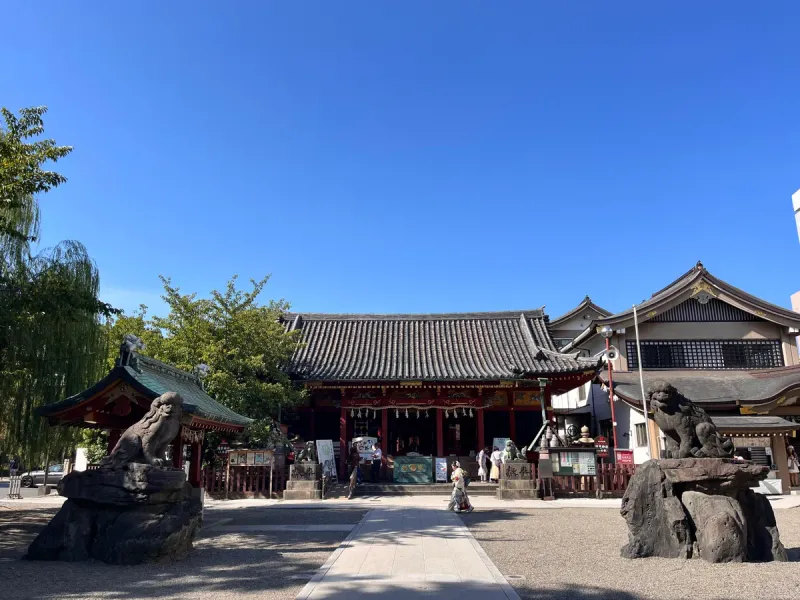
Asakusa Shrine sits right next to Senso-ji, and most visitors walk straight past it without realizing they’re missing something special. While Senso-ji is Buddhist, Asakusa Shrine is Shinto, and the contrast between the two is part of what makes the Asakusa area so fascinating. The shrine is notably calmer than its famous neighbour. You can actually stand in the courtyard and take a breath without someone’s selfie stick in your peripheral vision. The architecture is beautiful, with traditional vermillion-painted buildings that date to 1649. But the real reason to know about Asakusa Shrine is the Sanja Matsuri, held every May. It’s one of Tokyo’s biggest and rowdiest festivals, with over 100 portable shrines (mikoshi) carried through the streets by teams of chanting, sake-fuelled locals. If your trip coincides with Sanja Matsuri, do not miss it. It’s free, it’s loud, and it’s one of the most authentic cultural experiences you can have in Tokyo.

Asakusa Shrine
13

Asakusa Shrine

shrine Asakusa
4.5 Google 2-3-1 Asakusa, Taito City, Tokyo
  • Beautiful Shinto shrine right beside the more famous Senso-ji
  • Home to the Sanja Matsuri, one of Tokyo's wildest festivals
  • Far less crowded than its Buddhist neighbour
Tip

Sits right next to Senso-ji but is often overlooked. Visit both together. This is where the Sanja Matsuri festival happens in May.

"Asakusa Shrine is a tranquil Shinto shrine that often gets overshadowed by the neighbouring Senso-ji temple. Those who visit appreciate the calmer atmosphere."

Tips for Free Sightseeing in Tokyo

Get a Suica or Pasmo card. While trains aren’t free, a rechargeable IC card makes getting between these free attractions painless. A day of temple-hopping across Asakusa, Harajuku, and Shibuya costs maybe ¥500 in train fares.

Time your visits. Temples and shrines are best early morning or late afternoon. Markets peak between 7 and 10 AM. Parks and gardens shine on weekday afternoons when crowds thin out.

Layer your neighbourhoods. Several of these spots cluster naturally. Senso-ji, Nakamise, and Asakusa Shrine are all within a five-minute walk. Meiji Jingu and Yoyogi Park share a border. Shibuya Crossing and Hachiko are steps apart. Ginza Six and Maison Hermes Le Forum are in the same neighbourhood. Plan your day around these clusters to save time and train fare.

Don’t skip the TMG observation deck. The Tokyo Metropolitan Government Building in Shinjuku has a free 45th-floor observation deck that’s open until 11 PM. On clear days, you can see Mount Fuji. It’s one of the best free viewpoints in the city. More on that in our best views in Tokyo guide.

Combine free and paid. A morning at Meiji Jingu and Yoyogi Park pairs perfectly with an afternoon of window shopping (or real shopping) in Harajuku and Omotesando. Free sightseeing by day, great food by night. Speaking of which, our things to do in Tokyo guide has the full picture.

Frequently Asked Questions

Is Tokyo expensive to visit?
Tokyo has a reputation for being expensive, but it's surprisingly affordable if you know where to look. Dozens of world-class temples, shrines, parks, and markets cost nothing to enter. The Tokyo Metropolitan Government Building has a free observation deck with views rivaling paid alternatives. Street food at places like Tsukiji Outer Market lets you eat well for under ¥1,000.
Are temples and shrines in Tokyo free to enter?
Most temples and shrines in Tokyo are completely free to enter, including major ones like Senso-ji, Meiji Jingu, Asakusa Shrine, and Nezu Shrine. A few special inner gardens or treasure halls may charge a small fee (usually ¥200-500), but the main grounds and worship areas are always free.
What is the best free observation deck in Tokyo?
The Tokyo Metropolitan Government Building in Shinjuku has two free observation decks on the 45th floor, 202 meters up. On clear days you can see Mount Fuji. The north deck is open until 11 PM, making it one of the best free nighttime viewpoints in the city.
Can you visit Tsukiji Market for free?
Yes. The Tsukiji Outer Market is completely free to walk around. You'll pay for food if you want to eat (most items cost ¥200-1,000), but browsing the stalls, watching vendors prep seafood, and soaking in the atmosphere costs nothing.

More Tokyo Guides

3-Day Tokyo Itinerary (2026)

Itinerary

Three days, three pairs of neighbourhoods. This itinerary groups Tokyo by geography so you spend less time underground and more time eating, photographing, and getting properly lost.

14 places 3 days

5-Day Tokyo Itinerary (2026)

Itinerary

Five days, five neighbourhoods. This itinerary groups Tokyo by geography so you spend less time on trains and more time eating, exploring, and getting lost in the right way.

25 places 5 days

Things to Do in Asakusa, Tokyo (2026 Neighbourhood Guide)

Guide

Asakusa is Tokyo at its most traditional. While most of the city rebuilt itself into glass and steel after the war, this neighbourhood held onto its wooden shopfronts, its temple rituals, and its open-air drinking culture. Senso-ji has been standing here since the seventh century. Nakamise has been selling rice crackers and souvenirs since the Edo period. And Hoppy Street has been serving cheap beer alternatives to salarymen since the 1940s. It's the part of Tokyo that still feels like old Tokyo, and it's one of the few neighbourhoods where you can spend an entire day without running out of things to see, eat, and do.

13 places

Best Breakfast in Tokyo (2026) - From 6AM Sushi to Kissaten Toast

Vibe

Tokyo is one of the few cities where eating sushi at 6 AM is completely normal. Breakfast here spans everything from a three-piece sashimi set at a Tsukiji fish stall to a ¥500 kissaten morning set with toast so thick it could double as a pillow. This guide covers 11 ways to start your day, from the traditional to the trendy.

11 places

11 Best Brunch Spots in Tokyo (2026)

Vibe

Tokyo takes breakfast seriously, just not in the way you might expect. The city runs on kissaten morning sets, fluffy souffle pancakes that take 20 minutes to cook, and hotel buffets that could double as Michelin-level tasting menus. This guide covers all of it.

11 places

15 Best Cafes in Tokyo (2026)

Guide

Tokyo has over 550 cafes in our database alone, ranging from century-old kissaten to cafes where a capybara sits in your lap. These 15 cover matcha specialists, third-wave roasters, themed experiences, and traditional tea shops.

15 places

Save these places to your Tokyo trip

Tourli turns travel guides into actionable day plans. Save places, get walking directions, and share your itinerary — all in one app.