11 Best Views in Tokyo: Observation Decks, Rooftops & Free Spots (2026)

Tokyo has more observation decks than any city on earth. The question is not whether to go up, it is which one. These 11 spots cover the full range, from the open-air rooftop buzz of Shibuya Sky to the free observatory at the Tokyo Metropolitan Government Building, plus rooftop gardens and a classic tower that still earns its keep.

Places
11
Avg Rating
4.3
City
Tokyo

Tokyo has more observation decks per square kilometre than any city on earth. Towers, skyscrapers, government buildings, department store rooftops. Everyone wants to sell you a view of the skyline, and honestly, most of them deliver. The real question is not whether to go up. It is which one deserves your time and your yen.

The short version: Shibuya Sky is the best all-around experience, especially at night. Tokyo Skytree is the tallest and best for daytime panoramas. Tokyo Tower is the most charming. And the Tokyo Metropolitan Government Building is free, which matters when you are already spending a fortune on omakase. This guide covers all of them, plus a handful of rooftop gardens and lesser-known spots that round out the picture.

A word on weather. Tokyo’s skyline views are entirely weather-dependent. On a clear winter day, you can see Mt Fuji from multiple observation decks. On a humid summer afternoon, you can barely see the next ward over. December through February gives you the best odds. If Fuji visibility matters to you, check the forecast and go early in the morning when haze is thinnest.

1. Shibuya Sky

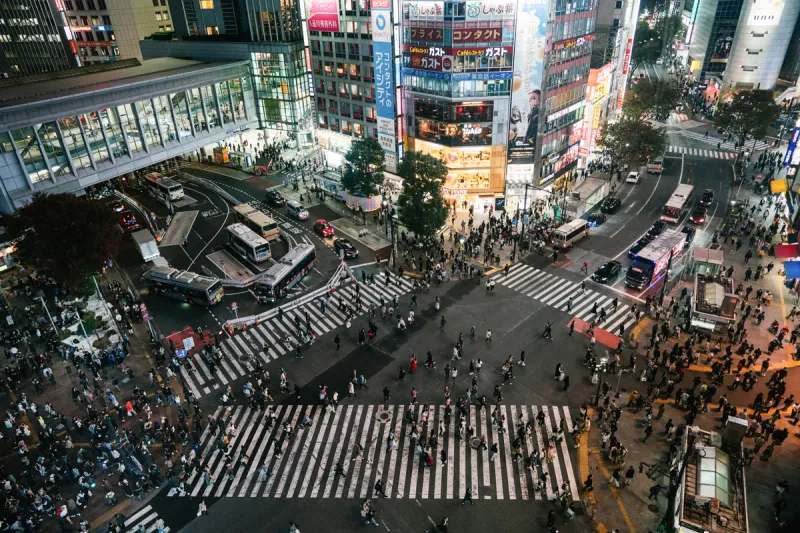
If you only go up one observation deck in Tokyo, make it this one. Shibuya Sky sits on top of Shibuya Scramble Square, 230 metres above the world’s most famous pedestrian crossing. The indoor section on the 46th floor is fine, but the real draw is the open-air rooftop on the 47th floor. No glass barriers. Just you, the wind, and a 360-degree view that stretches from Mt Fuji to Tokyo Skytree. There is a rooftop bar up here, and drinking a cocktail while staring down at the Shibuya Crossing ant farm below is one of those experiences that justifies the ticket price. The downside is the price itself, which has crept up since opening, and the queues on weekends can be painful. Book online in advance and go around sunset. You will get the daytime view, the golden hour, and the neon-lit nightscape all in a single visit.

1

Shibuya Sky

attraction Shibuya
4.6 Google 4.4 TripAdvisor 60-90 mins Shibuya Scramble Square, 2-24-12, Shibuya, Tokyo
  • 360-degree open-air views from 230 metres above Shibuya Crossing
  • Rooftop bar serving cocktails with a skyline backdrop
  • Views of Tokyo Tower, Skytree, and Mt Fuji on clear days
Tip

Book online in advance. Visit around sunset for the best of both worlds. Bring a jacket for the open-air rooftop even in summer.

"The open-air observation deck atop Shibuya Scramble Square is widely considered Tokyo's best viewpoint. Night visits around 8 PM are most spectacular."

2. Tokyo Skytree

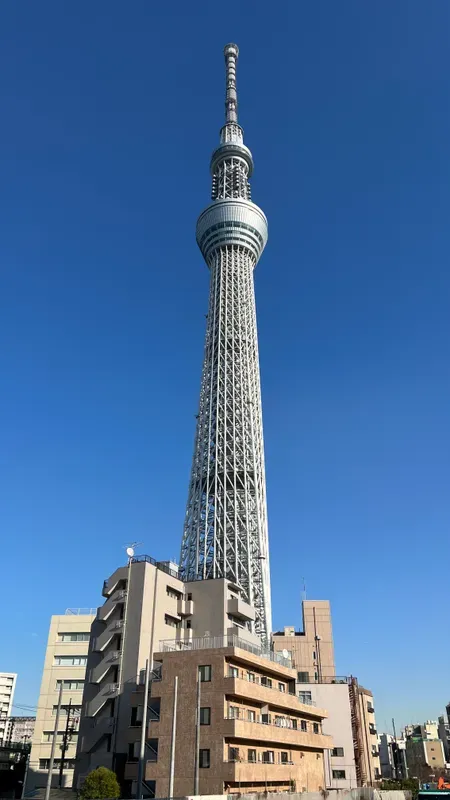
Japan’s tallest structure at 634 metres, and there is nothing subtle about it. Skytree has two observation decks: the Tembo Deck at 350 metres and the Tembo Galleria at 450 metres, which includes a glass floor that will test your nerve. The views are genuinely different from Shibuya Sky because Skytree sits on the east side of the city, giving you a perspective that includes the Sumida River, the flat expanse of eastern Tokyo, and on clear days, Mt Fuji floating in the western distance. The problem is that Skytree is a tourist machine. The base is a shopping mall. The queues are long. The combo ticket for both decks is expensive. And the viewing areas are enclosed behind glass, so you lose that open-air thrill. It is best on a clear weekday morning when you can actually see something and move around without bumping elbows. If you are coming from Asakusa (which you should, since Senso-ji is right there), it makes a logical pairing.

Tokyo Skytree
2

Tokyo Skytree

attraction Oshiage
4.4 Google 4.2 TripAdvisor 60-90 mins 1-1-2 Oshiage, Sumida City, Tokyo
  • Japan's tallest structure at 634 metres
  • Two observation decks at 350m and 450m
  • Glass floor panel on the Tembo Galleria level
Tip

Buy a combo ticket for both observation decks. Visit on a weekday morning for shorter queues and the best chance of seeing Mt Fuji.

"Impressive height and panoramic views, though some visitors find it overly commercialised. The glass floor is a highlight. Queues can be brutal on weekends."

3. Tokyo Tower

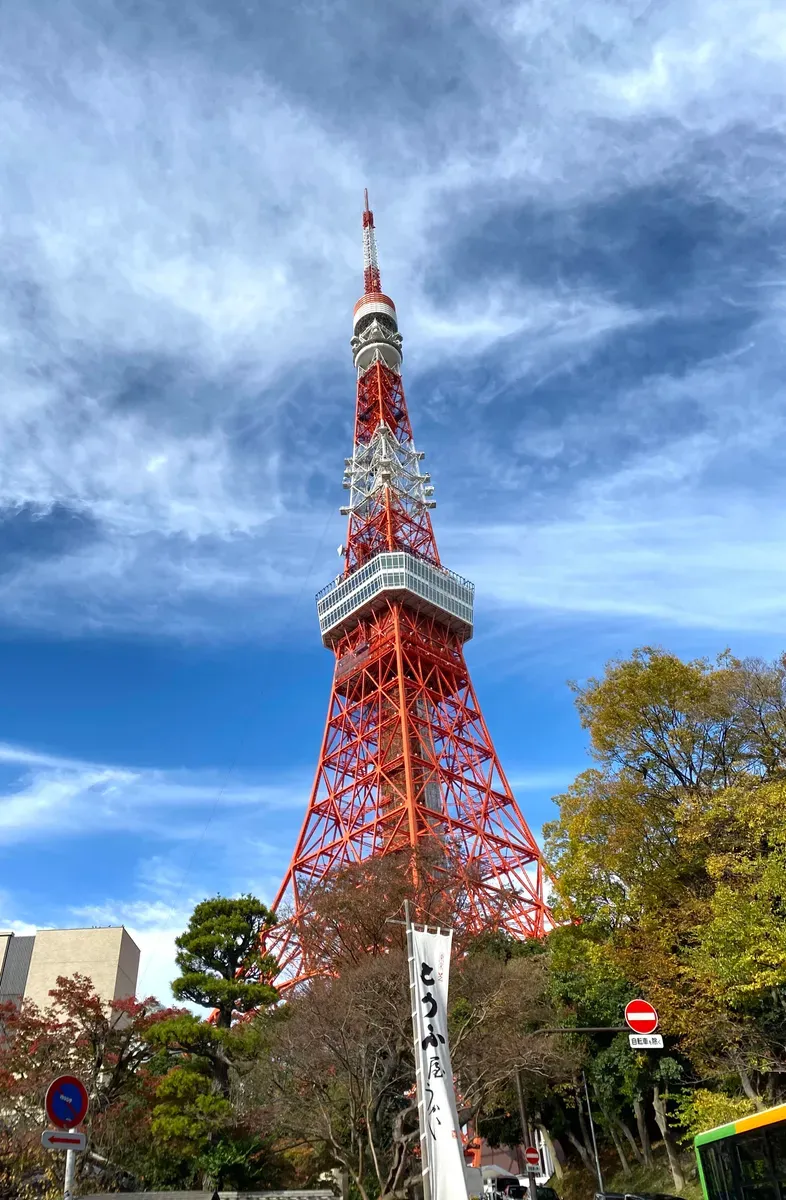
Opened in 1958, painted international orange, and still holding its own against every skyscraper that has gone up since. Tokyo Tower is 333 metres tall, but its main observation deck sits at just 150 metres, which sounds modest until you realise that puts you right in the thick of the skyline rather than above it. The views feel more intimate than Skytree’s because you are level with the surrounding buildings rather than looking down on them from outer space. The best time to visit is dusk. You get the daylight view first, then the tower itself lights up orange, and the city transitions to its nighttime form around you. There is a top deck at 250 metres too, but the main deck is honestly enough. Tokyo Tower also has something Skytree will never have: nostalgia. It was built to signal Japan’s post-war recovery, and it still looks like it belongs in a Godzilla film in the best possible way.

Tokyo Tower
3

Tokyo Tower

attraction Shiba
4.5 Google 45-60 mins 4-2-8 Shibakoen, Minato City, Tokyo
  • Tokyo's original 1958 observation tower, more intimate than Skytree
  • Great at dusk when the tower glows orange against the skyline
  • Less crowded than Skytree with a more relaxed atmosphere
Tip

The main deck at 150m is enough for most people. Go at dusk when the tower itself lights up orange.

"Visitors love the retro charm and more personal feel compared to Skytree. The 150m main deck provides excellent views. Dusk visits are highly recommended."

4. Tokyo Metropolitan Government Building (Free)

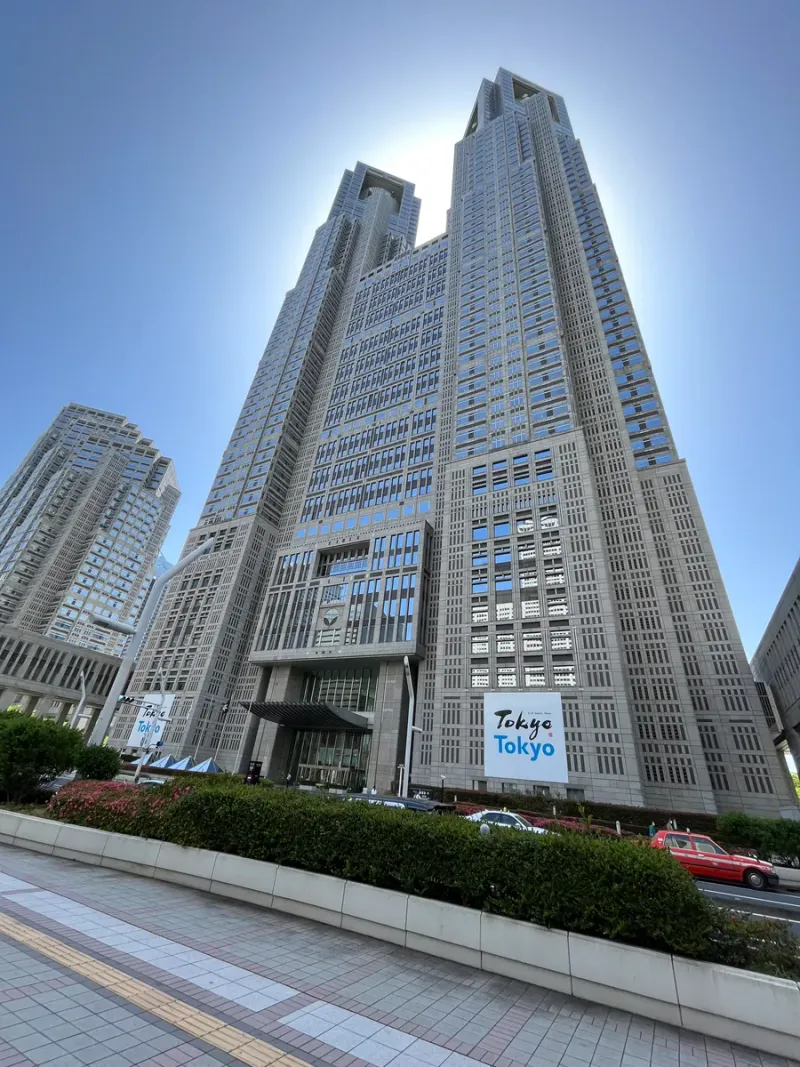
The tallest free observation deck in Tokyo, and honestly one of the best viewpoints, period. The twin towers of the Tokyo Metropolitan Government Building in Shinjuku each have an observatory on the 45th floor at 202 metres, and you do not pay a single yen to go up. The views cover Mt Fuji to the west, Tokyo Tower and Skytree to the east, and the endless sprawl of the Kanto Plain to the north. The South Tower is usually less crowded, and it stays open until 5:30 PM while the North Tower is open until 11 PM. There is a small cafe on the observation floor if you want to sit and stare for a while. The catch? It is a government building, so the atmosphere is more municipal waiting room than luxury observatory. But for zero cost and views that rival the paid decks, nobody is complaining.

Tokyo Metropolitan Government Building
4

Tokyo Metropolitan Government Building

attraction Shinjuku
4.3 Google 30-45 mins 2-8-1 Nishishinjuku, Shinjuku City, Tokyo
  • Completely free observation deck at 202 metres
  • Views of Mt Fuji, Tokyo Tower, and Skytree from the 45th floor
  • Open until 11 PM (North Tower) with a small cafe
Tip

The South Tower is less crowded than the North. Visit on a winter morning for the clearest Mt Fuji views. Free entry.

"The best free viewpoint in Tokyo. Both the North and South observation decks on the 45th floor deliver panoramic views. The South Tower tends to be quieter."

5. Mori Art Museum / Tokyo City View

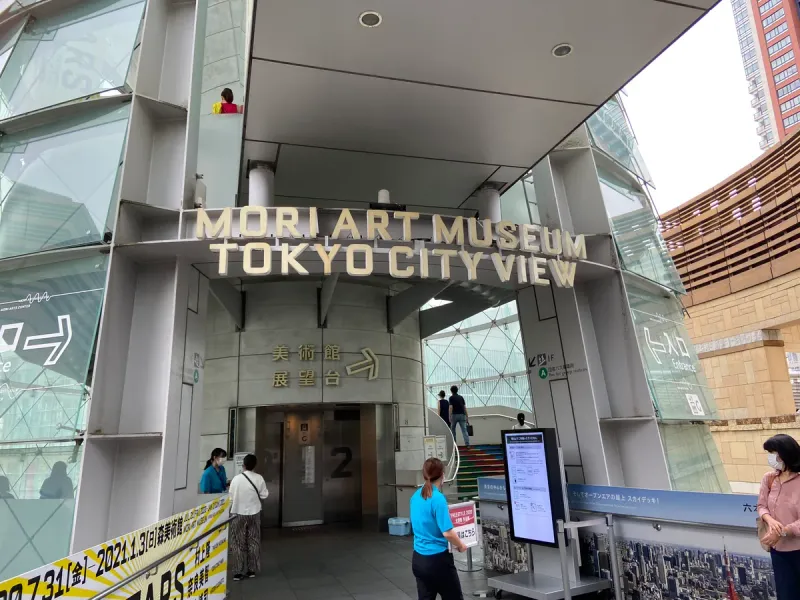
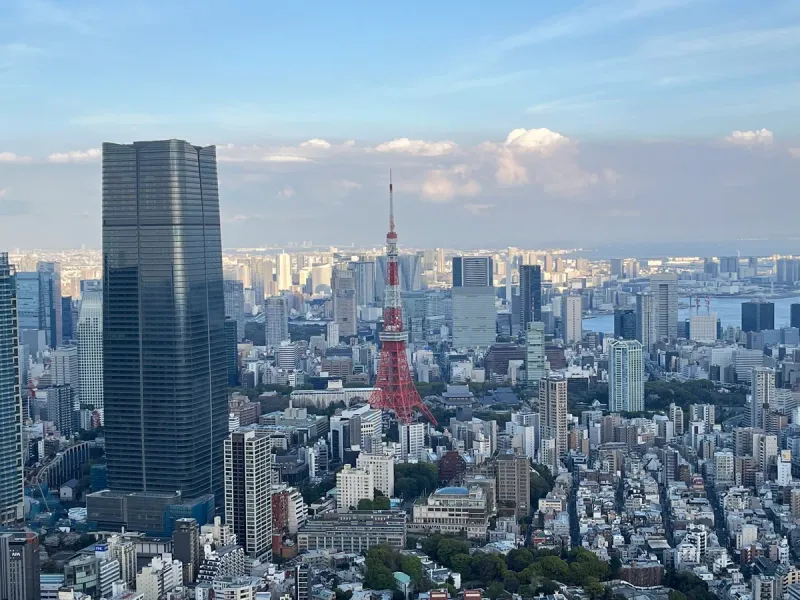
This is the two-for-one option, and it is clever. Your ticket to the Mori Art Museum on the 53rd floor of Roppongi Hills Mori Tower includes access to the Tokyo City View observatory. So you get a world-class contemporary art exhibition and one of the best indoor views in the city for one price. The angle on Tokyo Tower from up here is arguably the most photographed skyline shot in Tokyo, the one you see on every Instagram account and travel blog. The exhibitions rotate and range from excellent to extraordinary. If you want open air, there is a Sky Deck on the 54th floor roof for an extra fee. It is worth it on clear days but closes in high winds. The combination of art and skyline makes this the most culturally rewarding observation deck in the city, even if the view itself ranks slightly below Shibuya Sky for pure drama.

Mori Art Museum / Tokyo City View
5

Mori Art Museum / Tokyo City View

museum Roppongi
4.3 Google 90-120 mins Roppongi Hills Mori Tower 53F, 6-10-1 Roppongi, Minato City, Tokyo
  • Combine world-class art exhibitions with 53rd-floor panoramic views
  • The most photogenic angle of Tokyo Tower from any indoor observatory
  • Sky Deck rooftop on the 54th floor for open-air views
Tip

The museum ticket includes observatory access. The Sky Deck rooftop costs extra but is worth it on clear days.

"A two-in-one experience that pairs excellent rotating art exhibitions with one of Tokyo's best indoor observatories. The Tokyo Tower view from here is iconic."

6. Roppongi Hills Sky Deck

If you are already at the Mori Art Museum, it is worth paying the supplement for the Sky Deck. This open-air rooftop on the 54th floor of Mori Tower gives you unobstructed 360-degree views without any glass in the way. The wind can be fierce up here, which is part of the appeal. On clear nights, the Sky Deck also hosts stargazing events, which sounds absurd in a city of 14 million people but apparently Tokyo’s light pollution is not as bad as you would think at that altitude. The downside: it closes in bad weather, and “bad weather” can mean anything from rain to moderately strong wind. Check conditions before you make the trip up. No tripods allowed, which frustrates photographers.

Roppongi Hills Sky Deck
6

Roppongi Hills Sky Deck

attraction Roppongi
4.2 Google 30-45 mins Roppongi Hills Mori Tower Rooftop, Minato City, Tokyo
  • Open-air rooftop on the 54th floor of Mori Tower
  • Unobstructed 360-degree views without glass
  • Popular spot for astrophotography events
Tip

The rooftop Sky Deck closes in bad weather and strong wind. Check conditions before going. No tripods allowed.

"The open-air Sky Deck above the indoor observatory is a thrill. Wind can be fierce. Some visitors feel the extra fee on top of the museum ticket is steep."

7. Mag’s Park (Shibuya Crossing from Above)

Everyone tells you to grab a window seat at the Starbucks overlooking Shibuya Crossing, but there is a better option right next door. Mag’s Park is the rooftop of the Magnet by Shibuya 109 building, and it gives you a direct bird’s eye view straight down onto the crossing. The perspective is different from Shibuya Sky. You are much lower, so the human detail is clearer. You can actually watch the traffic lights change and see the wave of pedestrians flood the intersection from all five directions. There is a small entry fee, drinks are available on the roof, and the space is compact enough that you never feel like you are in a tourist attraction. It is just a rooftop with a really good view. Pair it with a visit to Shibuya Sky for the high-altitude version of the same neighbourhood.

Mag's Park (Shibuya Crossing View)
7

Mag's Park (Shibuya Crossing View)

attraction Shibuya
4.0 Google 20-30 mins Magnet by Shibuya 109 Rooftop, 1-23-10 Jinnan, Shibuya, Tokyo
  • Direct rooftop view looking down onto Shibuya Crossing
  • Less crowded alternative to the Starbucks window seat
  • Small rooftop with drinks available
Tip

Small entry fee. The view straight down onto Shibuya Crossing is better than the Starbucks window seat everyone fights over.

"A lesser-known rooftop right above Shibuya Crossing. The bird's eye view of the scramble is excellent. Space is limited but turnover is fast."

8. Ginza Six Rooftop Garden

Not every great view in Tokyo involves paying for an elevator ride to the 50th floor. The rooftop garden of Ginza Six, the upscale department store in the heart of Ginza, is free to access and surprisingly peaceful. You take the elevator up, step outside, and find yourself in a manicured garden with views across the Ginza rooftops. The skyline is not as dramatic as what you get from the towers, but that is sort of the point. This is a place to sit down, breathe, and look at the city from a human scale. It is also one of the highest-rated spots on this list with a 4.8 Google rating, which tells you something about how visitors feel when they find it. Combine it with shopping on the floors below or a walk through the Ginza district.

8

Ginza Six Rooftop Garden

attraction Ginza
4.8 Google 20-30 mins 6-10-1 Ginza, Chuo City, Tokyo
  • Free rooftop garden with skyline views over Ginza
  • Beautifully maintained green space above a luxury department store
  • Highest-rated rooftop garden in the area at 4.8 stars
Tip

Free to access. Take the elevator to the rooftop floor. A calm escape after shopping the floors below.

"A serene rooftop garden that surprises visitors with its size and calm atmosphere. The views are not the highest in Tokyo, but the combination of greenery and cityscape is unique."

9. KITTE Marunouchi Rooftop Garden

The rooftop terrace of the KITTE building, right next to Tokyo Station’s Marunouchi South Gate, gives you something none of the towers can: a direct view down onto Tokyo Station’s gorgeous red brick facade and the trains pulling in and out below. It is free. It is open until 9 PM. And it is the best spot in the city for trainspotting, if that is your thing (no judgment, it is surprisingly meditative). The terrace spans about 1,500 square metres, so there is plenty of room even when it is busy. The best time is twilight, when the station lights up and the surrounding Marunouchi office towers start to glow. No tripods allowed, so phone photographers have an advantage here. KITTE itself is a good shopping building with restaurants on the upper floors, and the free Intermediatheque museum on the second and third floors is worth a stop.

9

KITTE Marunouchi Rooftop Garden

attraction Marunouchi
4.1 Google 15-20 mins 2-7-2 Marunouchi, Chiyoda City, Tokyo
  • Free rooftop overlooking the red brick facade of Tokyo Station
  • Great for trainspotting and photography
  • Open until 9 PM with sunset lighting
Tip

Free entry. Best at twilight when Tokyo Station is lit up. Tripods are not allowed.

"A small but rewarding free rooftop with a unique angle on Tokyo Station. Photographers love the view of trains coming and going. Best visited at dusk."

10. Asakusa Tourist Information Center

You would never guess from the outside that this Kengo Kuma-designed building across from Senso-ji has a free observation floor on the 8th level. The space is tiny. The views are not panoramic. But what you get is a perfectly framed shot of Senso-ji’s Kaminarimon gate and the Tokyo Skytree rising behind it, ancient and futuristic in one frame. It takes about five minutes to see everything up there, which makes it the most efficient viewpoint in this guide. Stop in on your way to or from Senso-ji. The building itself is architecturally interesting too, with stacked timber-frame floors that look like someone piled a bunch of different houses on top of each other.

10

Asakusa Tourist Information Center

attraction Asakusa
4.2 Google 10-15 mins 2-18-9 Kaminarimon, Taito City, Tokyo
  • Free observation floor with views of Senso-ji and Skytree together
  • Designed by Kengo Kuma with stacked timber-frame floors
  • Quick stop easily combined with a Senso-ji visit
Tip

Free. The 8th floor observation deck is tiny but gives you Senso-ji's Kaminarimon gate and Skytree in one frame.

"A quick, free viewpoint that pairs well with a Senso-ji visit. The building itself is architecturally interesting."

11. Telecom Center Observatory (Odaiba)

If you are staying on the mainland and have not heard of this one, that is exactly the point. The Telecom Center in Odaiba has a small observation deck that looks back at the Tokyo skyline across the bay, with Rainbow Bridge in the foreground. It is the reverse angle. Instead of looking down at the city from within it, you are looking at the entire waterfront from a distance. At night, with Rainbow Bridge lit up and the skyscrapers reflecting off Tokyo Bay, it is genuinely beautiful. The deck is rarely crowded because getting to Odaiba takes a bit of effort via the Yurikamome monorail. But if you are already out there for teamLab or the Gundam statue, tack this on at sunset. You will have the place nearly to yourself.

11

Telecom Center Observatory

attraction Odaiba
4.0 Google 30-45 mins 2-5-10 Aomi, Koto City, Tokyo
  • Panoramic views of Rainbow Bridge, Tokyo Bay, and the waterfront skyline
  • Almost never crowded compared to mainland observation decks
  • Affordable entry with excellent night views
Tip

Go at night for the Rainbow Bridge and waterfront skyline. Rarely crowded. One of Tokyo's most underrated night views.

"A quiet observation deck that rarely has queues. The Rainbow Bridge and waterfront skyline at night are the main draw."

Planning Your Viewpoint Visits

The biggest mistake visitors make is trying to hit every observation deck in a few days. They all start to blur together. Pick two, maybe three, and make each one count by going at the right time.

For a first-time visitor to Tokyo, the ideal combination is: Tokyo Metropolitan Government Building in the morning (free, good Fuji odds), Shibuya Sky at sunset (the best all-around experience), and either KITTE or Ginza Six as a casual free stop while you are in that neighbourhood anyway.

If you have already done the big three towers on a previous trip, go for the smaller spots this time. Mag’s Park for the Shibuya Crossing angle, the Asakusa Tourist Information Center for the Senso-ji frame, and the Telecom Center for something completely different.

For more on what to do around each neighbourhood, check out our things to do in Tokyo guide or plan your full trip with our 5-day Tokyo itinerary.

Frequently Asked Questions

What is the best time of day for Tokyo observation decks?
Sunset is the golden window. You get the daytime skyline, the colour shift, and the city lighting up all in one visit. At Shibuya Sky, aim for about 30 minutes before sunset and stay through blue hour. For Skytree, late afternoon lets you catch Mt Fuji on the western horizon before it disappears into the haze. Night visits (after 8 PM) are best for pure neon spectacle, especially at Shibuya Sky and Tokyo Tower.
Which Tokyo observation decks are free?
The Tokyo Metropolitan Government Building in Shinjuku has a free observatory on the 45th floor (202m high) with views of Mt Fuji, Tokyo Tower, and Skytree. Ginza Six has a free rooftop garden. KITTE Marunouchi has a free rooftop terrace overlooking Tokyo Station. The Asakusa Tourist Information Center has a small free observation floor with views of Senso-ji and Skytree.
Can you see Mt Fuji from Tokyo observation decks?
Yes, but only on clear days. Winter months (December through February) offer the best visibility because cold, dry air reduces haze. Early mornings also tend to be clearer. Shibuya Sky, Tokyo Metropolitan Government Building, and Tokyo Skytree all have Mt Fuji views on good days. Summer is nearly hopeless for Fuji visibility due to humidity and haze.
Shibuya Sky vs Tokyo Skytree: which is better?
They are very different experiences. Shibuya Sky wins for atmosphere: it is open-air, 230m up, with a rooftop bar and direct views down onto Shibuya Crossing. It feels electric at night. Skytree wins for sheer height (350-450m) and the novelty of being in Japan's tallest structure, plus the glass floor. Skytree is better for daytime panoramas and Mt Fuji. Shibuya Sky is better for nighttime drama. If you can only do one, Shibuya Sky.

More Tokyo Guides

3-Day Tokyo Itinerary (2026)

Itinerary

Three days, three pairs of neighbourhoods. This itinerary groups Tokyo by geography so you spend less time underground and more time eating, photographing, and getting properly lost.

14 places 3 days

5-Day Tokyo Itinerary (2026)

Itinerary

Five days, five neighbourhoods. This itinerary groups Tokyo by geography so you spend less time on trains and more time eating, exploring, and getting lost in the right way.

25 places 5 days

Things to Do in Asakusa, Tokyo (2026 Neighbourhood Guide)

Guide

Asakusa is Tokyo at its most traditional. While most of the city rebuilt itself into glass and steel after the war, this neighbourhood held onto its wooden shopfronts, its temple rituals, and its open-air drinking culture. Senso-ji has been standing here since the seventh century. Nakamise has been selling rice crackers and souvenirs since the Edo period. And Hoppy Street has been serving cheap beer alternatives to salarymen since the 1940s. It's the part of Tokyo that still feels like old Tokyo, and it's one of the few neighbourhoods where you can spend an entire day without running out of things to see, eat, and do.

13 places

Best Breakfast in Tokyo (2026) - From 6AM Sushi to Kissaten Toast

Vibe

Tokyo is one of the few cities where eating sushi at 6 AM is completely normal. Breakfast here spans everything from a three-piece sashimi set at a Tsukiji fish stall to a ¥500 kissaten morning set with toast so thick it could double as a pillow. This guide covers 11 ways to start your day, from the traditional to the trendy.

11 places

11 Best Brunch Spots in Tokyo (2026)

Vibe

Tokyo takes breakfast seriously, just not in the way you might expect. The city runs on kissaten morning sets, fluffy souffle pancakes that take 20 minutes to cook, and hotel buffets that could double as Michelin-level tasting menus. This guide covers all of it.

11 places

15 Best Cafes in Tokyo (2026)

Guide

Tokyo has over 550 cafes in our database alone, ranging from century-old kissaten to cafes where a capybara sits in your lap. These 15 cover matcha specialists, third-wave roasters, themed experiences, and traditional tea shops.

15 places

Save these places to your Tokyo trip

Tourli turns travel guides into actionable day plans. Save places, get walking directions, and share your itinerary — all in one app.