11 Best Temples and Shrines in Tokyo (2026)
Tokyo is home to over 2,900 temples and 1,400 shrines, tucked between skyscrapers, hidden down residential lanes, and sometimes sitting directly beneath Tokyo Tower. These 11 are the ones worth building a day around.
Best Temples and Shrines in Tokyo
Tokyo has over 4,000 temples and shrines. That number sounds absurd until you start noticing them: wedged between convenience stores, hiding behind office towers, occupying entire city blocks that somehow went unnoticed on your first three walks past. The city’s spiritual landscape is so dense that you could spend a month here and still round a corner to find a 500-year-old stone torii you never knew existed.
Before you start exploring, a quick primer. Temples are Buddhist. You’ll recognise them by the suffix “ji” or “tera” in their names, incense burners in the courtyard, and a Buddha statue inside the main hall. Shrines are Shinto. They use “jinja,” “jingu,” or “taisha” and are marked by torii gates, those distinctive orange or stone archways that signal you’re entering sacred ground. Japan spent centuries blending the two traditions, so you’ll often find a small shrine tucked into a temple’s grounds or vice versa. Don’t stress too much about the distinction while visiting. Just enjoy both.
The etiquette is straightforward and worth knowing. At a shrine, bow slightly before walking through the torii gate. At the temizuya (the water basin near the entrance), rinse your left hand, then your right, then pour a little water into your cupped left hand to rinse your mouth. Don’t drink from the ladle directly. At the offering box, toss in a five-yen coin (the word for five yen, “go-en,” is a homophone for “good fortune”), bow twice, clap twice, make your wish silently, and bow once more. At temples, the ritual is simpler: toss your coin and bow with your hands pressed together. No clapping.
And then there are omikuji, the paper fortune slips you’ll find at nearly every temple and shrine. Draw one from the box, read your fortune (many now come in English), and if you got a bad one, tie it to the designated rack so the spirits can deal with it instead of you. Good fortune? Keep it in your wallet.
These 11 sites cover the essential range: ancient Buddhist temples, major Shinto shrines, a cat-covered hidden gem, and a samurai burial ground that will give you chills.

1. Senso-ji
Tokyo’s oldest temple dates to 645 AD, and the story of its founding involves two fishermen pulling a golden statue of Kannon (the goddess of mercy) from the Sumida River. Whether that actually happened is beside the point. What matters is that Senso-ji has been a spiritual anchor for this city for nearly 1,400 years, surviving earthquakes, fires, and the firebombing of 1945 before being rebuilt in 1958.
You enter through the Kaminarimon, the Thunder Gate, which is exactly as dramatic as it sounds. A massive red lantern hangs from the centre, flanked by statues of wind and thunder gods. Beyond the gate, Nakamise-dori stretches 250 metres to the main hall, lined with stalls selling senbei crackers, ningyo-yaki cakes, and enough souvenir chopsticks to equip a small nation. The main hall itself is enormous, its ceiling painted with celestial maidens, its incense burner constantly wreathed in smoke from visitors wafting it over themselves for good health.
Here’s the thing about Senso-ji: 30 million people visit each year, making it the most visited spiritual site on Earth. The secret is timing. Come before 7 AM and you’ll share the grounds with monks doing morning prayers and maybe a dozen other early risers. The Nakamise shops don’t open until 9:30, but the temple itself is open and the morning light through the five-storey pagoda is worth the early alarm.
Senso-ji
- Tokyo's oldest temple, founded in 645 AD
- The iconic Kaminarimon thunder gate and giant red lantern
- Free entry with Nakamise shopping street leading to the main hall
Arrive before 7 AM to experience the grounds almost empty. Nakamise-dori shops open around 9:30.
"Senso-ji is Tokyo's most visited temple, drawing 30 million visitors annually. The Kaminarimon gate, Nakamise shopping street, and imposing main hall create an unforgettable atmosphere."
2. Meiji Jingu
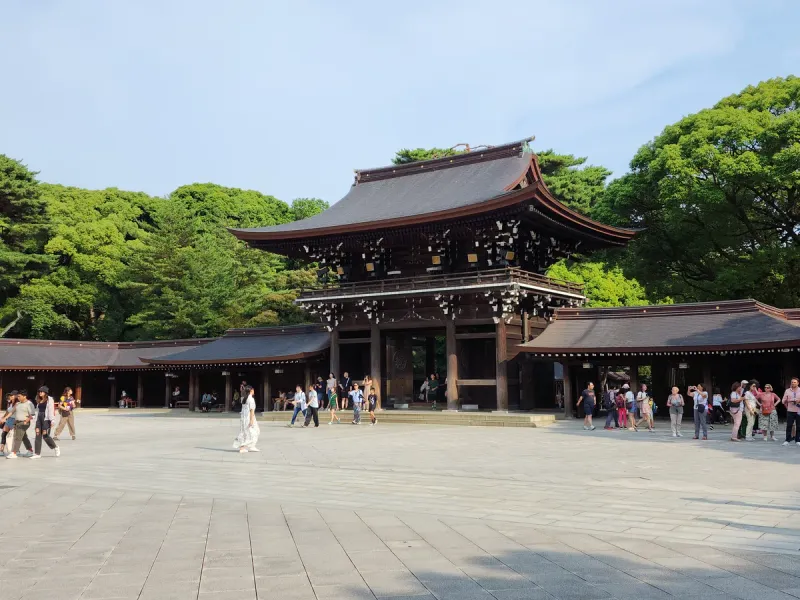
The walk from Harajuku Station to Meiji Jingu is one of the great transitions in Tokyo. One moment you’re in the middle of Harajuku’s neon-lit chaos, and then you step through a 12-metre cypress torii gate and the city disappears. The gravel path leads through 170 acres of forest, 100,000 trees donated from every prefecture in Japan when the shrine was built in 1920, and the canopy is so thick that birdsong replaces traffic noise within about 30 seconds.
The shrine itself honours Emperor Meiji and Empress Shoken, the rulers who opened Japan to the modern world in the late 1800s. The wooden buildings are elegant but restrained, all dark cypress and copper roofing, deliberately understated compared to the ornate temples elsewhere in the city. You’ll see walls of sake barrels (donated by vintners) and wine barrels (donated by Burgundy winemakers, a nod to the Emperor’s fondness for Western culture) lining one section of the approach.
Meiji Jingu draws three million visitors during hatsumode, the first shrine visit of the New Year, making it Japan’s busiest shrine for the occasion. Outside of holidays, weekday mornings are calm enough to feel genuinely meditative. Write a wish on a wooden ema plaque, draw an omikuji fortune, or just sit on a bench and listen to the forest. This is the shrine you visit when you need to remember that Tokyo is not only concrete and glass.

Meiji Jingu
- Tokyo's most important Shinto shrine, dedicated to Emperor Meiji
- 170-acre forest with 100,000 donated trees
- One of Japan's tallest torii gates at the entrance
Visit early morning to avoid crowds. Combine with Yoyogi Park and Harajuku for a full day.
"Meiji Jingu offers a serene forest experience that feels impossible for central Tokyo. Shinto rituals, ema plaques, and beautiful wooden architecture make it a cultural highlight."
3. Zojo-ji
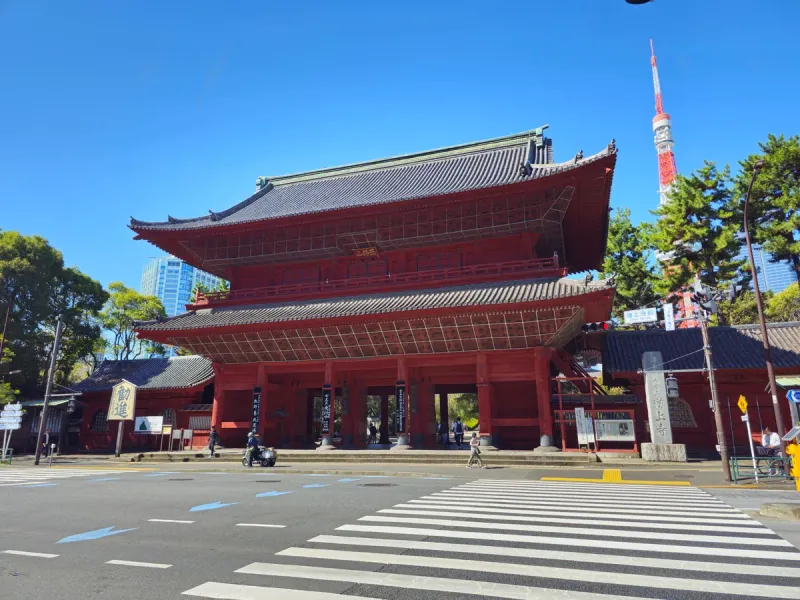
There’s a photograph you’ve almost certainly seen even if you don’t know the name: a traditional Japanese temple gate with Tokyo Tower rising directly behind it. That’s Zojo-ji, and in person the juxtaposition is even more striking than in pictures. A 600-year-old Buddhist temple sitting at the foot of a steel broadcast tower, ancient and modern Tokyo occupying the same frame.
Zojo-ji was the family temple of the Tokugawa shoguns, the dynasty that ruled Japan for 250 years. Six of the fifteen Tokugawa shoguns are buried in the mausoleum here (700 yen to enter, and worth it for the lacquerwork alone). The main gate, Sangedatsumon, dates to 1622 and is the oldest wooden structure in Tokyo. Walking through it is supposed to free you from three vices: greed, anger, and foolishness. A good deal for a free gate.
The most affecting part of Zojo-ji, though, is the rows of small Jizo statues dressed in red bibs and knitted caps. These represent unborn children, and visitors leave pinwheels and toys alongside them. It’s quietly devastating in a way that doesn’t translate to photographs. The main grounds are free and open from 6 AM. Cherry blossom season and the late-June candlelight event, when thousands of candles replace the electric lighting, are particularly beautiful times to visit.

Zojo-ji
- Dramatic Tokyo Tower backdrop behind the main hall
- Tokugawa shogunate family temple with six shoguns buried here
- Oldest wooden gate in Tokyo (1622) and rows of Jizo statues
Stand in front of the Sangedatsumon gate for the iconic shot with Tokyo Tower framed behind the temple.
"Zojo-ji offers one of Tokyo's most photogenic contrasts: a 600-year-old Buddhist temple sitting directly beneath Tokyo Tower. The rows of small Jizo statues in red bibs are deeply moving."
4. Nezu Shrine
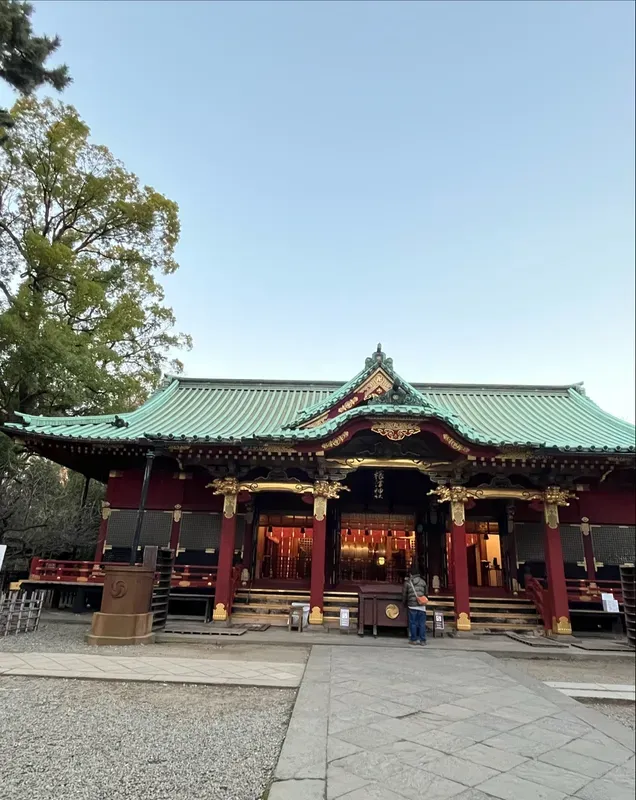
If you want the Fushimi Inari torii gate tunnel experience without going to Kyoto, Nezu Shrine is your answer. A corridor of vermilion torii gates winds through the back of the shrine grounds, much smaller than Kyoto’s famous version but also much emptier. You can actually walk through it in peace, which counts for a lot.
Nezu Shrine is one of Tokyo’s oldest, with roots stretching back over 1,900 years, and the current buildings date to 1706. It sits in the Yanaka district, one of the few Tokyo neighbourhoods that survived both the 1923 earthquake and the 1945 firebombing, so the surrounding streets still have that old shitamachi (low city) feeling: narrow lanes, independent shops, cats lounging on walls. The shrine grounds include stone bridges, carp ponds, and a hillside azalea garden that explodes into colour during the Bunkyo Azalea Festival in late April, when over 3,000 azalea bushes in 100 varieties bloom simultaneously. Outside of festival season, Nezu Shrine is one of the most tranquil spots in the city. It’s the kind of place where you sit on a bench for twenty minutes and forget you’re in a metropolis of 14 million people.

Nezu Shrine
- Vermilion torii gate tunnel reminiscent of Kyoto's Fushimi Inari
- One of Tokyo's oldest shrines with stunning azalea gardens
- Located in the charming old-town Yanaka district
Visit in late April for the azalea festival. The torii gate tunnel is at the back of the grounds.
"Nezu Shrine is a hidden gem with a stunning tunnel of red torii gates and beautifully maintained azalea gardens. Far fewer tourists than Senso-ji or Meiji Jingu."
5. Asakusa Shrine
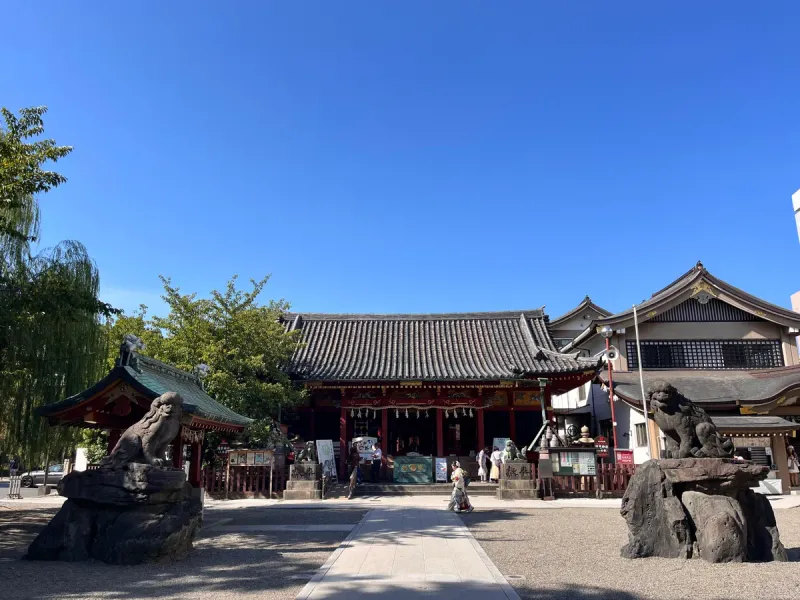
Most visitors to Asakusa make a beeline for Senso-ji and walk right past the Shinto shrine sitting quietly to its right. Which is a shame, because Asakusa Shrine is beautiful in its own right and tells the other half of the Senso-ji story. It’s dedicated to the two fishermen who pulled that golden Kannon statue from the Sumida River and the village chief who enshrined it. While Senso-ji is Buddhist, Asakusa Shrine is Shinto, and the two have coexisted side by side for centuries. This is one of the best examples in Tokyo of the shinbutsu-shugo tradition, the historical blending of Buddhism and Shinto that defined Japanese religious life for over a thousand years.
The shrine really comes alive during Sanja Matsuri in mid-May, when over a hundred portable mikoshi shrines are paraded through the streets of Asakusa in one of Tokyo’s most raucous and beloved festivals. Outside of festival time, it’s a peaceful counterpoint to the sensory overload next door. A five-minute visit after Senso-ji costs nothing and adds real depth to your understanding of the site.

Asakusa Shrine
- Beautiful Shinto shrine right next to Senso-ji
- Home to the famous Sanja Matsuri festival
- Free entry with peaceful grounds away from the Senso-ji crowds
Visit during Sanja Matsuri in mid-May for one of Tokyo's wildest festivals.
"Asakusa Shrine sits quietly beside the more famous Senso-ji temple. The Shinto shrine has beautiful architecture and a much calmer atmosphere than its Buddhist neighbour."
6. Gotokuji
You know that little white ceramic cat you see waving its paw in the window of every Japanese restaurant worldwide? This is allegedly where the whole thing started. Legend says that in 1633, a feudal lord named Ii Naotaka was caught in a thunderstorm near this temple and took shelter under a tree. He noticed a cat sitting at the temple gate, beckoning him inside. He followed it, and moments later lightning struck the tree where he’d been standing. Grateful for the save, he became the temple’s patron. Whether the story is true or embellished doesn’t really matter because the result is one of Tokyo’s most photogenic spots: hundreds upon hundreds of white maneki-neko figurines arranged on shelves, tables, and stone ledges throughout the grounds.
Gotokuji sits in a quiet residential neighbourhood in Setagaya, well off the tourist trail. Getting here takes effort (Odakyu line to Gotokuji Station, then a 10-minute walk), but the payoff is a genuinely unique temple experience. The cats come in all sizes, from thumb-nail tiny to basketball-sized, and their raised right paws are meant to beckon good fortune. Notably, they’re all empty-handed: the temple’s philosophy is that the cat gives you the opportunity for success, but whether you grasp it is entirely on you. You can buy your own figurine at the temple shop, make a wish, and leave it behind as an offering. The temple grounds are open from 6 AM to 6 PM. Bring cash for the surrounding neighbourhood’s cat-themed cafes.
Gotokuji
- Birthplace of the maneki-neko (lucky cat) with thousands of cat statues
- Peaceful residential-area temple away from tourist crowds
- One of Tokyo's most photogenic and unique temple experiences
Bring cash for the area's cafes. Buy a small maneki-neko figurine at the temple shop to take home.
"Gotokuji is a Buddhist temple famous as the supposed origin of the maneki-neko lucky cat. The temple grounds are covered with hundreds of white beckoning cat figurines of all sizes."
7. Kanda Myojin
Only in Tokyo would you find a 1,300-year-old shrine selling charms shaped like circuit boards. Kanda Myojin sits a 10-minute walk from Akihabara Station and has thoroughly embraced its proximity to Electric Town. The shrine sells IT safety amulets designed to protect your electronics from crashes and data loss (stick one on your laptop, why not), anime-themed ema prayer boards featuring characters from Love Live!, and crane machines that dispense fortunes. None of this is ironic. It’s all part of a deliberate strategy to bring younger visitors to a shrine that has been here since 730 AD.
But strip away the otaku trappings and Kanda Myojin is a serious place of worship. It enshrines Daikokuten and Ebisu, two of the Seven Lucky Gods, which makes it one of Tokyo’s top shrines for businesspeople praying for prosperity. The Kanda Matsuri, held in mid-May on odd-numbered years, is one of Tokyo’s three great festivals. The shrine buildings were rebuilt in reinforced concrete after the 1923 earthquake, giving them a solidity that contrasts with the delicate wooden shrines elsewhere on this list. It’s also completely free, and the combination of ancient history and modern weirdness makes it one of the most entertaining shrine visits in the city.
Kanda Myojin
- Nearly 1,300-year-old shrine with anime collaborations and IT charms
- Walking distance from Akihabara's Electric Town
- Enshrines two of the Seven Lucky Gods (Daikokuten and Ebisu)
Pick up an IT safety charm (designed like a circuit board) to protect your electronics. Seriously.
"Kanda Myojin is a fascinating collision of ancient Shinto worship and modern otaku culture. The shrine sells Love Live! ema boards alongside traditional charms and circuit-board-shaped IT safety amulets."
8. Hie Shrine
If you’re tired of reading about torii gate tunnels and thinking “yeah, but Fushimi Inari in Kyoto does it better,” fair enough. But Hie Shrine’s tunnel of 90 vermilion torii gates climbing a hillside staircase is genuinely stunning, and you’ll likely have it almost to yourself. The shrine hides in plain sight in Nagatacho, Tokyo’s political centre, surrounded by government ministry buildings and office towers. Almost nobody goes looking for a shrine here, which is exactly why it works so well.
The main entrance has something you won’t find at any shrine in Kyoto: an outdoor escalator. Yes, an escalator to a shrine. It was installed for elderly visitors and anyone who’d rather not climb a steep stone staircase, and it’s one of those perfectly Tokyo details that makes you love this city. The shrine grounds feature monkey statues (the shrine’s guardians, not the typical fox or lion-dog) and views back over the government district. Hie Shrine also hosts the Sanno Matsuri in June on even-numbered years, one of Tokyo’s three great festivals and a counterpart to Kanda Myojin’s Kanda Matsuri. Free entry, always.
Hie Shrine
- Tunnel of 90 vermilion torii gates rivalling Kyoto's Fushimi Inari
- Outdoor escalator to reach the hilltop shrine
- Hidden in the government district, surprisingly few tourists
Enter from the back to walk through the tunnel of 90 red torii gates. There's an escalator at the main entrance.
"Hie Shrine sits on a hill in Tokyo's political centre. The tunnel of red torii gates along the back stairway is stunning. Monkey statues represent the shrine's guardian messengers."
9. Toyokawa Inari Tokyo Betsuin
Most Inari shrines in Japan are Shinto. Toyokawa Inari is Buddhist. This already makes it unusual, but the real draw is the foxes. Hundreds of stone fox statues in every size and posture fill the temple grounds, each one unique: foxes holding keys to granaries, jewels of wisdom, scrolls of knowledge, sheaves of rice. Some are centuries old and weathered smooth. Others are newer, sharper-featured, with scarves tied around their necks by visitors.
The temple is a branch of the main Toyokawa Inari in Aichi Prefecture and was established at this Akasaka location in 1828. For generations it has been popular with people in the entertainment industry, likely because of its proximity to what used to be Akasaka’s geisha district. Today the neighbourhood is more corporate than artistic, but the temple itself feels timeless. The Reiko Zuka, a mound packed tightly with fox statues of every shape, is the visual centrepiece and one of the most atmospheric spots in Tokyo. It’s a five-minute walk from Akasaka-mitsuke Station and completely free. Visit on the 1st of the month for a special prayer ceremony.
Toyokawa Inari Tokyo Betsuin
- Hundreds of stone fox statues scattered throughout the grounds
- Rare temple that blends Buddhist and Shinto traditions
- Popular with entertainers and performers since the Edo period
Look for the Reiko Zuka, a mound covered in hundreds of fox statues. The temple is busiest on the 1st of each month.
"Toyokawa Inari Tokyo Betsuin is a Soto Zen Buddhist temple filled with hundreds of unique stone fox statues. It sees far fewer tourists than the big-name sites."
10. Nogi Shrine
Nogi Shrine tells one of the more dramatic stories in Tokyo’s spiritual landscape. General Nogi Maresuke was a celebrated military hero of the Russo-Japanese War, but when Emperor Meiji died in 1912, Nogi and his wife committed junshi, ritual suicide out of loyalty to their sovereign, on the day of the Emperor’s funeral. The shrine, established in 1923, honours both of them.
The grounds are compact but atmospheric: orange torii gates, thick greenery, and the striking juxtaposition of traditional shrine architecture against the glass towers of Roppongi visible just above the tree line. The adjacent Nogi Residence, the actual house where the general lived, is open to the public three times a year. Every fourth Sunday of the month, the shrine grounds host a flea market that draws locals from across the city. Nogi Shrine is also, somewhat unexpectedly, a pilgrimage site for fans of the idol group Nogizaka46, named after the neighbourhood. It’s a 60-second walk from Nogizaka Station on the Chiyoda Line, making it an easy add-on before or after the National Art Center in nearby Roppongi.
Nogi Shrine
- Quiet shrine dedicated to a Meiji-era general with a moving story
- Monthly flea market on shrine grounds
- One minute from Nogizaka Station, easy to combine with Roppongi
Visit on the fourth Sunday of the month when the shrine grounds host a popular flea market.
"Nogi Shrine is a small, peaceful shrine dedicated to General Nogi Maresuke and his wife. The grounds feature orange torii gates, verdant foliage, and views of the Roppongi skyline."
11. Sengaku-ji
If you know one samurai story, it’s probably this one. In 1703, 47 ronin (masterless samurai) avenged the forced death of their lord, Asano Naganori, by storming the mansion of the official responsible, Kira Yoshinaka. They succeeded, carried Kira’s head to their lord’s grave at Sengaku-ji, and then turned themselves in. All 47 were ordered to commit seppuku. They’re buried here, alongside their lord, in a quiet hillside cemetery that smells permanently of incense.
Sengaku-ji is a modest temple compared to the grand complexes elsewhere on this list, but the weight of the story gives it a gravity that bigger temples can’t match. Visitors burn incense at each of the 47 graves, a ritual that has continued unbroken for over 300 years. The small museum (500 yen) displays armour, weapons, and documents from the actual vendetta. Every December 14th, the anniversary of the attack, a festival re-enacts the ronin’s march through the streets. Sengaku-ji sits near Shinagawa, slightly south of central Tokyo, and receives far fewer visitors than it deserves. If you have any interest in Japanese history, this is a temple you should not skip.
Sengaku-ji
- Final resting place of Japan's legendary 47 ronin samurai
- One of the most important historical sites in Tokyo
- Small museum telling the full story of the Ako vendetta
Burn incense at the 47 ronin graves. The small museum costs 500 yen and adds real context to the story.
"Sengaku-ji is a Soto Zen Buddhist temple famous as the burial site of the 47 ronin, Japan's most celebrated tale of samurai loyalty."
Planning Your Temple and Shrine Route
You can cluster several of these visits into efficient half-day routes. In Asakusa, start early at Senso-ji, then cross over to Asakusa Shrine. From there, take the Ginza Line north to Nezu Shrine for a quieter morning. In the Akasaka area, combine Hie Shrine, Toyokawa Inari, and Nogi Shrine in a single walk; they’re all within 15 minutes of each other. Meiji Jingu pairs naturally with Harajuku and Yoyogi Park for a full day on the west side. Zojo-ji is best combined with Tokyo Tower, Shiba Park, and a walk through the surrounding Hamamatsucho neighbourhood.
Gotokuji and Sengaku-ji are the two outliers that require dedicated trips, but both reward the effort. Gotokuji’s cat-filled grounds are unlike anything else in Tokyo, and Sengaku-ji’s samurai history gives it an emotional weight that’s hard to find at the more polished central sites.
Almost every temple and shrine on this list is free. The only paid elements are Zojo-ji’s Tokugawa Mausoleum (700 yen) and Sengaku-ji’s museum (500 yen). You could visit all 11 without spending a single yen on admission.
For more ideas on what to do in Tokyo, see our things to do in Tokyo guide, or check out free things to do in Tokyo for a full list of experiences that cost nothing.
Planning your trip to Tokyo? Save these places to your itinerary with Tourli, the app that turns travel guides into actionable day plans.
Frequently Asked Questions
What is the difference between a temple and a shrine in Japan?
What is the etiquette for visiting temples and shrines in Tokyo?
Are temples and shrines in Tokyo free to visit?
What is the best season to visit Tokyo's temples and shrines?
More Tokyo Guides
3-Day Tokyo Itinerary (2026)
ItineraryThree days, three pairs of neighbourhoods. This itinerary groups Tokyo by geography so you spend less time underground and more time eating, photographing, and getting properly lost.
5-Day Tokyo Itinerary (2026)
ItineraryFive days, five neighbourhoods. This itinerary groups Tokyo by geography so you spend less time on trains and more time eating, exploring, and getting lost in the right way.
Things to Do in Asakusa, Tokyo (2026 Neighbourhood Guide)
GuideAsakusa is Tokyo at its most traditional. While most of the city rebuilt itself into glass and steel after the war, this neighbourhood held onto its wooden shopfronts, its temple rituals, and its open-air drinking culture. Senso-ji has been standing here since the seventh century. Nakamise has been selling rice crackers and souvenirs since the Edo period. And Hoppy Street has been serving cheap beer alternatives to salarymen since the 1940s. It's the part of Tokyo that still feels like old Tokyo, and it's one of the few neighbourhoods where you can spend an entire day without running out of things to see, eat, and do.
Best Breakfast in Tokyo (2026) - From 6AM Sushi to Kissaten Toast
VibeTokyo is one of the few cities where eating sushi at 6 AM is completely normal. Breakfast here spans everything from a three-piece sashimi set at a Tsukiji fish stall to a ¥500 kissaten morning set with toast so thick it could double as a pillow. This guide covers 11 ways to start your day, from the traditional to the trendy.
11 Best Brunch Spots in Tokyo (2026)
VibeTokyo takes breakfast seriously, just not in the way you might expect. The city runs on kissaten morning sets, fluffy souffle pancakes that take 20 minutes to cook, and hotel buffets that could double as Michelin-level tasting menus. This guide covers all of it.
15 Best Cafes in Tokyo (2026)
GuideTokyo has over 550 cafes in our database alone, ranging from century-old kissaten to cafes where a capybara sits in your lap. These 15 cover matcha specialists, third-wave roasters, themed experiences, and traditional tea shops.
Save these places to your Tokyo trip
Tourli turns travel guides into actionable day plans. Save places, get walking directions, and share your itinerary — all in one app.