Best Street Food in Tokyo (2026) - 6 Must-Try Spots & Snacks

Tokyo street food is not an afterthought. It is a parallel food universe where some of the city's best bites cost less than a subway ride. Tsukiji Outer Market alone could keep you eating for an entire morning, and that is before you hit the karaage stands in Asakusa or the gyoza joints in Roppongi.

Places
6
Avg Rating
4.6
City
Tokyo

Best Street Food in Tokyo

There is a version of Tokyo that exists entirely at waist height. It is the city seen through steam rising from takoyaki griddles, through the smoke of yakitori grills in alleyways barely wide enough for two people, through the glass cases of konbini displaying onigiri that cost ¥150 and taste better than they have any right to. Street food in Tokyo is not a lesser category of eating. It is, for many visitors, the highlight of the entire trip.

The trick is knowing where to go. Tsukiji Outer Market gets all the attention (deservedly), but some of the best street eating happens in places tourists walk right past. The karaage stand near Senso-ji that opens at 9 AM. The abura soba counter in Shibuya where office workers queue for five minutes, eat for seven, and leave looking deeply satisfied. The wagyu-on-a-stick stall in Tsukiji where a piece of A5 beef costs less than a London sandwich.

This guide covers the best street food spots in Tokyo, from proper market grazing to quick-hit snack stops. If you are looking for sit-down meals, check out our best restaurants in Tokyo guide or the cheap eats guide for budget-friendly options with tables.

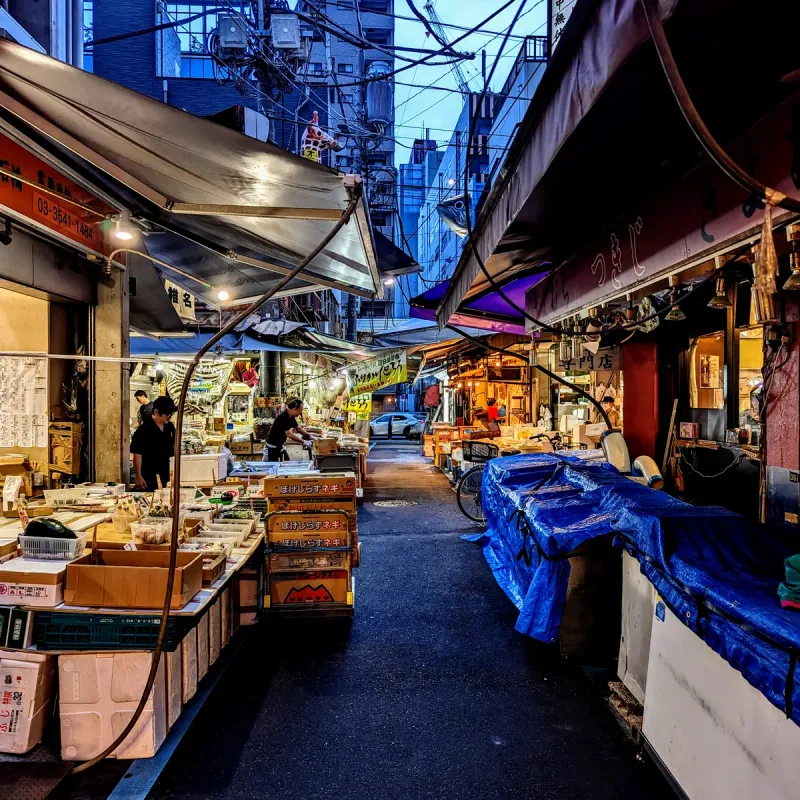
1. Tsukiji Outer Market

If you only have one morning for street food in Tokyo, spend it here. The inner wholesale market moved to Toyosu in 2018, but the outer market stayed put, and it is better than ever. Hundreds of stalls line narrow covered lanes, selling everything from grilled hotate (scallops) to tamagoyaki on sticks to fresh uni spooned into crispy seaweed cones. The pace is fast. You eat standing, usually within a few steps of whatever stall you bought from, and then you move on to the next thing that catches your eye.

The smart play is to arrive before 10 AM, ideally around 8 or 9, when the stalls have just opened and the tour groups have not yet arrived. Start with the seafood side: grilled scallops for ¥500-800, a couple of pieces of fresh sushi from a counter for ¥300-500 per piece, and a tamagoyaki stick for ¥200. Work your way toward the wagyu skewers and the tamago sando (egg sandwich) stalls deeper in the market. Most vendors are cash only, so bring ¥5,000 in small bills and you will leave stuffed with change to spare.

Tsukiji Outer Market
1

Tsukiji Outer Market

street_food Tsukiji
4.2 Google Tsukiji, Chuo City, Tokyo
  • Tokyo's best concentration of street food stalls in one place
  • Grilled scallops, tamagoyaki, fresh sushi, and wagyu skewers
  • Most items cost ¥200-800
Tip

Go before 10 AM to beat tour groups. Most stalls are cash only. Start at the sushi side and work your way through seafood skewers and tamagoyaki.

"Tsukiji Outer Market remains Tokyo's top street food destination even after the inner market moved to Toyosu."

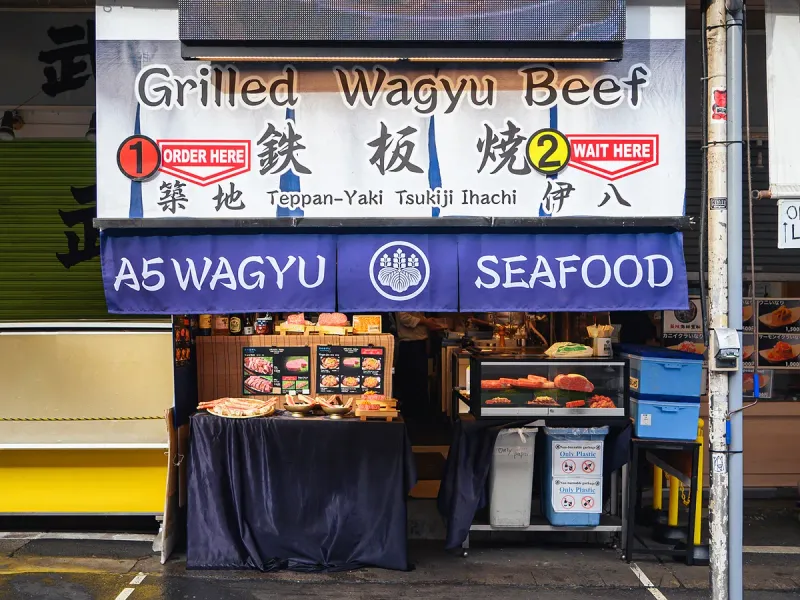
2. Tsukiji Ihachi honten (Grilled Wagyu Beef)

While you are at Tsukiji, do not leave without stopping at Ihachi. This is technically a small restaurant, but the experience feels like street food: you point at the cut you want, they grill A5 wagyu on a hot stone right in front of you, and you eat it on a stick or from a small tray while standing in the market flow. The wagyu is deeply marbled, almost obscenely so, and the hot stone gives it a crust that locks in the fat without making it greasy. A single wagyu stick runs under ¥2,000, which sounds expensive until you remember this is the same grade of beef that costs ¥15,000 at a Ginza steakhouse. If you are actually hungry and not just grazing, the lunch set with rice and miso is better value. But the stick is the move for market grazing.

Tsukiji Ihachi honten
2

Tsukiji Ihachi honten

street_food Tsukiji
4.8 Google Tsukiji, Chuo City, Tokyo
  • A5 wagyu grilled on a hot stone right in front of you
  • Located steps from Tsukiji Outer Market
  • Wagyu on a stick for under ¥2,000
Tip

The wagyu steak on a stick is the move, but the lunch set with rice is better value if you're properly hungry.

"Tsukiji Ihachi honten offers a unique and delightful dining experience with its A5 wagyu steak, grilled on a hot stone at your table."

3. Nakamise Shopping Street

Nakamise is the 250-metre stretch of shops and food stalls leading from Kaminarimon gate to Senso-ji temple, and it has been feeding visitors since the Edo period. Yes, it is touristy. Yes, it gets absolutely packed by midday. But the food is genuinely good, and some of the stalls have been run by the same families for generations. The stars here are ningyoyaki, little doll-shaped cakes filled with sweet red bean paste, pressed fresh in cast-iron molds and handed to you still warm. They cost almost nothing and they taste like what street food is supposed to taste like: simple, honest, made in front of you.

Beyond the ningyoyaki, look for beef croquettes (korokke) with their shatteringly crisp panko shell, melon pan stuffed with cream, and kibidango (chewy millet dumplings). The trick is to go early, ideally before 10 AM, when the stalls are open but the crowds have not yet descended. If you are exploring Asakusa, pair this with a stop at Asakusa Chicken (see below) and a walk through the Asakusa neighbourhood guide for the full picture.

3

Nakamise Shopping Street

street_food Asakusa
4.3 Google Asakusa, Taito City, Tokyo
  • Historic shopping street leading to Senso-ji temple
  • Traditional Japanese snacks like ningyoyaki and kibidango
  • Beef croquettes and melon pan fresh from the oven
Tip

Visit early morning or on a weekday. The ningyoyaki are best eaten warm from the press.

"The 250-metre shopping street leading to Senso-ji is packed with vendors selling traditional snacks. Ningyoyaki, melon pan, and beef croquettes are the highlights."

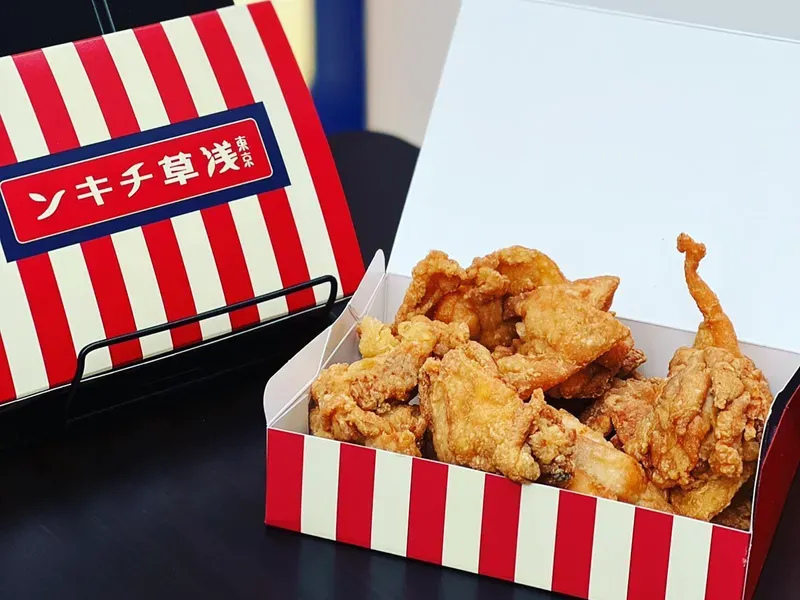
4. Asakusa Chicken

This is the spot that convinced me street food karaage can be a destination in its own right. Asakusa Chicken sits near Senso-ji and opens at 9 AM, which sounds absurdly early for fried chicken until you try it fresh from the fryer at that hour and realize your entire breakfast philosophy has been wrong. The karaage is made to order using a family recipe. It arrives golden, crunchy, and juicy in a way that suggests the oil temperature is managed with surgical precision.

But here is the real secret: the crab cream croquettes. Most people come for the chicken and leave raving about these instead. They are creamy, rich, with actual crab flavour and a panko shell that cracks cleanly. Get both. It will cost you about ¥800 total, which is less than a cup of coffee at most Tokyo hotel lobbies.

Asakusa Chicken
4

Asakusa Chicken

street_food Asakusa
4.9 Google 2-10-1 Asakusa, Taito City, Tokyo
  • Award-winning chicken karaage cooked to order
  • The crab cream croquettes are a sleeper hit
  • Opens at 9 AM near Senso-ji, perfect morning snack
Tip

Visit early at 9 AM to avoid crowds and get freshly cooked chicken.

"A gem near Senso-ji known for its delicious made-to-order chicken karaage based on a family recipe. The crab cream croquettes also get high praise."

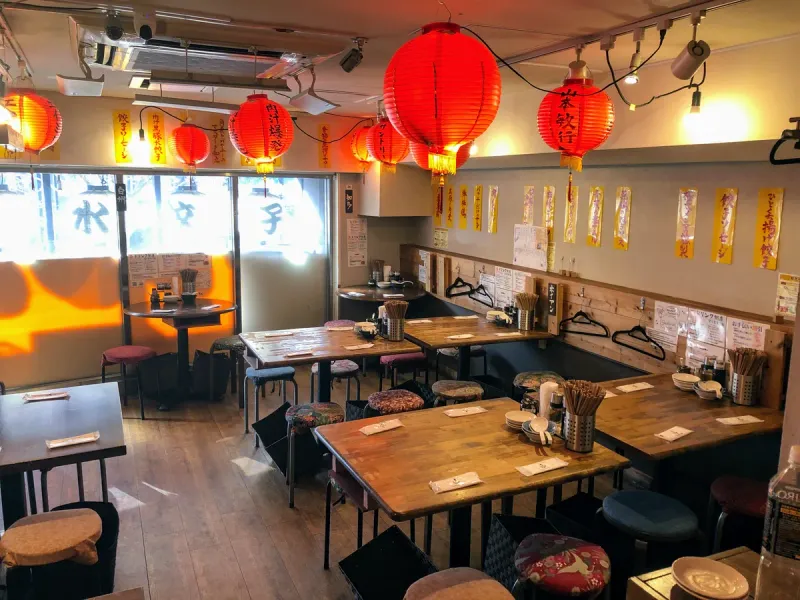
5. GYOPAO Gyoza Roppongi

Gyoza might not be the first thing you think of when someone says “Tokyo street food,” but GYOPAO will change that. This Roppongi spot does pan-fried dumplings with the kind of obsessive attention that Tokyo applies to everything. The signature gyoza arrive with a crispy golden skirt connecting the row of dumplings, the kind of lace-thin crunch that only happens when the batter-water ratio is exactly right and the pan heat is perfectly calibrated. The filling is juicy without being greasy, and the dipping sauce has enough bite to cut through the richness.

Order the spicy mapo gyoza alongside the classic for contrast. It is a completely different experience: heavier, bolder, with a numbing Sichuan heat that builds. GYOPAO works well as a late-night stop after drinks in Roppongi, or as an early dinner before the neighbourhood gets too rowdy. It is casual, it is fun, and the gyoza genuinely compete with anything you will find at a dedicated gyoza shop in Utsunomiya or Hamamatsu.

GYOPAO Gyoza Roppongi
5

GYOPAO Gyoza Roppongi

street_food Roppongi
4.8 Google Roppongi, Minato City, Tokyo
  • Some of the best dumplings in Tokyo
  • Creative gyoza variations beyond the classic
  • Casual Roppongi spot great for groups
Tip

Order the signature pan-fried gyoza and the spicy mapo gyoza for contrast. Great for a late-night bite.

"GYOPAO Gyoza Roppongi serves some of the best dumplings in Tokyo. Reviewers highlight the perfectly crispy pan-fried gyoza and creative variations."

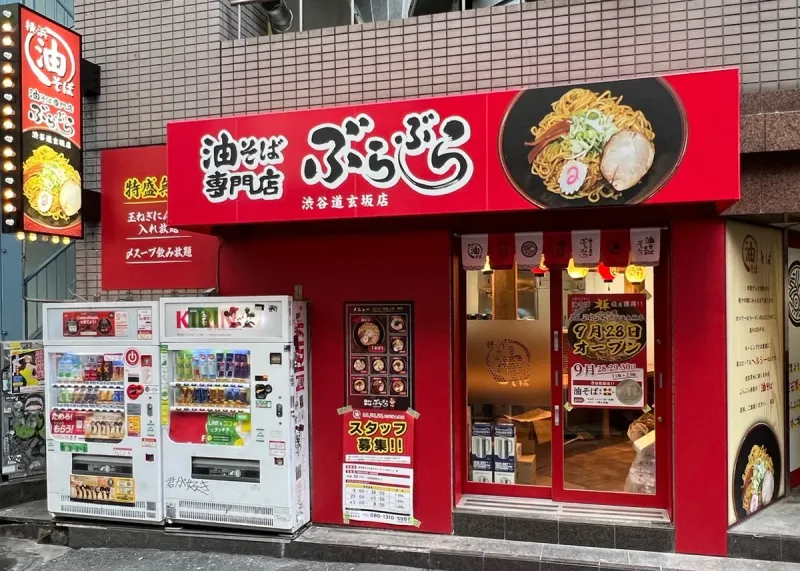
6. Bura Bura Abura Soba

Abura soba is ramen’s underappreciated sibling. No broth. Just noodles tossed in a concentrated tare sauce, topped with chashu, a raw egg, menma, and green onions, with vinegar and chili oil on the side that you are absolutely supposed to add. Bura Bura in Shibuya does this format perfectly. The noodles are thick and chewy, the tare is deeply savoury without being overwhelmingly salty, and the raw egg binds everything together into something that tastes richer than the sum of its parts.

The whole thing costs under ¥1,000 and takes maybe ten minutes from ordering to finishing. It is the kind of meal that office workers in Shibuya eat three times a week without thinking about it, and once you try it, you will understand why. Mix everything thoroughly before you start eating. Add the vinegar first, then the chili oil. Trust the process. If you want something more substantial with a table and a longer menu, our cheap eats guide has more options in the same price range.

Bura Bura Abura Soba
6

Bura Bura Abura Soba

street_food Shibuya
4.7 Google Shibuya, Tokyo
  • Fast, filling abura soba for under ¥1,000
  • Brothless noodles tossed in rich tare sauce
  • Perfect quick lunch between Shibuya sightseeing
Tip

Mix everything thoroughly before eating. Add the vinegar and chili oil, trust the process.

"A no-frills abura soba spot where the brothless noodles are coated in a savoury tare and topped with a raw egg, chashu, and green onions."

Beyond the List: Other Street Food Worth Finding

Tokyo’s street food scene extends far beyond these six spots. Here are a few areas and bites worth seeking out if you have the time.

Omoide Yokocho (Memory Lane), Shinjuku. A narrow alley of tiny yakitori stalls just outside Shinjuku Station’s west exit. The smoke is thick, the seats are cramped, and the chicken skewers cost ¥100-150 each. It feels like stepping into 1960s Tokyo. Go after 6 PM when the grills are fully fired up and the atmosphere peaks. Some stalls have a seating charge of ¥300-500, so check before sitting down.

Ameyoko Market, Ueno. This chaotic open-air market runs along the train tracks between Ueno and Okachimachi stations. The food here is louder and messier than Tsukiji: vendors shouting prices, piles of dried squid, chocolate stacked in towers, and stalls selling fresh-cut fruit, takoyaki, and kebabs. It is not refined. It is fun. Look for the wagyu menchi katsu (deep-fried minced beef patties) and the fresh strawberry mochi.

Takeshita Street, Harajuku. The famous Harajuku teen fashion street also happens to be one of the best places in Tokyo for crepes. Japanese crepes are different from the French version: they are rolled into a cone and stuffed with combinations like strawberry, cream, chocolate, and whipped cream. They are over-the-top, photogenic, and genuinely tasty. Marion Crepes has been doing this since the 1970s and there is usually a queue.

Konbini (Convenience Stores). This might sound like a joke, but Japanese convenience stores are a legitimate street food experience. A 7-Eleven, Lawson, or FamilyMart onigiri costs ¥150, and the quality would embarrass most rice restaurants outside Japan. The egg salad sandwiches at Lawson are oddly famous. The karaage at FamilyMart is crispy and hot. Nikuman (steamed pork buns) sit in warming cases by the register for ¥150-200 each. Do not skip these just because they are “convenience stores.” They are something else entirely here.

Taiyaki. These fish-shaped cakes filled with red bean paste (or custard, or sweet potato) show up at street stalls across the city. The best ones have a thin, crispy shell and a generous filling that goes all the way to the tail. You will find them near temples, at festival stalls, and increasingly at dedicated taiyaki shops that experiment with fillings like matcha cream and Nutella.

Tips for Eating Street Food in Tokyo

Etiquette matters. Do not walk and eat. Find a spot near the stall, eat there, and dispose of your rubbish properly. Public bins are rare in Tokyo, so many stalls have their own waste stations. Use them.

Bring cash. While Tokyo is increasingly card-friendly, many street food stalls and market vendors are still cash only. Carry ¥5,000-10,000 in small denominations if you plan to graze through a market.

Go early. The best market food at Tsukiji and Nakamise is available from around 8-9 AM. By noon, the crowds are intense and some popular items sell out. Early birds eat better here.

Pair with a neighbourhood. Street food works best as part of a larger exploration. Combine Tsukiji with a walk through Ginza, Nakamise with the rest of Asakusa, and Omoide Yokocho with an evening in Shinjuku.

For sit-down restaurants across all budgets, see our best restaurants in Tokyo guide.

Frequently Asked Questions

What is the best area for street food in Tokyo?
Tsukiji Outer Market is the single best spot for street food in Tokyo. You can spend an entire morning grazing on grilled scallops, tamagoyaki, wagyu skewers, and fresh sushi for a few hundred yen per item. Nakamise Shopping Street in Asakusa, Ameyoko in Ueno, and Omoide Yokocho in Shinjuku are also excellent. Each has a different vibe: Tsukiji is seafood-focused, Nakamise is traditional snacks, Ameyoko is chaotic and fun, and Omoide Yokocho is tiny yakitori stalls with smoke and atmosphere.
How much does street food cost in Tokyo?
Most street food items in Tokyo cost between ¥200 and ¥800 ($1.30-5.30 USD). A tamagoyaki stick at Tsukiji is around ¥200. Grilled scallops run ¥500-800. Wagyu skewers are ¥800-1,500 depending on the grade. Karaage portions are ¥400-600. You can eat your way through an entire market for ¥2,000-3,000 and leave very full.
Is street food in Tokyo safe to eat?
Extremely safe. Japan has some of the strictest food hygiene standards in the world, and Tokyo street food vendors take cleanliness seriously. The food turnover is high, meaning everything is fresh. You will see vendors wearing gloves, using tongs, and keeping their stalls spotless. Tap water is safe to drink too.
Can I eat street food while walking in Tokyo?
Technically yes, but it is considered impolite in Japan to eat while walking. Most street food areas have small standing areas or benches where you are expected to eat before moving on. At Tsukiji and Nakamise, vendors will often point you to a designated eating spot. The exception is festival food (matsuri), where eating while walking is more accepted.

More Tokyo Guides

3-Day Tokyo Itinerary (2026)

Itinerary

Three days, three pairs of neighbourhoods. This itinerary groups Tokyo by geography so you spend less time underground and more time eating, photographing, and getting properly lost.

14 places 3 days

5-Day Tokyo Itinerary (2026)

Itinerary

Five days, five neighbourhoods. This itinerary groups Tokyo by geography so you spend less time on trains and more time eating, exploring, and getting lost in the right way.

25 places 5 days

Things to Do in Asakusa, Tokyo (2026 Neighbourhood Guide)

Guide

Asakusa is Tokyo at its most traditional. While most of the city rebuilt itself into glass and steel after the war, this neighbourhood held onto its wooden shopfronts, its temple rituals, and its open-air drinking culture. Senso-ji has been standing here since the seventh century. Nakamise has been selling rice crackers and souvenirs since the Edo period. And Hoppy Street has been serving cheap beer alternatives to salarymen since the 1940s. It's the part of Tokyo that still feels like old Tokyo, and it's one of the few neighbourhoods where you can spend an entire day without running out of things to see, eat, and do.

13 places

Best Breakfast in Tokyo (2026) - From 6AM Sushi to Kissaten Toast

Vibe

Tokyo is one of the few cities where eating sushi at 6 AM is completely normal. Breakfast here spans everything from a three-piece sashimi set at a Tsukiji fish stall to a ¥500 kissaten morning set with toast so thick it could double as a pillow. This guide covers 11 ways to start your day, from the traditional to the trendy.

11 places

11 Best Brunch Spots in Tokyo (2026)

Vibe

Tokyo takes breakfast seriously, just not in the way you might expect. The city runs on kissaten morning sets, fluffy souffle pancakes that take 20 minutes to cook, and hotel buffets that could double as Michelin-level tasting menus. This guide covers all of it.

11 places

15 Best Cafes in Tokyo (2026)

Guide

Tokyo has over 550 cafes in our database alone, ranging from century-old kissaten to cafes where a capybara sits in your lap. These 15 cover matcha specialists, third-wave roasters, themed experiences, and traditional tea shops.

15 places

Save these places to your Tokyo trip

Tourli turns travel guides into actionable day plans. Save places, get walking directions, and share your itinerary — all in one app.