15 Best Ramen in Tokyo (2026)

Tokyo has more ramen shops than any city on earth, and the competition is so fierce that a mediocre bowl simply cannot survive. These 15 shops cover seven distinct styles: tonkotsu, shio, shoyu, miso, tori paitan, tsukemen, and abura soba.

Places
15
Avg Rating
4.3
City
Tokyo

Best Ramen in Tokyo

Tokyo is, by any reasonable measure, the ramen capital of the world. The city has somewhere north of 10,000 ramen shops, and the competition between them is so ruthless that a bowl needs to be genuinely special to survive more than a few years. Shops that Tokyo locals consider average would be the best ramen restaurant in most other cities. The bar here is just different.

What makes Tokyo ramen culture particularly interesting is the sheer variety of styles you can eat in a single day. Tonkotsu, the rich pork-bone broth that most Westerners think of as “ramen,” is just one branch of a much larger tree. Shio (salt-based) ramen keeps things delicate and clean. Shoyu (soy sauce) ramen is the most traditional Tokyo style, deep and savoury without being heavy. Miso ramen, originally from Hokkaido, has been adopted and remixed by Tokyo chefs who add Sichuan peppercorn and chili for a numbing heat. Tori paitan uses a milky chicken broth cooked down for hours until it becomes thick and creamy. Tsukemen flips the whole format by serving cold noodles alongside a concentrated dipping broth. And abura soba skips the soup entirely, tossing noodles in flavoured oil and tare.

The ordering system is part of the experience. Almost every ramen shop uses a ticket machine near the entrance. You feed in cash (or increasingly, tap an IC card), press the button for your bowl, and hand the ticket to the chef when you sit down. At some shops, that’s the only human interaction you’ll have during the entire meal. At Ichiran, you eat in a solo booth behind a bamboo curtain, and your bowl arrives through a slot in the wall. It sounds antisocial, but there’s something genuinely meditative about eating great ramen with no distractions.

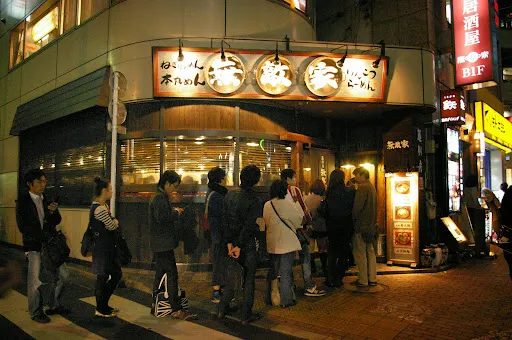
Queue culture is real. At the best shops, 30-minute waits are standard. An hour is not unusual on weekends. Most serious ramen eaters in Tokyo time their visits: arrive at 10:45 for an 11 AM opening, or show up at 5:30 PM before the dinner rush builds. The line moves fast because most people eat a bowl of ramen in 10 to 15 minutes. Slurp loudly. It cools the noodles, aerates the broth, and signals to the chef that you’re having a good time. Nobody in Tokyo eats ramen quietly.

This list covers seven distinct styles across 15 shops, from a former Michelin-starred seafood broth in Shinjuku to a brothless abura soba counter in Shibuya. A bowl at any of these places will cost you between ¥900 and ¥1,500. The most expensive ramen meal on this list is about $10. That’s the magic of Tokyo ramen.

1. Soba House Konjiki-Hototogisu

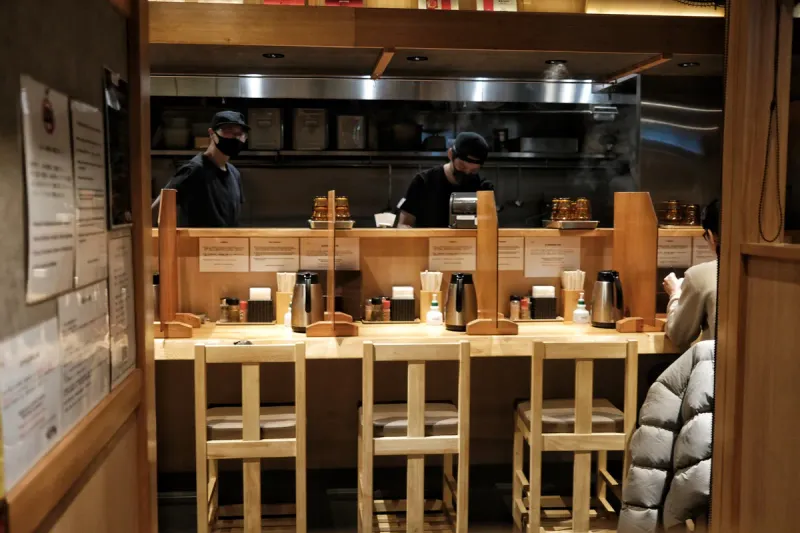
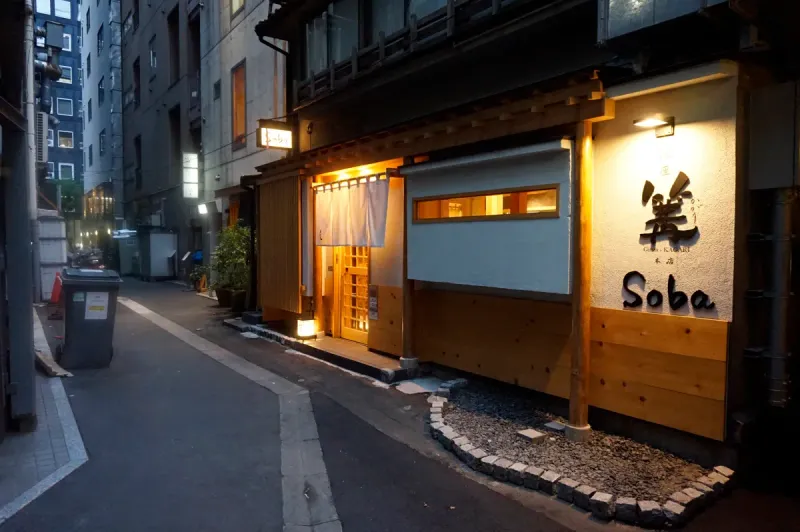
This is the bowl that changed how I think about ramen. Konjiki-Hototogisu in Shinjuku makes a broth from red sea bream and clams that tastes like nothing else in the ramen world. It’s light, deeply savoury, and somehow both subtle and complex at the same time. The shio (salt) version is the one to order. It lets the seafood broth speak without soy sauce muddying the water. The shop held a Michelin star and, while it no longer carries that distinction, the quality hasn’t wavered. A bowl costs about ¥900, which is absurd given what you’re eating. The catch is the queue system. You don’t just line up and wait. You arrive early (9:30 AM for lunch, 5:30 PM for dinner), take a numbered ticket, and come back at your assigned time. It sounds fussy, but it means you’re not standing in a line for 45 minutes. You grab the ticket, go for a walk around Shinjuku, and return when your number is up. The shop is tiny. Seven seats. The chef works in silence. The only sound is slurping. It’s perfect.

Soba House Konjiki-Hototogisu
1

Soba House Konjiki-Hototogisu

restaurant Shinjuku $
4.1 Google Shinjuku, Tokyo
  • Former Michelin-starred ramen
  • Unique sea bream and clam broth unlike any other ramen
  • A bowl of world-class ramen for just ¥900
Tip

Arrive at 9:30 AM for lunch or 5:30 PM for dinner to get a numbered ticket with your return time.

"A renowned ramen restaurant known for its exceptional seafood-based broth using red sea bream and clams. The shio version is the standout."

2. Ginza Kagari

Tori paitan is the style of ramen that converts people who think they don’t like ramen. The broth at Ginza Kagari is made from chicken bones simmered for hours until the collagen breaks down into a thick, opaque, almost creamy liquid. It coats the noodles like a sauce. The original Ginza location has only eight seats arranged in a U-shape around an open kitchen, and the queue starts forming before the 11 AM opening. The truffle chicken ramen is excellent if you’re in that mood, but the regular chicken paitan shoyu is the better bowl. It’s richer and more honest. One warning: the place went cashless, so you’ll need a card or IC card. The portions are normal-sized, which means you might want to add an extra egg or chashu. Reviews consistently mention the queue as a downside. It is long, and it is annoying. But this is one of the few ramen shops in Tokyo that earned a Michelin recommendation, and at this price point, it’s hard to argue with the value. If you want the same broth without the Ginza wait, the Roppongi Hills branch (number 9 on this list) serves the same recipe with shorter lines.

Ginza Kagari
2

Ginza Kagari

restaurant Ginza $$
4.2 Google 6-4-12 Ginza, Chuo City, Tokyo
  • Famous creamy tori paitan chicken broth
  • Michelin-recommended ramen
  • Truffle-flavored chicken ramen option
Tip

Arrive before 11 AM opening to beat the queue. Cashless only. Try the chicken paitan shoyu.

"A small ramen spot known for its rich and creamy chicken broth that keeps customers coming back despite long queues. Only 8 seats around a U-shaped counter."

3. AFURI Ebisu

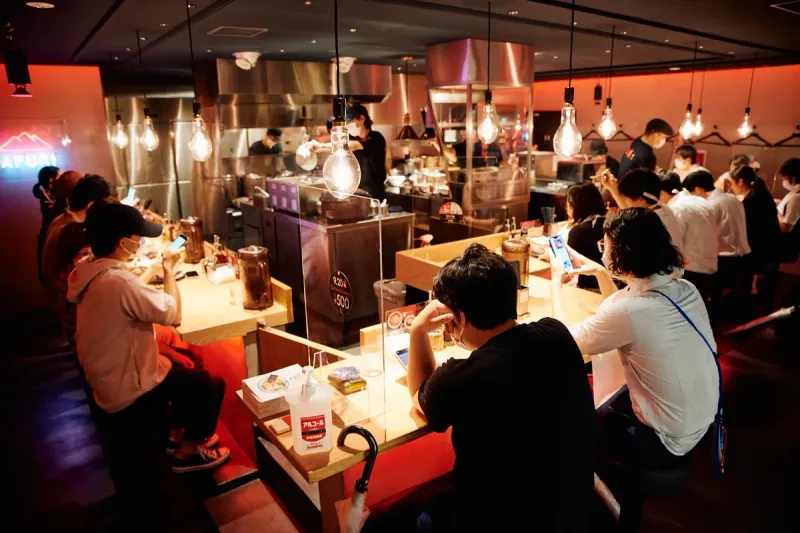
AFURI is the ramen shop that people who are tired of heavy broths fall in love with. The signature yuzu shio ramen uses a light, clear broth seasoned with salt and a hit of yuzu citrus that cuts through everything and leaves you feeling refreshed instead of weighed down. It’s the anti-tonkotsu. The Ebisu flagship is the original, right next to the station, and it stays open late enough to catch the post-drinks crowd. They offer three base versions (shio, shoyu, and a spicy option), plus vegan bowls with konjac noodles for anyone avoiding wheat or animal products. The ordering is all done through a touchscreen kiosk with English, and they only accept cards. No cash. This makes it one of the most tourist-friendly ramen shops in Tokyo, which is both a compliment and a caveat. The crowd here skews more international than at Konjiki-Hototogisu or Kagari. That doesn’t diminish the ramen. The yuzu-shio balance is genuinely special. But if you want a rougher, more local experience, try the AFURI Karakurenai in Shinjuku (number 12 on this list), which serves a spicier version of the same concept in a more izakaya-like setting.

AFURI Ebisu
3

AFURI Ebisu

restaurant Ebisu $$
4.2 Google 1-1-7 Ebisu, Shibuya, Tokyo
  • Famous yuzu broth in shio, shoyu, and spicy versions
  • Vegan options including konjac noodles
  • Modern kiosk ordering, open late, right by Ebisu Station
Tip

The yuzu shio ramen is the signature. Try the pour-over sake served in a cedar box.

"AFURI Ebisu is known for its delicious yuzu broth. The balance between the shio base soup and yuzu essence sets it apart. Card-only and kiosk ordering."

4. Karashibi Miso Ramen Kikanbo

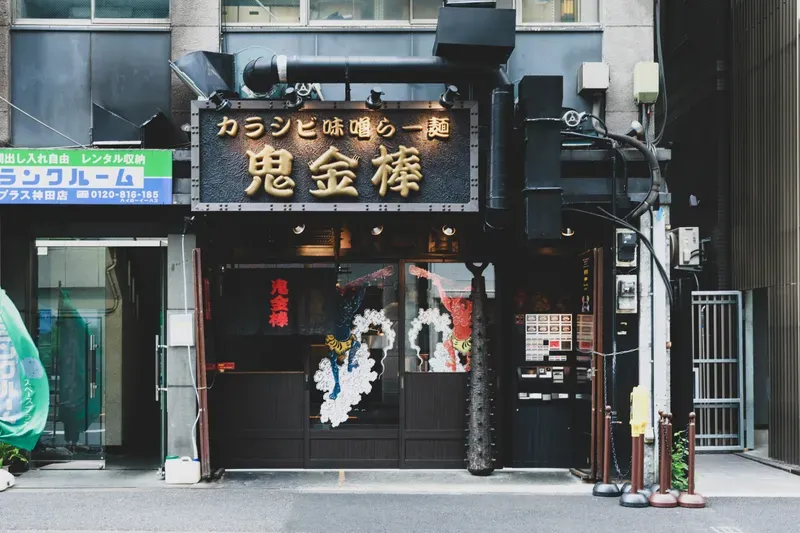
If you want heat, Kikanbo in Kanda is where Tokyo sends you. This is spicy miso ramen built around two axes of pain: “kara” (chili heat) and “shibi” (Sichuan peppercorn numbing). You choose your level of each on a scale when ordering, and the combination creates a broth that’s simultaneously fiery and tingly. Medium-medium is the recommended starting point. It’s intense but manageable. Go higher and you’re entering territory where your lips go numb and your forehead sweats. The noodles are handmade and thick enough to stand up to the heavy broth, and the pork belly chashu is tender without being floppy. The atmosphere adds to the experience. Traditional Japanese battle drum music plays in the background, which sounds absurd until you’re actually there and it somehow works. There’s usually a queue, especially at lunch, and it can stretch 30 minutes. Cash is the preferred payment. One practical note: if you have a low spice tolerance, this place will humble you. Start low. You can always come back and go higher.

Karashibi Miso Ramen Kikanbo
4

Karashibi Miso Ramen Kikanbo

restaurant Kanda
4.4 Google 2-10-9 Kajicho, Chiyoda City, Tokyo
  • Intensely flavorful miso ramen with customizable spice and numbing levels
  • Handmade noodles and tender pork belly
  • Immersive atmosphere with traditional Japanese battle drum music
Tip

Customize your spice level on the order sheet. Medium-medium is a good starting point. Bring cash.

"Known for intense and flavorful broth, handmade noodles, and customizable spice levels including Sichuan pepper for a numbing sensation."

5. Ichiran Shimbashi

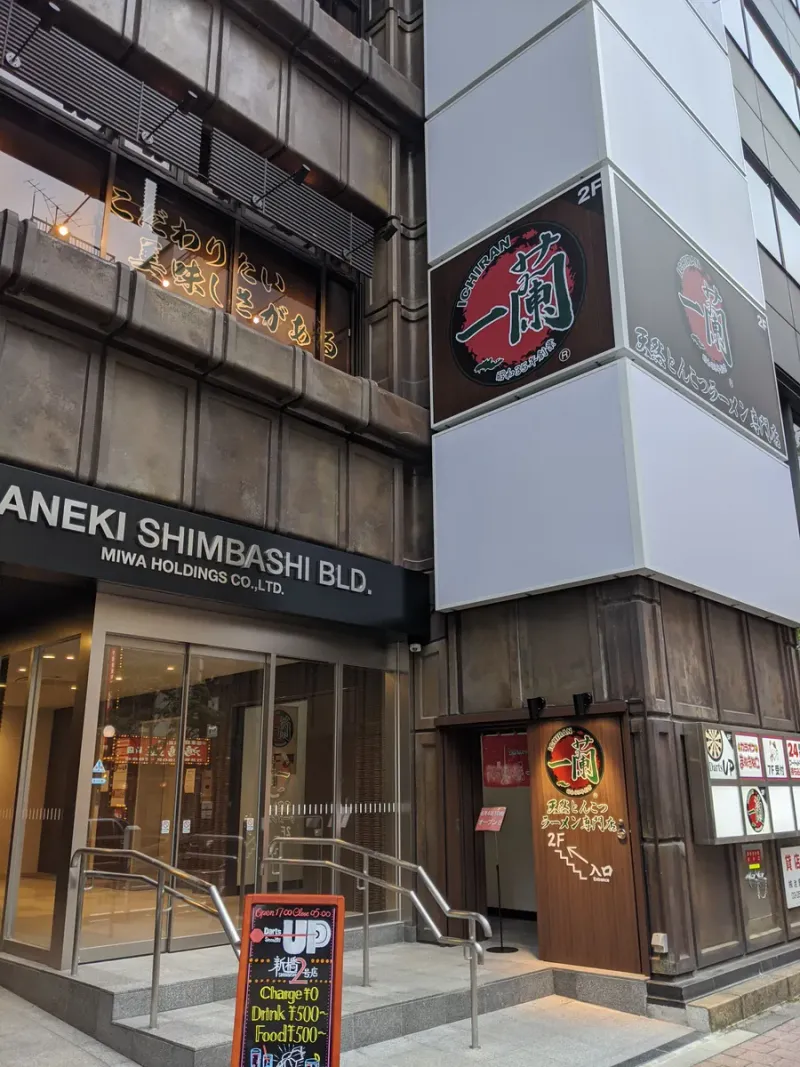
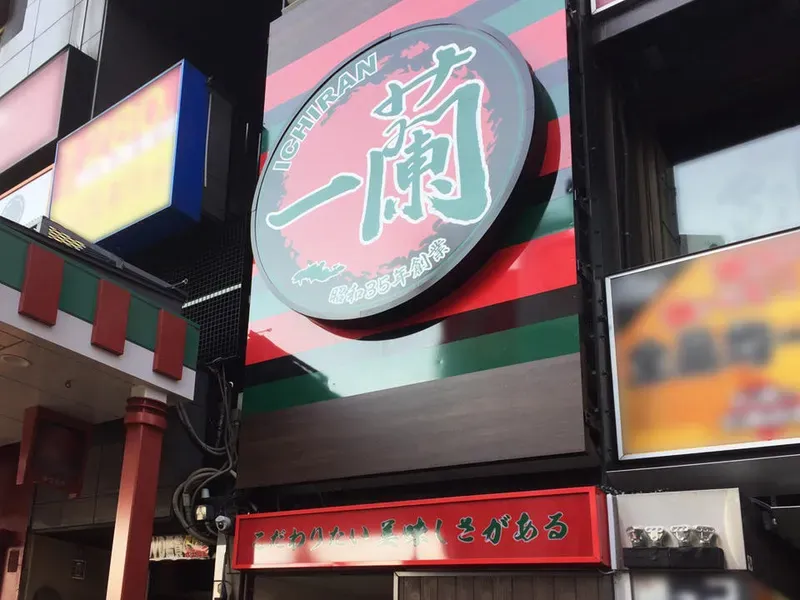
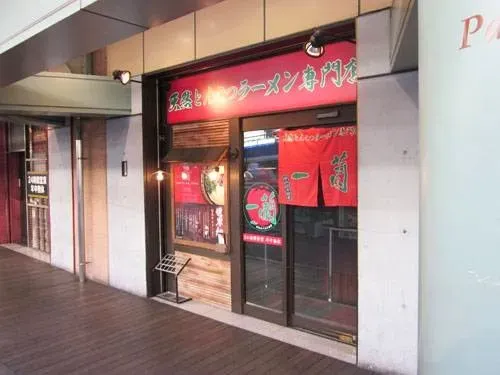
Yes, it’s a chain. Yes, every food blogger has an opinion about whether Ichiran is “real” ramen or a tourist trap. Here’s the honest answer: the ramen is solid, and the experience is unlike anything else. You sit in a solo booth behind a bamboo curtain. A bowl of tonkotsu ramen appears through a slot in the wall. You fill out a preference card beforehand to set broth richness, noodle firmness, spice level, garlic amount, and green onion quantity. Then you eat in complete privacy. It’s designed for focused eating, not socializing. The Shimbashi branch is central, less crowded than Shibuya, and open 24 hours, which makes it the go-to for late-night or jet-lagged ramen runs. Two bowls with extras come in around ¥2,000. The broth is rich and porky, the noodles are thin and firm, and the chashu is decent. It’s not the most refined bowl on this list. But for a first-time visitor to Japan, the Ichiran experience is genuinely fun, and the food is well above average for a chain. The virtual queue system (when available) texts you when a seat opens, so you don’t have to stand in line.

Ichiran Shimbashi
5

Ichiran Shimbashi

restaurant Shimbashi $$
4.2 Google 30-45 mins 2-5-6 Shinbashi, Minato City, Tokyo
  • Iconic solo-booth ramen experience with complete privacy
  • Customizable tonkotsu ramen with preference cards
  • Open 24 hours, perfect for late-night cravings
Tip

Use the preference card to set broth richness, spice, and garlic. Order extra chashu and the ajitama egg.

"Reviewers praise the customizable tonkotsu ramen and unique booth dining experience. The preference card lets you control every aspect of your bowl."

6. Mutekiya

Mutekiya has been drawing lines in Ikebukuro for years, and the queue is part of the legend at this point. On weekends, you might wait an hour. On a Tuesday at 11 AM, maybe 20 minutes. The tonkotsu broth here is thick, rich, and deeply porky in a way that hits different from Ichiran’s more polished version. It’s rawer, more old-school. The chashu is the star. Thick-cut slabs of braised pork belly that practically fall apart when you pick them up with chopsticks. You can customize your bowl with toppings like bamboo shoots, leeks, a soft-boiled egg, raw garlic, and chili pepper. The space is counter seating only, tight and warm, and the turnover is fast because nobody dawdles over a bowl of ramen at Mutekiya. You eat, you slurp, you leave. Cash only. Strollers and large bags don’t fit inside, so travel light. If you’re staying near Ikebukuro (a lot of budget hotels are in this area), Mutekiya should be your first ramen stop. It’s the kind of no-frills, all-flavour shop that reminds you why Tokyo ramen is worth queuing for.

Mutekiya
6

Mutekiya

restaurant Ikebukuro
4.2 Google 1-17-1 Minamiikebukuro, Toshima City, Tokyo
  • One of Tokyo's most legendary tonkotsu ramen shops
  • Generous thick-cut pork chashu slices
  • Customizable toppings including bamboo, leeks, eggs, garlic, and chili
Tip

Arrive before 11:30 AM to avoid the worst queues. Cash only. Counter seating only.

"Renowned for serving some of the best ramen in Tokyo with rich tonkotsu broth and thick slices of pork. Efficient service despite long queues."

7. Jikasei MENSHO

The Mensho group has been quietly building one of Tokyo’s most interesting ramen empires, and the Shibuya PARCO basement location is where they let their creativity run loose. The menu ranges from a wagyu shio ramen (rich, beefy, indulgent) to a fully vegan tantanmen that’s so well-made you’d never guess it was plant-based. The chef trained across multiple ramen disciplines and it shows. Each broth on the menu feels like it was developed by someone who actually cares about balance, not just intensity. The vegan options here are legitimately excellent, not an afterthought or a compromise. If you’re travelling with someone who doesn’t eat meat, this is the ramen shop that will make both of you happy. The self-ordering kiosks keep things moving, and because it’s in a basement food court, you can scope the queue before committing. Lines form but move quickly. The space is modern and clean, which is a contrast to the smoky, cramped aesthetic of old-school ramen shops. That’s not a criticism. Just a different vibe.

7

Jikasei MENSHO

restaurant Shibuya
4.8 Google Shibuya PARCO B1F, 15-1 Udagawacho, Shibuya, Tokyo
  • Exceptional ramen from the Mensho group with multiple broth styles
  • Strong vegan and vegetarian options including tantanmen
  • Located in Shibuya PARCO's basement food court
Tip

Visit when the line is short. Try the wagyu shio ramen or the vegan tantanmen.

"Offers delicious vegetarian and vegan ramen options alongside wagyu-based bowls. Self-ordering kiosks and quick seating make it convenient."

8. Sugoi Niboshi Ramen Nagi Golden Gai

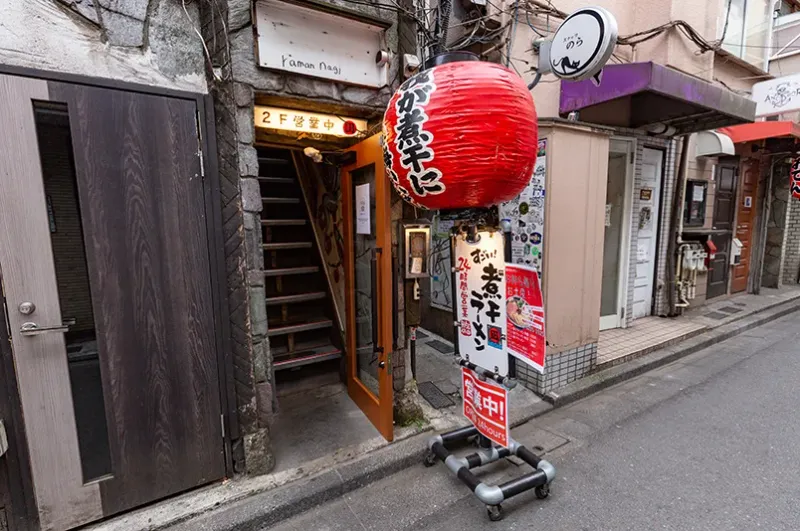
Golden Gai is a tiny grid of alleyways in Kabukicho packed with bars that seat six people each. In the middle of it all, up a narrow staircase, Ramen Nagi serves one of Tokyo’s most divisive bowls. The broth is made from niboshi, dried sardines, and it’s intense. Fishy, salty, pungent, and absolutely addictive if it clicks with your palate. The noodles are bouncy and thick, the toppings include sardine flakes, and the whole thing is unapologetically bold. If you find the broth overwhelming (and some people do), a splash of the anchovy vinegar they keep on the counter balances it out. About 10 seats. The queue spills into the alley. The atmosphere is half the appeal: you’re eating one of Tokyo’s most distinctive bowls of ramen in the middle of a neighbourhood that feels like a movie set. It won’t be everyone’s favourite. The fishiness is real. But if you’re the type of person who orders anchovies on pizza, you’ll be very happy here.

Sugoi Niboshi Ramen Nagi Golden Gai
8

Sugoi Niboshi Ramen Nagi Golden Gai

restaurant Shinjuku
4.2 Google 1-1-10 Kabukicho, Shinjuku City, Tokyo
  • Pungent niboshi (dried sardine) broth unlike anything else
  • Located inside Golden Gai for a uniquely atmospheric ramen experience
  • Bouncy noodles with interesting textures
Tip

Only about 10 seats. Try adding anchovy vinegar if the broth is too intense for you.

"Offers a unique and flavorful ramen experience with an addictively tasty anchovy-based broth, bouncy noodles, and interesting textures in Golden Gai."

9. Ginza Kagari Roppongi Hills

If you read the Ginza Kagari entry above and thought “I want that broth but not that queue,” this is your answer. The Roppongi Hills branch serves the same tori paitan recipe in a location that, because it’s slightly off the main ramen tourist circuit, draws shorter lines. The broth is the same rich, creamy chicken. They also offer a niboshi (dried sardine) tsukemen here that isn’t available at the Ginza original, which gives you a reason to visit even if you’ve already done the flagship. They hand out plastic aprons before you sit down, which is a thoughtful touch given how aggressively you’ll want to slurp the thick broth. Ordering is through the vending machine outside. Mid-afternoon visits are your best bet for avoiding any wait at all.

9

Ginza Kagari Roppongi Hills

restaurant Roppongi
4.3 Google 6-4-1 Roppongi, Minato City, Tokyo
  • Same creamy tori paitan as the Ginza original with shorter queues
  • Truffle ramen option and niboshi tsukemen
  • Plastic aprons provided for splash-free slurping
Tip

Visit during off-peak hours like mid-afternoon. Vending machine ordering. Try the truffle tori paitan or niboshi tsukemen.

"Offers a delightful ramen experience with rich and creamy broth, truffle flavors, tender slow-cooked chicken, and thoughtful service."

10. Bura Bura Abura Soba Shibuya

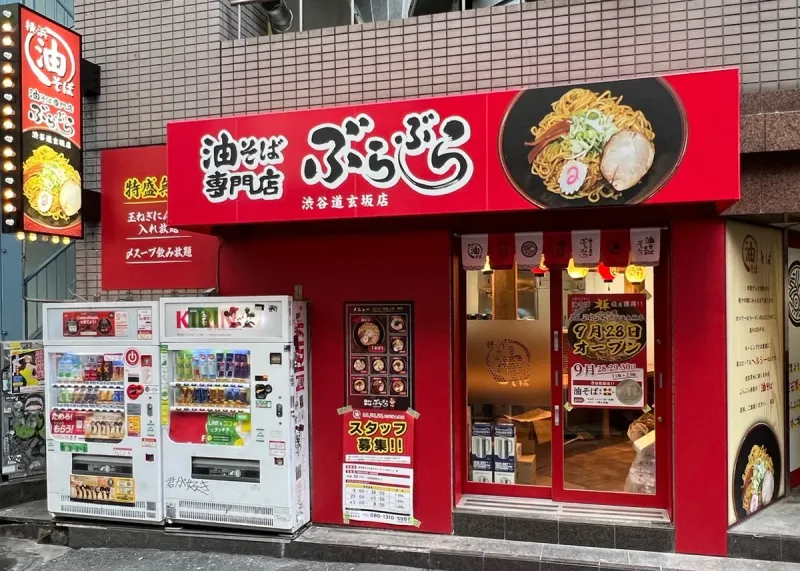
Abura soba is the ramen style that doesn’t get enough love from tourists, probably because it doesn’t look like ramen. There’s no broth. Instead, thick chewy noodles are tossed in a flavoured oil and tare (seasoning sauce), then topped with chashu, egg, green onions, and whatever else the shop chooses. At Bura Bura in Shibuya’s Dogenzaka, the noodles are the star. They’re fat and springy with a satisfying chew, coated in an oil that’s savoury without being greasy. Here’s the trick that regulars know: order any size (M, L, or XL) because the price is the same. At the end, you can add hot water to the remaining oil and toppings at the bottom of the bowl to make a light soup. Budget-friendly, filling, and genuinely delicious. Only about eight bar seats, so turnover is fast. People eat and leave. It’s a five-minute meal if you’re efficient, ten if you savour it.

Bura Bura Abura Soba Shibuya
10

Bura Bura Abura Soba Shibuya

restaurant Shibuya
4.7 Google 2-29-18 Dogenzaka, Shibuya, Tokyo
  • Delicious and unique soupless abura soba (oil-based noodles)
  • Budget-friendly with no price difference between sizes
  • Thick and chewy noodles with flavorful oil-based sauce
Tip

Order any size (M, L, XL) as there's no price difference. Add hot water at the end for a soup finish.

"Known for its delicious and unique soupless ramen with thick, chewy noodles paired with oil-based sauce. Budget-friendly with fast turnover."

11. Tsukemen Zuppa

This is the wildcard on the list, and it deserves to be here. Tsukemen Zuppa in Suidobashi is run by a chef who trained in Italian cuisine before pivoting to ramen, and that background shows up in every bowl. The soy milk broth ramen has a delicate sweetness and a silky texture that you won’t find anywhere else in Tokyo. The miso version is equally good. There are limited-edition seasonal specials like a tomato and basil mazesoba and a curry taco mazesoba that sound like they shouldn’t work but absolutely do. The restaurant leans heavily into vegan and vegetarian options, and unlike most ramen shops where the plant-based bowl is an afterthought, here it’s the main event. Cash at the ticket machine. Small space. If this chef ever gets a Michelin nod, the queues will be unbearable, so go now.

11

Tsukemen Zuppa

restaurant Suidobashi
4.8 Google 2-17-8 Misakicho, Chiyoda City, Tokyo
  • Italian-trained chef creating innovative tsukemen and vegan ramen
  • Exceptional soy milk broth with perfectly cooked noodles
  • Creative seasonal specials like curry taco mazesoba
Tip

Cash may be required at the ticket machine. Try the limited-edition specials like Tomato and Basil Mazesoba.

"An exceptional vegan and vegetarian ramen spot where the chef's Italian background adds unique twists. The soy milk ramen and miso ramen are standouts."

12. Afuri Karakurenai Shinjuku

The spicy offshoot of the AFURI chain, Karakurenai is for people who loved the yuzu concept but wanted more punch. The broth still has that citrus backbone, but layered on top is a chili heat that you can dial up to level 4 at no extra charge. The underground Shinjuku Subnade location has a moodier, izakaya-style atmosphere compared to the bright and airy Ebisu original. Vegetarian and vegan options are available here too. The braised pork belly side dish is worth adding. Good for a Shinjuku evening when you want something warming before heading into Golden Gai or Kabukicho.

Afuri Karakurenai Shinjuku
12

Afuri Karakurenai Shinjuku

restaurant Shinjuku
4.3 Google 1-23 Kabukicho, Shinjuku City, Tokyo
  • Spicy version of AFURI's famous yuzu ramen not found at other branches
  • Customizable heat levels with a yuzu-spice balance
  • Vegetarian and vegan options available
Tip

Spice levels go up to 4 at no extra charge. The braised pork belly side dish is worth adding.

"Offers a unique spicy ramen menu with yuzu undertones, customizable spiciness, and a cozy izakaya-style atmosphere."

13. Ichiran Asakusa

If you’re spending a day around Senso-ji and Asakusa (and you should), this Ichiran branch saves you a trip across the city for your tonkotsu fix. It’s the same Ichiran formula: solo booths, preference cards, ramen through the wall slot. The Asakusa location has one advantage over most other branches. It offers table seating alongside the solo booths, so you can actually eat with friends if you want to. There’s also an elevator for accessibility. The basement location means you might walk past it without noticing. The queue is usually shorter than Shibuya but longer than Shimbashi.

Ichiran Asakusa
13

Ichiran Asakusa

restaurant Asakusa
4.3 Google 1-1-16 Asakusa, Taito City, Tokyo
  • Same iconic Ichiran tonkotsu experience near Senso-ji
  • Both solo booths and table seating available
  • Quick and efficient service even during busy periods
Tip

This branch has tables as well as solo booths. An elevator is available for accessibility.

"Praised for incredibly tasty and customizable ramen with rich, complex broth, perfectly cooked noodles, and well-prepared boiled eggs."

14. ICHIRAN Ueno

Another Ichiran, and the reason it’s here is practical: Ueno is a major transit hub, and this branch inside Atre is the most convenient ramen stop for anyone passing through. Same tonkotsu, same booths, same preference cards. If you’re coming back from a day at Ueno Park or the museums and want a quick bowl before catching the Yamanote Line, this is it. Collapse the booth dividers if you’re eating with a friend. Add the egg.

ICHIRAN Ueno
14

ICHIRAN Ueno

restaurant Ueno
4.2 Google 7-1-1 Ueno, Taito City, Tokyo
  • Convenient Ichiran location inside Atre Ueno
  • Same customizable tonkotsu with preference cards
  • Easy access from JR Ueno Station
Tip

Collapse the booth dividers if you're eating with friends. Add an egg for extra richness.

"Popular for its perfectly balanced and flavorful ramen with individual dining booths and preference customization."

15. Afuri Shinjuku Lumine

The Lumine B2 location is the most accessible AFURI for anyone arriving at or departing from Shinjuku Station. The yuzu shio and yuzu shoyu bowls are the same as the Ebisu original, and the vegan option here can be made gluten-free with shirataki noodles, which is a combination that’s genuinely hard to find in Tokyo ramen. The space is modern, the kiosk ordering is quick, and the service is fast. Visit around 5 PM to skip the lunch and dinner peaks. It’s not the most atmospheric ramen experience on this list, but if you want a reliably good bowl with minimal fuss in the most convenient location possible, this is your spot.

Afuri Shinjuku Lumine
15

Afuri Shinjuku Lumine

restaurant Shinjuku
4.2 Google Lumine 1 B2F, 1-1-5 Nishishinjuku, Shinjuku City, Tokyo
  • Clean-tasting yuzu broths in a convenient station-adjacent location
  • Vegan and gluten-free options available
  • Quick service with modern kiosk ordering
Tip

Visit post-lunch or around 5 PM to skip the queue. The vegan option with shirataki noodles is gluten-free.

"Offers clean-tasting broths with tangy yuzu flavors, chewy noodles, and reasonably priced ramen sets. Quick service and modern ambiance."

A Ramen Strategy for Your Trip

You could eat ramen three times a day in Tokyo and not repeat a shop for weeks. But if you’re here for a few days, here’s a practical approach. Anchor your ramen meals around the neighbourhoods you’re already visiting. If you’re in Shinjuku, Konjiki-Hototogisu for a refined lunch and Ramen Nagi in Golden Gai for a late-night bowl is a strong double. In Shibuya, Jikasei MENSHO and Bura Bura Abura Soba are a short walk from each other and represent completely different styles. In Ginza, Kagari is the clear winner. In Ikebukuro, Mutekiya is the only name you need.

Try to hit at least three different broth types during your trip. If you only eat tonkotsu, you’re missing the point of Tokyo ramen. A shio bowl at AFURI, a miso bowl at Kikanbo, and a tonkotsu at Ichiran will give you a sense of the range.

For more on Tokyo’s broader food scene beyond noodles, read our best restaurants in Tokyo guide, which covers omakase sushi, wagyu yakiniku, and everything in between. And if you’re building a full itinerary, our things to do in Tokyo guide covers the non-eating hours.

Planning a ramen crawl across Tokyo? Save all 15 shops to your itinerary with Tourli, the app that turns travel guides into actionable day plans with walking routes between stops.

Frequently Asked Questions

How do I order ramen in Tokyo?
Most ramen shops use a ticket machine (券売機, kenbaiki) near the entrance. Insert cash or tap your IC card, press the button for your bowl, and hand the ticket to the chef. Some newer shops accept credit cards or have touchscreen kiosks with English. At Ichiran, you also fill out a preference card to customize broth richness, noodle firmness, spice level, and garlic. Staff interaction is minimal by design.
How much does a bowl of ramen cost in Tokyo?
A standard bowl runs ¥900-1,200 ($6-8 USD). Fancier shops with truffle toppings or premium chashu push toward ¥1,500-1,800. Adding extra noodles (kaedama) is usually ¥100-200. Two bowls with toppings and a side at Ichiran costs around ¥2,000. Tsukemen portions tend to be larger and cost ¥1,000-1,400. You can eat excellent ramen for under $10 almost anywhere in Tokyo.
Is it rude to slurp ramen in Japan?
No, slurping is expected and encouraged. It aerates the broth, cools the noodles, and signals to the chef that you're enjoying the food. Eating ramen quietly is actually the unusual thing to do. You'll hear the entire restaurant slurping, and nobody will look twice.
What are the main types of ramen in Tokyo?
Tokyo covers every regional style. Tonkotsu is a rich pork-bone broth (Ichiran, Mutekiya). Shio is a light salt-based broth, often with seafood (Konjiki-Hototogisu, AFURI). Shoyu is soy-sauce-based and the most traditional Tokyo style. Miso ramen uses fermented soybean paste (Kikanbo). Tori paitan is a creamy chicken broth (Ginza Kagari). Tsukemen is cold noodles dipped in concentrated broth. Abura soba is brothless noodles tossed in flavored oil.

More Tokyo Guides

3-Day Tokyo Itinerary (2026)

Itinerary

Three days, three pairs of neighbourhoods. This itinerary groups Tokyo by geography so you spend less time underground and more time eating, photographing, and getting properly lost.

14 places 3 days

5-Day Tokyo Itinerary (2026)

Itinerary

Five days, five neighbourhoods. This itinerary groups Tokyo by geography so you spend less time on trains and more time eating, exploring, and getting lost in the right way.

25 places 5 days

Things to Do in Asakusa, Tokyo (2026 Neighbourhood Guide)

Guide

Asakusa is Tokyo at its most traditional. While most of the city rebuilt itself into glass and steel after the war, this neighbourhood held onto its wooden shopfronts, its temple rituals, and its open-air drinking culture. Senso-ji has been standing here since the seventh century. Nakamise has been selling rice crackers and souvenirs since the Edo period. And Hoppy Street has been serving cheap beer alternatives to salarymen since the 1940s. It's the part of Tokyo that still feels like old Tokyo, and it's one of the few neighbourhoods where you can spend an entire day without running out of things to see, eat, and do.

13 places

Best Breakfast in Tokyo (2026) - From 6AM Sushi to Kissaten Toast

Vibe

Tokyo is one of the few cities where eating sushi at 6 AM is completely normal. Breakfast here spans everything from a three-piece sashimi set at a Tsukiji fish stall to a ¥500 kissaten morning set with toast so thick it could double as a pillow. This guide covers 11 ways to start your day, from the traditional to the trendy.

11 places

11 Best Brunch Spots in Tokyo (2026)

Vibe

Tokyo takes breakfast seriously, just not in the way you might expect. The city runs on kissaten morning sets, fluffy souffle pancakes that take 20 minutes to cook, and hotel buffets that could double as Michelin-level tasting menus. This guide covers all of it.

11 places

15 Best Cafes in Tokyo (2026)

Guide

Tokyo has over 550 cafes in our database alone, ranging from century-old kissaten to cafes where a capybara sits in your lap. These 15 cover matcha specialists, third-wave roasters, themed experiences, and traditional tea shops.

15 places

Save these places to your Tokyo trip

Tourli turns travel guides into actionable day plans. Save places, get walking directions, and share your itinerary — all in one app.