12 Best Izakaya in Tokyo (2026)
Izakaya are where Tokyo actually eats and drinks after work. These 12 spots cover smoky yokocho alleys, refined sake counters, standing bars under railway arches, and a few chains worth knowing about.
Best Izakaya in Tokyo
The word izakaya translates loosely to “stay-drink-place,” which tells you everything about the priorities. These are Tokyo’s after-work living rooms, the places where salary workers loosen their ties at 6 PM, order a draft beer before looking at the menu, and gradually build a table full of small plates that somehow turns into a three-hour evening. They range from six-stool counters wedged under railway tracks to multi-floor restaurants that look like film sets. The common thread is that drinking and eating happen together, in no particular hurry, and the bill at the end is almost always cheaper than you expected.
For visitors, izakaya are the single best way to eat and drink in Tokyo without a reservation list or a dress code. They’re also the place where you’ll run into the most unfamiliar customs. You’ll be handed food you didn’t order (that’s otoshi, and yes, you’re paying for it). Someone will shout “Toriaezu nama!” and a draft beer will appear. The menu might be entirely in Japanese. None of this is a problem once you know what to expect.
This guide covers 12 izakaya experiences across Tokyo, from the smoky alleyways of Shinjuku to the polished counters of Ginza, plus everything you need to know about ordering, tipping (don’t), and not accidentally spending ¥10,000 on a cover charge.

1. Omoide Yokocho (Memory Lane)
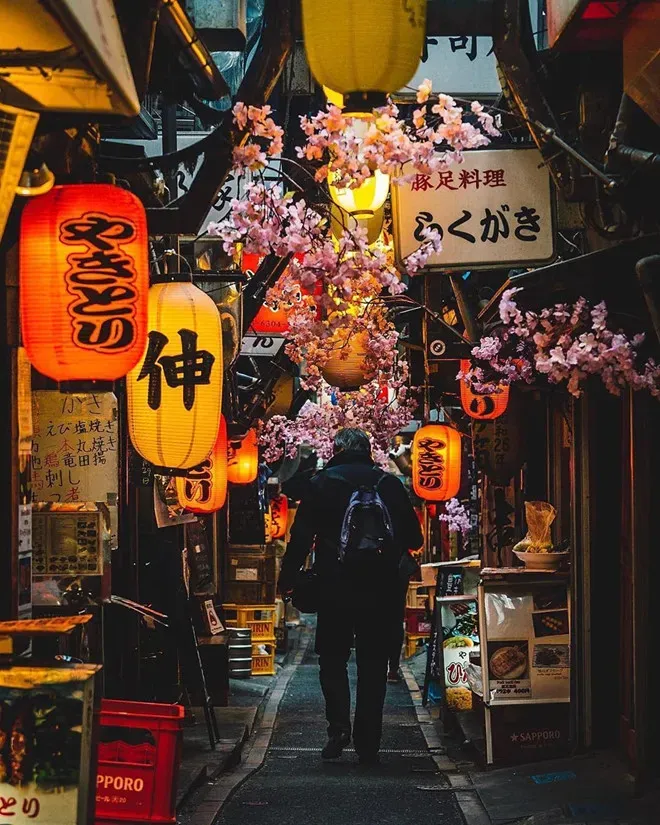
If you only visit one izakaya area in Tokyo, make it this one. Omoide Yokocho is a tangle of narrow alleyways just west of Shinjuku Station, packed with tiny yakitori stalls that seat six to eight people each. The smoke from a dozen charcoal grills hangs in the air. Lanterns glow red. Salary workers elbow past tourists who are trying to take photos of their skewers. It dates back to the post-war black market era and still feels like stepping into a different decade, even though the buildings have been rebuilt multiple times after fires. The stalls here specialize in yakitori and offal. Chicken hearts, gizzards, skin, and cartilage are standard fare alongside the usual thigh and breast skewers. Most places are cash-only and don’t have English menus, but pointing works. The key tactical advice: visit on a weekday. Weekends draw heavy tourist crowds and the waits stretch past 30 minutes. On a Tuesday at 6 PM, you can usually slide onto a stool within ten minutes.

Omoide Yokocho Memory Lane
- Iconic post-war alley with dozens of tiny yakitori stalls
- Authentic atmosphere impossible to replicate
- Right next to Shinjuku Station's west exit
Visit on weekdays or early evening to grab a seat. Most stalls are cash-only and seat 6-8 people.
"A narrow maze of post-war alleyways packed with tiny yakitori stalls and izakaya. The smoke, the cramped seating, and the energy make it one of Tokyo's most atmospheric drinking spots."
2. Hinotori
Yakitori and izakaya culture overlap heavily in Tokyo, and Hinotori in Nishi-Shinjuku sits right at the intersection. The chef sources premium Daisen chicken daily from Tottori Prefecture, one of Japan’s most respected poultry regions, and grills it over charcoal with a precision that comes from doing the same thing thousands of times. Each skewer arrives at its own pace, and the manager, who earned a Sake Master certification, pairs specific sakes with each course. The liver is silky. The tsukune (chicken meatball) has a light char on the outside and stays juicy inside. The skin skewer, grilled until it shatters, is one of those things you’ll find yourself craving on the flight home. The room is small, loud, and smoky in the best possible way. It fills up fast after 7 PM, so reservations are not optional. If you’re staying near Shinjuku, this is an easy walk from the station and a much better use of an evening than the tourist traps around Kabukicho. See our Shinjuku guide for more on the neighbourhood.

Hinotori
- Top-quality Daisen chicken sourced daily
- Sake Master-certified manager pairs drinks with each course
- Lively izakaya atmosphere in Nishi-Shinjuku
Reserve ahead. The chef sources fresh Daisen chicken daily from Tottori Prefecture.
"A popular yakitori place in Tokyo with expertly grilled chicken skewers. Premium Daisen chicken and curated sake pairings make it a standout."
3. Uokin Honten
Uokin’s trick is simple: they’re owned by a Tsukiji fish wholesale company. While other izakaya buy their fish through middlemen at marked-up prices, Uokin gets it at cost. The result is a sashimi platter with 14 varieties of fish for a price that would barely buy you three pieces at a Ginza sushi counter. The Shimbashi location is the original, and it’s chaos in the best way. Office workers pile in from 5:30 PM, the shouting starts, beer appears on tables before anyone’s sat down, and plates of impossibly fresh fish keep coming. It’s not pretty. The decor is functional at best. But the quality-to-price ratio on the seafood is hard to beat anywhere in central Tokyo. Raw oysters, grilled fish, and tempura round out the menu beyond the sashimi. Get there before 6 PM or resign yourself to a wait. The vibe here is pure Shimbashi salary-worker culture, which is to say: loud, fast, and deeply satisfying.
Uokin Honten
- Owned by a Tsukiji wholesale company, so fish prices are unbeatable
- Famous 14-variety sashimi platter
- Quintessential salary-worker izakaya experience
The sashimi platter is the move. Arrive before 6 PM or you'll wait 30+ minutes.
"A no-frills Shimbashi izakaya owned by a Tsukiji fish wholesaler. The sashimi is priced well below market rate. Always packed with office workers."
4. Nonbei Yokocho (Drunkard’s Alley)
Shibuya’s answer to Golden Gai is quieter, less touristy, and arguably more interesting. Nonbei Yokocho is a narrow lane of miniature bars just north of Shibuya Station, dating back to the early 1950s. Each bar is its own world. Some have a mama-san behind a counter pouring shochu for a handful of regulars. Others play jazz and serve wine. A few have evolved into craft cocktail spots. The common thread is size: most hold five to eight people. That intimacy is the entire point. You end up in conversation with whoever’s sitting next to you, whether that’s a local architect or another traveller who wandered in. The protocol is simple: peek inside, make eye contact with the bartender, and if they nod, take a seat. Some places have cover charges (¥500-1,000), some don’t. Carry cash. None of these bars take cards. The trick is to not overthink it. Have a drink, move on, try the next door. Two or three bars in one evening is the right pace.
Nonbei Yokocho
- 1950s drinking alley steps from Shibuya Station
- Younger crowd than Golden Gai
- Tiny bars with personal, intimate atmosphere
Most bars seat only 5-8 people. Bring cash. Don't be shy about peeking inside before committing.
"A narrow alley of miniature bars near Shibuya Station dating to the 1950s. Less touristy than Golden Gai. Each bar has its own personality."
5. Gonpachi Nishi-Azabu
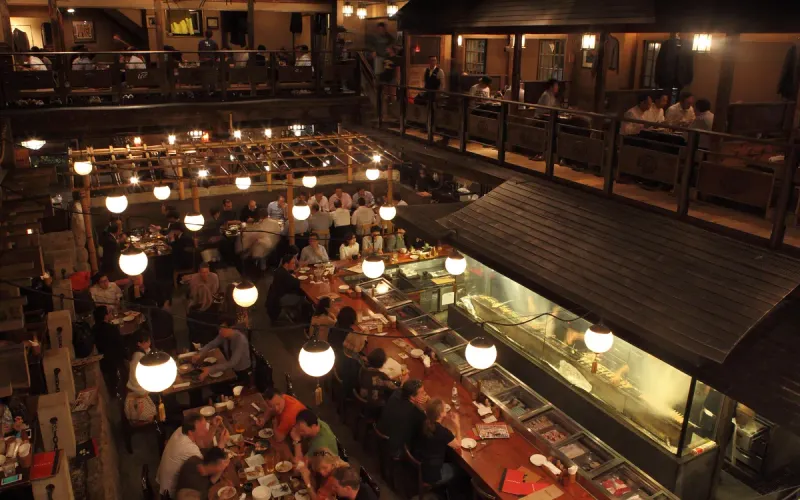
Yes, this is the Kill Bill restaurant. Quentin Tarantino based the Crazy 88 fight scene on the multi-level Edo-period interior, and the restaurant leans into it with just the right amount of pride. But the thing people don’t expect is that the food is actually good. The charcoal-grilled yakitori is excellent, the handmade soba noodles are fresh, and the menu is broad enough to cover an entire evening of drinking and eating without repeating yourself. It’s bigger and louder than a typical izakaya, more like a grand dining hall, which makes it better for groups than for a solo drink at the counter. There’s a drum performance around 8 PM some evenings that adds to the theatre. For visitors who want the izakaya experience with English menus, international-friendly service, and zero communication barriers, Gonpachi delivers that without dumbing down the food. They also offer Halal wagyu and vegan options, which is rare in the izakaya world. Cashless only.

Gonpachi Nishi-Azabu
- The 'Kill Bill' restaurant with stunning Edo-period interiors
- Excellent charcoal-grilled yakitori and handmade soba
- Halal and vegan options available
Reservations recommended. Cashless only. Catch the drum performance around 8 PM.
"An iconic multi-level izakaya famous as the inspiration for Kill Bill's fight scene. Great yakitori, handmade soba, and a lively atmosphere."
6. Ebisu Yokocho
Ebisu Yokocho solves one of the big problems with yokocho drinking: commitment. In a traditional alley, you pick a stall and you’re locked in for the evening. Ebisu Yokocho is a covered arcade of 20-odd stalls sharing communal tables, so you can order yakitori from one vendor, oden from the next, Korean fried chicken from a third, and keep your beer flowing throughout. It’s rowdy. The seating is plastic stools and shared tables. The lighting is fluorescent. It feels like a festival that happens to run every night of the week. The standing bars near the entrance are good for a quick drink if all the stools are taken. Weekday evenings around 6 PM are the sweet spot. By 8 PM on weekends, the wait for seating can hit 30 minutes. The variety makes it particularly good for groups where everyone wants something different, and the per-person spend rarely tops ¥3,000 even with generous drinking.
Ebisu Yokocho
- Covered food hall with 20+ stalls in a single arcade
- Mix of standing bars and seated izakaya
- Great variety from yakitori to oden to Korean food
Weekend evenings get packed. Weekday visits around 6 PM are ideal. Several stalls are standing-only.
"A covered arcade of small izakaya and food stalls in Ebisu. The communal tables and open layout make it easy to hop between vendors."
7. Warayakiya Nishi-Azabu
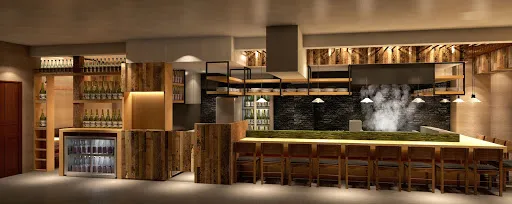
The straw fire pit at Warayakiya burns at 900 degrees Celsius. That’s not a marketing number. They use dried rice straw bundled into thick sheaves, and when it ignites, the flames leap three feet into the air. The signature dish is katsuo no tataki: a thick slab of bonito that gets seared in the fire for seconds, leaving the outside charred and smoky while the inside stays raw and cool. It arrives sliced, with fresh garlic, ginger, and ponzu on the side. The contrast between the smoky crust and the clean fish interior is one of those tastes that explains why Japanese food works. Beyond the bonito, the menu runs through grilled chicken, seasonal vegetables charred in the straw fire, and rice dishes. The sake list is thoughtful. This is a more refined izakaya experience, the kind of place where the bill might run ¥5,000-8,000 per person with drinks, but the theatrics of the straw fire cooking justify the price. Counter seats give you the best view of the flames.
Warayakiya Nishi-Azabu
- Dishes cooked over a traditional straw fire pit at 900°C
- Signature katsuo no tataki (seared bonito) prepared tableside
- Dramatic, theatrical cooking in an upscale setting
Sit at the counter to watch the straw fire pit in action. The katsuo no tataki is the signature.
"A high-end izakaya where chefs use a traditional straw fire pit to sear bonito and chicken at extreme temperatures. The flames and smoke are part of the show."
8. Yurakucho Gado-shita
This isn’t a single restaurant. It’s a strip of izakaya built into the arches under the Yamanote Line tracks between Yurakucho and Shimbashi stations. “Gado-shita” means “under the guardrails,” and that’s exactly what it is: concrete railway arches converted into tiny drinking spots where the rumble of trains overhead punctuates your conversation every few minutes. The stalls here specialise in grilled meat, seafood, and yakitori, all served with cheap beer and highballs on plastic stools that look like they haven’t been replaced since the 1980s. This is where Tokyo’s office workers have been unwinding for decades, and the atmosphere has a lived-in quality that no amount of interior design could replicate. Some stalls have English menus, many don’t. Cash is king. The best strategy is to walk the full stretch from Yurakucho Station to Shimbashi, peek into each archway, and sit down wherever catches your eye. A few beers and a plate of yakitori will cost you under ¥2,000.
Yurakucho Gado-shita
- Izakaya built into arches under the Yamanote Line tracks
- Authentic salary-worker after-work drinking culture
- Some of the cheapest beer and yakitori in central Tokyo
Walk the full length of the tracks from Yurakucho to Shimbashi. Each archway has a different izakaya.
"A strip of izakaya under the railway arches between Yurakucho and Shimbashi stations. The rumble of trains overhead, plastic stools, and cheap beer define the experience."
9. Shimada
Shimada is the izakaya equivalent of a sleight-of-hand trick. It looks, from the outside, like another quiet Ginza bar. Inside, the chef is producing dishes that would sit comfortably on a kaiseki menu: seasonal sashimi arranged with intention, grilled fish with crispy skin and perfectly pink flesh, small vegetable courses that change week to week based on what’s at the market. The prices, given the quality and the Ginza address, are genuinely reasonable. An omakase course with drinks might run ¥8,000-12,000 per person, which in this neighbourhood is a bargain. Counter seats are the way to go. You can watch the chef work and ask about the fish, which he’s happy to explain. It’s an intimate space, maybe 15 seats total, and reservations are necessary a few days out. If you want to experience what izakaya food looks like when it’s elevated to fine-dining standards without the fine-dining attitude, Shimada is that place.
Shimada
- Michelin-caliber izakaya dishes at reasonable Ginza prices
- Intimate counter seating with direct chef interaction
- Seasonal ingredients prepared with fine-dining technique
The omakase course is worth it over a la carte. Reserve at least a few days ahead.
"A refined Ginza izakaya serving dishes closer to kaiseki than pub food. Seasonal courses change frequently and ingredients are sourced with care."
10. Sowado
Ebisu has a reputation as one of Tokyo’s more relaxed drinking neighbourhoods, and Sowado fits right in. It’s a modern izakaya with a seasonal tasting course that changes monthly, curated sake pairings chosen by the owner, and a calm, warm atmosphere that feels more like a dinner party than a pub. The food leans refined but doesn’t lose the izakaya spirit: dishes arrive in small portions meant for sharing, the flavours are clean and seasonal, and there’s always something on the menu that surprises. The sake list goes deep, featuring smaller breweries from across Japan that you won’t find at chain izakaya. If you’re in the mood for a quieter evening after a day of navigating Shibuya crowds, Sowado is the antidote. Prices sit in the mid-range for Tokyo, around ¥5,000-7,000 per person with drinks.
Sowado
- Refined modern izakaya with seasonal courses
- Curated sake and wine pairings
- Elegant Ebisu setting away from the tourist circuit
Reserve a window seat for the view. The seasonal tasting course changes monthly.
"A polished izakaya in Ebisu serving seasonal Japanese dishes with modern technique. The sake selection is curated and the atmosphere is warm."
11. Torikizoku
Let’s talk about chain izakaya. They get dismissed by food bloggers, but they serve a purpose, and Torikizoku serves it better than most. The concept is pure simplicity: every item on the menu is ¥350. Yakitori skewers, draft beer, highballs, fried chicken, edamame, rice bowls, all ¥350. A full evening of eating and drinking rarely costs more than ¥3,000 per person. The quality won’t blow your mind, but the chicken skin skewers are crispy, the mega highball is strong, and the tablet ordering system works in English, which removes the communication barrier entirely. For budget travellers, for groups who want a casual night without worrying about the bill, or for anyone who wants to understand what a regular Tuesday evening looks like for millions of Japanese workers, Torikizoku delivers. There are branches everywhere. The Shinjuku location is the most convenient for most visitors.
Torikizoku Shinjuku
- Every item on the menu is ¥350
- Yakitori, beer, highballs, and sides all at the same flat price
- English tablet ordering system
Everything is ¥350 (tax included since 2024). The kawa (chicken skin) skewers and mega highball are the best value.
"Japan's most popular budget izakaya chain. Flat ¥350 pricing means a full evening of yakitori and drinks rarely tops ¥3,000 per person."
12. Furaibou
Furaibou’s double-fried chicken wings come from Nagoya, where tebasaki is treated with the same reverence that Tokyo gives to ramen. The process involves frying the wings twice, which renders out the fat and produces a shatteringly crispy skin, then dusting them with a peppery, slightly sweet seasoning blend that the chain has kept secret since 1963. You eat them with your hands. They’re salty enough to make you order another beer, which is, of course, the entire strategy. Beyond the wings, the menu covers standard izakaya fare: edamame, salads, sashimi, and rice dishes. But you’re here for the tebasaki. Order them first, order a nama biiru alongside, and then decide what else you want once the wings arrive. The Shinjuku branch is open late, making it a solid option for a post-drinking snack or a starting point before heading deeper into the neighbourhood’s nightlife. See our best bars in Tokyo guide for where to continue the evening.
Furaibou Nagoya-Style Wings
- Legendary double-fried chicken wings from Nagoya
- Casual drinking atmosphere with long hours
- Perfect izakaya starter food before a Shinjuku night out
Order the tebasaki (chicken wings) first. They arrive fast and pair perfectly with a nama biiru.
"A Nagoya-style chicken wing chain with a cult following. The secret-recipe double-fried wings are crispy, peppery, and engineered for pairing with cold beer."
Izakaya Ordering Culture: What to Know Before You Go
The first thing that happens when you sit down at an izakaya is the otoshi. A small plate appears that you didn’t order. Maybe it’s a bowl of edamame, maybe it’s a tiny dish of pickled vegetables, maybe it’s a piece of tofu in broth. You’re paying for it regardless, usually ¥300-700 per person. This is normal. It’s not a scam. Think of it as a cover charge that comes with a snack. If you have allergies, you can ask for something different, but you can’t refuse the charge itself.
Next: drinks. The universal opening move is “Toriaezu nama!” which translates roughly to “A draft beer for starters!” Nama biiru (draft beer) is the default first order at almost every izakaya in Japan. Most places serve Asahi, Kirin, or Sapporo. After the first round, you branch into highballs (whisky and soda), shochu, sake, or chuhai (fruit-flavoured shochu cocktails). Many izakaya offer nomihoudai, an all-you-can-drink deal for a set time, usually two hours, at a flat rate of ¥1,500-2,500. It’s good value for groups.
Food arrives in waves, not courses. You order a few dishes to start, then keep adding as the evening goes on. Izakaya food is designed for sharing: small plates of grilled fish, fried chicken, sashimi, pickles, tofu, salads, and rice or noodles to finish. Don’t try to order everything at once. Part of the rhythm is the gradual accumulation.
When you’re done, call out “Okaikei onegaishimasu!” (Check, please!) and pay at the register by the door. Never leave money on the table. Never tip. Both will confuse the staff.
Chain vs. Independent: A Honest Comparison
Chain izakaya like Torikizoku, Watami, and Doma Doma get a bad reputation from travel blogs, and some of that criticism is fair. The food is mass-produced. The atmosphere is generic. The sake selection is limited. But they have real advantages for visitors: English menus, tablet ordering, predictable pricing, and branches near every major station. If it’s your first night in Tokyo and you’re jet-lagged and overwhelmed, a chain izakaya is a perfectly reasonable choice. Nobody will judge you.
Independent izakaya are where the magic happens, but they demand more from you. The menu might be a handwritten board in Japanese. The owner might wave you away if they’re full. The otoshi might be something you’ve never seen before. These friction points are part of the experience, and the reward is food and atmosphere that no chain can replicate. The best approach is to start with a chain to get your bearings, then graduate to independent spots as your confidence grows.
Planning Your Izakaya Evening
The smart way to do this is to pick a neighbourhood and commit to it. Shinjuku gives you Omoide Yokocho, Hinotori, Torikizoku, and Furaibou all within walking distance. Ebisu has Ebisu Yokocho and Sowado. The Yurakucho-to-Shimbashi railway arch strip leads naturally to Uokin. Ginza has Shimada for a more refined evening.
If you’re spending several nights in Tokyo, try one yokocho evening (Omoide Yokocho or Nonbei Yokocho), one refined izakaya evening (Shimada or Warayakiya), and one casual chain night (Torikizoku). That covers the full spectrum. For more Tokyo drinking options beyond izakaya, check our best bars guide. If you want to combine izakaya hopping with proper sit-down meals, our best restaurants in Tokyo guide covers the full range from ramen to omakase.
Planning your trip to Tokyo? Save these places to your itinerary with Tourli, the app that turns travel guides into actionable day plans.
Frequently Asked Questions
What is otoshi and why did I get charged for food I didn't order?
How do you order at a Japanese izakaya?
What is the difference between an izakaya and a bar in Tokyo?
Are izakaya in Tokyo cash only?
More Tokyo Guides
3-Day Tokyo Itinerary (2026)
ItineraryThree days, three pairs of neighbourhoods. This itinerary groups Tokyo by geography so you spend less time underground and more time eating, photographing, and getting properly lost.
5-Day Tokyo Itinerary (2026)
ItineraryFive days, five neighbourhoods. This itinerary groups Tokyo by geography so you spend less time on trains and more time eating, exploring, and getting lost in the right way.
Things to Do in Asakusa, Tokyo (2026 Neighbourhood Guide)
GuideAsakusa is Tokyo at its most traditional. While most of the city rebuilt itself into glass and steel after the war, this neighbourhood held onto its wooden shopfronts, its temple rituals, and its open-air drinking culture. Senso-ji has been standing here since the seventh century. Nakamise has been selling rice crackers and souvenirs since the Edo period. And Hoppy Street has been serving cheap beer alternatives to salarymen since the 1940s. It's the part of Tokyo that still feels like old Tokyo, and it's one of the few neighbourhoods where you can spend an entire day without running out of things to see, eat, and do.
Best Breakfast in Tokyo (2026) - From 6AM Sushi to Kissaten Toast
VibeTokyo is one of the few cities where eating sushi at 6 AM is completely normal. Breakfast here spans everything from a three-piece sashimi set at a Tsukiji fish stall to a ¥500 kissaten morning set with toast so thick it could double as a pillow. This guide covers 11 ways to start your day, from the traditional to the trendy.
11 Best Brunch Spots in Tokyo (2026)
VibeTokyo takes breakfast seriously, just not in the way you might expect. The city runs on kissaten morning sets, fluffy souffle pancakes that take 20 minutes to cook, and hotel buffets that could double as Michelin-level tasting menus. This guide covers all of it.
15 Best Cafes in Tokyo (2026)
GuideTokyo has over 550 cafes in our database alone, ranging from century-old kissaten to cafes where a capybara sits in your lap. These 15 cover matcha specialists, third-wave roasters, themed experiences, and traditional tea shops.
Save these places to your Tokyo trip
Tourli turns travel guides into actionable day plans. Save places, get walking directions, and share your itinerary — all in one app.