Best Breakfast in Tokyo (2026) - From 6AM Sushi to Kissaten Toast

Tokyo is one of the few cities where eating sushi at 6 AM is completely normal. Breakfast here spans everything from a three-piece sashimi set at a Tsukiji fish stall to a ¥500 kissaten morning set with toast so thick it could double as a pillow. This guide covers 11 ways to start your day, from the traditional to the trendy.

Places
11
Avg Rating
4.2
City
Tokyo

Best Breakfast in Tokyo

Tokyo is a city that starts eating before most tourists have figured out the subway map. By 5 AM, the sushi counters at Tsukiji Outer Market are already slicing through the day’s first tuna. By 7 AM, salarymen are sitting in wood-panelled kissaten, working through thick slices of buttered toast and hand-dripped coffee that costs less than a vending machine energy drink. By 9 AM, the souffle pancake queues in Omotesando have already formed.

Breakfast here is not one thing. It can be a traditional Japanese set meal of grilled mackerel, steamed rice, miso soup, and pickled vegetables. It can be a ¥150 onigiri from 7-Eleven eaten on a park bench. It can be sushi so fresh the fish was swimming six hours ago. The sheer range is part of what makes mornings in Tokyo so good, and so easy to waste if you default to your hotel’s overpriced buffet.

This guide covers 11 places across the full spectrum: market sushi at dawn, traditional fish breakfasts, old-school kissaten, fluffy pancakes, convenience store staples, and a fried chicken stand near a temple that somehow makes perfect sense at 9 in the morning.

1. Fish Market Tsukiji Outer Market

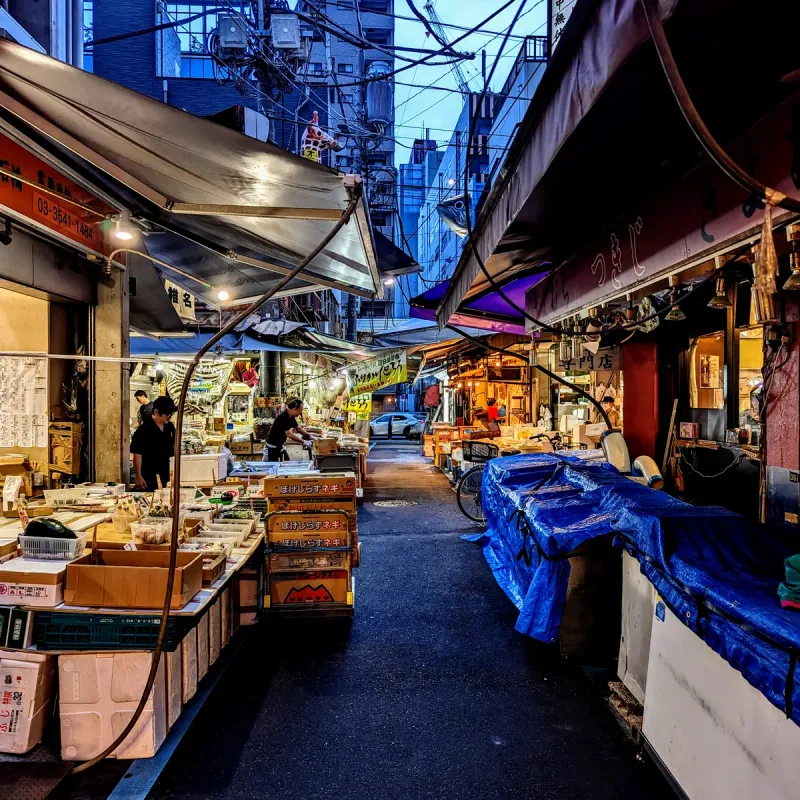
The wholesale tuna auctions moved to Toyosu in 2018, but the outer market at Tsukiji is still the beating heart of Tokyo’s food culture, and it still runs on a 5 AM clock. Over 400 shops and stalls line the narrow alleys, and the ones you want for breakfast are the sushi counters that open between 5 and 7 AM. The fish is absurdly fresh. Tuna, salmon, uni, ikura, and a half-dozen other things you might not recognize arrive on rice that’s still warm, and the whole experience costs a fraction of what you’d pay at a dinner sushi counter. Beyond the sit-down sushi spots, there’s street food worth grazing: grilled scallops on skewers, tamagoyaki (sweet rolled omelette) from shops that have been making it the same way for decades, and tuna sashimi that vendors will slice to order. The crowd is a mix of chefs stocking their restaurants, elderly locals doing their morning shop, and tourists who set an alarm for once. Go early. By 10 AM the narrow lanes get genuinely uncomfortable, and by 2 PM most stalls have shuttered for the day.

Fish Market Tsukiji Outer Market
1

Fish Market Tsukiji Outer Market

market Tsukiji $$
4.2 Google Tsukiji, 4-chome-16, Chuo City, Tokyo
  • Fresh sushi breakfast from 5-6 AM
  • Street food stalls with grilled seafood skewers and tamagoyaki
  • An authentic morning-market experience that locals still use
Tip

Arrive by 6 AM for the freshest sushi and shortest queues. Most stalls are cash only.

"Sprawling wholesale fish market with an array of seafood stalls, sushi counters, and viewing areas. Vendors are friendly and the atmosphere is buzzing from dawn."

2. Marukita Tsukiji

If you want to sit down for a proper sushi breakfast rather than eat standing at a stall, Marukita is where the queues form. This Tsukiji institution opens at 6 AM and serves kaisendon, which is basically a bowl of rice buried under an embarrassing amount of fresh seafood. The signature Marukita-don comes topped with 11 different kinds of fish that change based on what’s best that morning. The chef picks. You eat. It’s one of those meals where the simplicity is the point: perfectly vinegared rice, fish that was alive a few hours ago, a dab of wasabi, and soy sauce on the side. The portions are generous and the prices are reasonable for what you’re getting. Weekend queues build quickly after 7 AM, so weekday visits are easier. The restaurant is small and no-frills, which fits. You’re here for the fish, not the decor.

2

Marukita Tsukiji

restaurant Tsukiji $$
4.3 Google 4-10-16 Tsukiji, Chuo City, Tokyo
  • Kaisendon (seafood rice bowls) served from 6 AM
  • Signature bowl topped with 11 kinds of daily-catch seafood
  • One of Tsukiji's most popular breakfast-only restaurants
Tip

The Marukita-don with 11 types of seafood is the move. Get there before 7 AM on weekends.

"Famous Tsukiji restaurant serving generous seafood rice bowls from early morning. The daily-changing selection of fresh fish on rice draws long queues."

3. Shinpachi Shokudo Shinjuku

If you want to understand how most Japanese people actually eat breakfast, forget sushi and pancakes. The traditional Japanese morning meal is a grilled fish set: a fillet of mackerel, salmon, or saury grilled over charcoal, served alongside steamed rice, a bowl of miso soup, a small dish of pickled vegetables, and sometimes a raw egg to crack over the rice. Shinpachi Shokudo in Shinjuku does this for around ¥600-800, and they do it well. The fish selection is broad. Grilled saba (mackerel) is the most popular and probably the best starting point. The salmon is reliable. The red fish (akadai) is a solid pick if you want something milder. You order from a tablet at your seat, which means no Japanese language skills required. The space is small and honestly a bit cramped, but that’s standard for Tokyo breakfast joints. The real appeal is timing: Shinpachi opens early, when most Shinjuku restaurants are still locked up, making it perfect if you’re heading out to explore and want fuel that will actually last until lunch.

3

Shinpachi Shokudo Shinjuku

restaurant Shinjuku $
4.0 Google Nishishinjuku, 1-chome-15-9, Shinjuku City, Tokyo
  • Traditional grilled fish breakfast sets from ¥600
  • Wide selection of fish including mackerel, salmon, red fish, and saury
  • Opens early when most Shinjuku restaurants are still closed
Tip

Cash only. Order from the tablet at your seat. The grilled mackerel set is the most popular choice.

"Affordable Japanese breakfast chain serving excellent grilled fish sets with rice, miso soup, and pickles. Cramped seating but good value and quick service."

4. Cafe de l’Ambre

Walking into Cafe de l’Ambre feels like stepping back fifty years. This Ginza kissaten has been open since 1948, and not much appears to have changed since then. The counter is dark wood. The lighting is warm and low. There is no Wi-Fi, no laptop brigade, and nobody is taking photos of their latte art. What there is, instead, is some of the most carefully prepared coffee in Tokyo, made from beans that the shop ages for years before roasting. The founder, Ichiro Sekiguchi, was a pioneer of Japanese coffee culture, and his legacy lives on in the preparation: each cup is brewed by hand with intense attention to temperature, grind, and timing. The morning here is not about food. There is no morning set with toast and eggs. You come for the coffee and the atmosphere, and both are extraordinary. Pair it with a walk through the quiet Ginza backstreets before the department stores open at 10 AM. If you want a proper kissaten morning set with toast and all the fixings, head to Renoir instead (see below), but for coffee alone, l’Ambre is in a class of its own.

4

Cafe de l'Ambre

cafe Ginza $$
4.4 Google 8-10-15 Ginza, Chuo City, Tokyo
  • One of Tokyo's most legendary kissaten, open since 1948
  • Specialises in aged coffee beans with meticulous preparation
  • A living museum of Japanese coffee culture
Tip

Try the aged coffee beans. The atmosphere is Showa-era perfection. No laptops, no rushing.

"A Ginza institution since 1948 known for meticulous coffee preparation and aged beans. The Showa-era interior is a time capsule. Quiet, contemplative, and deeply atmospheric."

5. Renoir Coffee House Shinjuku

For the full kissaten morning set experience, Renoir is the move. This chain has been running since the 1960s and the format hasn’t changed because it doesn’t need to. Order any coffee (starting around ¥730), then add the morning set for just ¥60 more. For that barely-there surcharge, you get a thick slice of toast, a boiled egg, and a small cup of soup. The toast is the star. Japanese kissaten toast is not like regular toast. The bread is cut thick, sometimes nearly two centimetres, and it’s toasted until the outside is golden and crackly while the inside stays soft and almost custardy. A pat of butter melts into it. That’s it. No avocado, no fancy toppings, just very good bread treated with respect. The Shinjuku location has spacious booth seating, which is unusual for Tokyo, and the morning set is available until 11 AM. It’s the kind of breakfast that costs less than a Starbucks latte and leaves you wondering why thick toast hasn’t caught on everywhere else.

5

Renoir Coffee House Shinjuku

cafe Shinjuku $
3.8 Google 3-26-14 Shinjuku, Shinjuku City, Tokyo
  • Classic kissaten morning set: thick toast, boiled egg, and coffee from ¥790 total
  • Spacious Showa-era interior with booth seating
  • Multiple locations across Tokyo, reliably open from early morning
Tip

The morning set adds just ¥60 to your drink order. Available until 11 AM.

"Long-running kissaten chain with comfortable seating and traditional morning sets. The toast is thick-cut and properly buttered, and the coffee is hand-dripped."

6. A Happy Pancake Omotesando

Japanese souffle pancakes are one of those things that look fake on Instagram and taste even better in person. A Happy Pancake (Shiawase no Pancake) is the chain that popularised them, and the Omotesando location is probably the most accessible for visitors. The pancakes are made without baking powder. Instead, the batter relies entirely on whipped egg whites, which gives them a texture that’s less “fluffy pancake” and more “savoury cloud that someone drizzled honey on.” Each order is cooked fresh, which means a 20-minute wait even after you’re seated. Don’t get impatient. The result is three wobbly discs of golden batter topped with Hokkaido butter and New Zealand Manuka honey that deflate slowly as you eat them. Five locations across Tokyo (Omotesando, Shibuya, Ginza, Ikebukuro, Kichijoji) mean you can usually find one near wherever you’re staying. Weekend queues at the Omotesando branch can hit 40 minutes, so weekday mornings are the better call.

6

A Happy Pancake Omotesando

cafe Omotesando $$
4.2 Google 6-29-3 Jingumae, Shibuya, Tokyo
  • Tokyo's most famous souffle pancakes, made without baking powder
  • Hokkaido butter and New Zealand Manuka honey toppings
  • Five Tokyo locations including Omotesando, Shibuya, and Ginza
Tip

Expect a 20-40 minute wait on weekends. Pancakes take 20 minutes to cook fresh, so don't rush.

"Famous chain serving impossibly fluffy souffle pancakes made with whipped egg whites and no baking powder. Each order is cooked fresh, resulting in a 20-minute wait that's worth it."

7. Flipper’s Shimokitazawa

If A Happy Pancake is the souffle pancake establishment, Flipper’s is the cool younger sibling. Their signature “Kiseki” (miracle) pancakes are even more theatrical than A Happy Pancake’s version. They wobble. They jiggle. They look like they might collapse at any moment, and then they don’t. The texture is somewhere between a pancake and a Japanese cheesecake, and the seasonal flavour rotations keep regulars coming back. Strawberry and cream in spring, matcha in winter, peach in summer. The Shimokitazawa location is worth choosing over the more central branches because the neighbourhood itself is worth exploring. Shimokitazawa is Tokyo’s vintage clothing and indie culture capital, full of thrift shops, tiny live music venues, and coffee shops that take themselves exactly the right amount of seriously. Have pancakes, then spend the morning browsing record shops and secondhand kimono stores. Weekday mornings are noticeably quieter.

7

Flipper's Shimokitazawa

cafe Shimokitazawa $$
4.1 Google 2-26-21 Kitazawa, Setagaya City, Tokyo
  • Famous 'Kiseki' miracle souffle pancakes
  • Seasonal flavour rotations keep it interesting
  • Trendy Shimokitazawa location perfect for morning exploring
Tip

The 'Kiseki' (miracle) pancakes are the signature. Weekday mornings have shorter waits.

"Popular chain known for impossibly jiggly souffle pancakes served with seasonal fruit and cream. The 'miracle' pancakes wobble on the plate and melt in your mouth."

8. Ivy Place

Daikanyama is Tokyo’s quiet, upscale answer to Brooklyn, and Ivy Place sits right in the middle of it, inside the beautiful T-Site complex next to Tsutaya bookstore. The breakfast menu runs until 10:45 AM and covers Western territory: buttermilk pancakes, granola bowls, egg dishes, seasonal fruit smoothies. The pancakes are the thing to order. They’re not the jiggly souffle style. These are proper American-style buttermilk pancakes, thick and golden and served in a stack with maple syrup and butter. The terrace is where you want to sit if the weather cooperates. It’s surrounded by greenery, feels surprisingly private for central Tokyo, and is dog-friendly. Ivy Place opens at 7 AM on weekdays, which makes it one of the earlier Western-style breakfast options in the city. The crowd is a mix of well-dressed Daikanyama locals, expats, and the occasional tourist who wandered in from the bookstore. Reservations are smart for weekend brunch but usually unnecessary for weekday breakfast.

Ivy Place
8

Ivy Place

cafe Daikanyama $$$
4.2 Google 16-15 Sarugakucho, Shibuya, Tokyo
  • Classic buttermilk pancakes that are fluffy and comforting
  • Beautiful garden terrace seating in the Daikanyama T-Site complex
  • Full Western breakfast menu with granola, eggs, and smoothies
Tip

Opens at 7 AM on weekdays. The outdoor terrace is dog-friendly and lovely on clear mornings.

"Designer cafe with pancakes, pizza and brunch cocktails, plus outdoor dining in a manicured garden. The buttermilk pancakes are a bestseller."

9. Asakusa Chicken

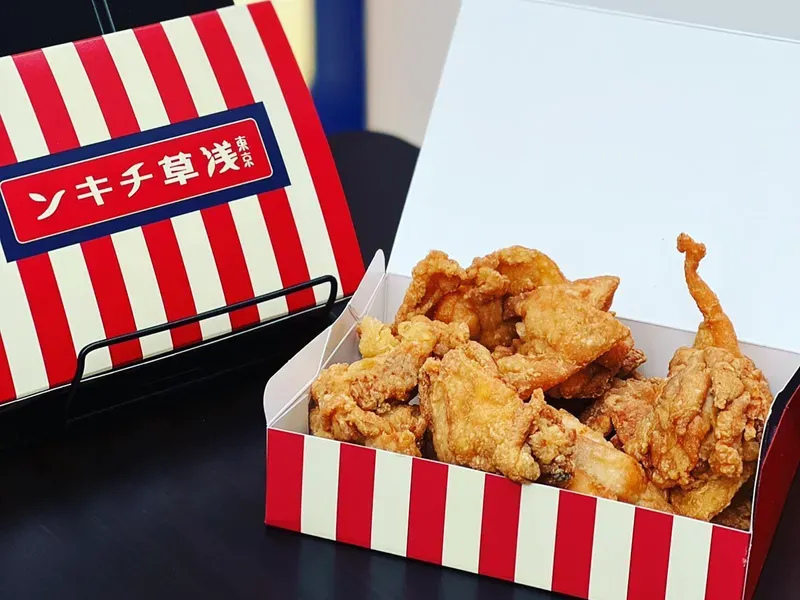
Fried chicken for breakfast sounds wrong until you’re standing outside Senso-ji at 9 AM, hungry after the train ride to Asakusa, and someone hands you a piece of freshly fried karaage that’s still crackling. Asakusa Chicken sits a few minutes from the temple and opens at 9 AM with chicken cooked to order from a family recipe. The pieces are small, nugget-sized, and impossibly crispy. The coating shatters, the meat inside is juicy, and the whole thing disappears before you’ve had time to think about it. The crab cream croquettes are the sleeper hit: creamy on the inside, crackly on the outside, and about ¥300 each. There is a small seating area with fun photo props out front, but most people eat standing or walking. It pairs well with the morning beer culture that’s completely normal at Japanese food stalls. Nobody will judge you. Come early to avoid the tourist crowds that build after 11 AM, and combine it with a visit to Senso-ji before the incense smoke gets thick and the Nakamise-dori souvenir street becomes a traffic jam.

Asakusa Chicken
9

Asakusa Chicken

restaurant Asakusa $
4.9 Google 2-10-1 Asakusa, Taito City, Tokyo
  • Award-winning chicken karaage cooked fresh to order
  • Crab cream croquettes for about ¥300 each
  • Perfect pre-temple morning snack near Senso-ji
Tip

Opens at 9 AM. Bring cash. Try both the karaage and the crab cream croquettes.

"A gem near Senso-ji known for delicious made-to-order chicken karaage based on a family recipe. The crab cream croquettes also get high praise."

10. Hatoya Asakusa

If Asakusa Chicken is the savory morning option near Senso-ji, Hatoya is the sweet, quiet alternative a few streets away. This matcha cafe serves traditional Japanese sweets alongside quality matcha lattes and hojicha, and it’s the kind of place where you can sit for 20 minutes in genuine peace before the temple crowds descend. A matcha and daifuku mochi pairing makes for a gentle, sweet start to the day that won’t weigh you down. It’s not a full breakfast in the Western sense, more of a morning ritual. But if you’re someone who reaches for something sweet and a good cup of tea before anything else, Hatoya feels purpose-built for that. The location is convenient for combining with Asakusa Chicken and Senso-ji into a full morning loop.

10

Hatoya Asakusa

cafe Asakusa $
4.5 Google 2-14-3 Hanakawado, Taito City, Tokyo
  • Matcha and traditional Japanese sweets in a calm setting
  • Located steps from Senso-ji temple
  • A gentle, sweet start to a morning in Asakusa
Tip

Try the matcha latte with a fresh daifuku mochi. A quieter alternative to the Senso-ji crowds.

"Charming matcha cafe near Senso-ji serving traditional Japanese sweets and quality matcha drinks. A peaceful spot to sit before the temple crowds arrive."

11. The Convenience Store (7-Eleven, Lawson, FamilyMart)

This isn’t a joke recommendation. Japanese convenience stores are, genuinely, one of the best breakfast options in Tokyo, and there are thousands of them. The onigiri (rice balls) are the headline act: triangular parcels of seasoned rice wrapped in crisp nori seaweed, filled with salmon, tuna mayo, pickled plum, or a dozen other options. They cost ¥120-180 each, they’re made fresh daily, and two of them plus a ¥100 machine-brewed coffee from 7-Eleven makes a filling breakfast for under ¥500. The egg sandwiches deserve special mention. Japanese convenience store egg sandwiches use pillowy milk bread and a creamy egg salad filling that somehow tastes better than it has any right to. Lawson’s is widely considered the best of the three chains for pastries and baked goods. FamilyMart’s famichiki (fried chicken) is a breakfast option if you lean that direction. Any 7-Eleven will have the best coffee machine. The point is: don’t sleep on the konbini. On days when you want to save your appetite (and your yen) for a big lunch, a convenience store breakfast is not settling. It’s strategy.

11

7-Eleven

convenience_store Ginza $
4.0 Google 7-12-9 Ginza, Chuo City, Tokyo
  • Onigiri rice balls from ¥120, available 24 hours
  • Egg sandwiches on pillowy milk bread
  • Fresh-brewed 100 yen coffee that rivals many cafes
Tip

The salmon onigiri and egg sandwich are the safest bets. 100 yen coffee from the machine is excellent.

"Japan's convenience stores are a breakfast institution. 7-Eleven offers surprisingly high-quality onigiri, sandwiches, and fresh coffee at unbeatable prices."

How to Plan Your Tokyo Mornings

The smartest approach is to match your breakfast to your neighbourhood for the day. If you’re starting in Tsukiji or Ginza, do the market sushi at dawn and follow it with coffee at Cafe de l’Ambre. If you’re based in Shinjuku, Shinpachi Shokudo’s grilled fish set will fuel a full day of walking, or grab a kissaten morning set at Renoir. Heading to Asakusa for temples? Hit Asakusa Chicken at 9 AM and Hatoya for matcha. If Omotesando or Harajuku is on the agenda, start with souffle pancakes at A Happy Pancake.

A few practical notes: most traditional breakfast spots are cash only. Kissaten morning sets are typically only available until 10 or 11 AM. Tsukiji stalls close by early afternoon. And if you’re jet-lagged and awake at 5 AM anyway, congratulations: you’re on perfect Tsukiji time.

For more Tokyo food coverage, check out our best restaurants in Tokyo guide for dinner options, our best brunch in Tokyo guide for weekend late-morning eating, and our best cafes in Tokyo guide for afternoon coffee spots.

Planning your trip to Tokyo? Save these places to your itinerary with Tourli, the app that turns travel guides into actionable day plans.

Frequently Asked Questions

What time should I wake up for Tsukiji breakfast?
Sushi counters and seafood stalls at Tsukiji Outer Market open between 5 and 7 AM. Arriving around 6 AM gives you the freshest fish and the shortest queues. Most stalls close by early afternoon, so this is strictly a morning activity. The nearest station is Tsukiji on the Hibiya Line.
What is a kissaten morning set?
A kissaten is a traditional Japanese coffee shop, usually decades old with Showa-era decor. Most kissatens offer a 'morning set' (モーニング) in the first couple of hours after opening: a thick slice of buttered toast, a boiled egg, sometimes a small salad, and a cup of hand-dripped coffee. The whole set typically costs ¥500-800, making it one of the cheapest sit-down breakfasts in Tokyo.
Where can I get a traditional Japanese breakfast in Tokyo?
Shinpachi Shokudo in Shinjuku serves traditional grilled fish breakfast sets (yakizakana teishoku) with rice, miso soup, and pickles from early morning. Many hotel restaurants also offer washoku breakfast buffets. For the full experience, look for the word 'teishoku' (定食) which means a set meal.
Are convenience store breakfasts worth it in Tokyo?
Absolutely. Tokyo's 7-Eleven, Lawson, and FamilyMart stores stock surprisingly good onigiri (rice balls, ¥120-180), egg sandwiches with pillowy milk bread, and fresh-brewed coffee for ¥100. For a quick, cheap breakfast under ¥500, they genuinely compete with many sit-down options. The salmon and tuna mayo onigiri are safe starting points.

More Tokyo Guides

3-Day Tokyo Itinerary (2026)

Itinerary

Three days, three pairs of neighbourhoods. This itinerary groups Tokyo by geography so you spend less time underground and more time eating, photographing, and getting properly lost.

14 places 3 days

5-Day Tokyo Itinerary (2026)

Itinerary

Five days, five neighbourhoods. This itinerary groups Tokyo by geography so you spend less time on trains and more time eating, exploring, and getting lost in the right way.

25 places 5 days

Things to Do in Asakusa, Tokyo (2026 Neighbourhood Guide)

Guide

Asakusa is Tokyo at its most traditional. While most of the city rebuilt itself into glass and steel after the war, this neighbourhood held onto its wooden shopfronts, its temple rituals, and its open-air drinking culture. Senso-ji has been standing here since the seventh century. Nakamise has been selling rice crackers and souvenirs since the Edo period. And Hoppy Street has been serving cheap beer alternatives to salarymen since the 1940s. It's the part of Tokyo that still feels like old Tokyo, and it's one of the few neighbourhoods where you can spend an entire day without running out of things to see, eat, and do.

13 places

11 Best Brunch Spots in Tokyo (2026)

Vibe

Tokyo takes breakfast seriously, just not in the way you might expect. The city runs on kissaten morning sets, fluffy souffle pancakes that take 20 minutes to cook, and hotel buffets that could double as Michelin-level tasting menus. This guide covers all of it.

11 places

15 Best Cafes in Tokyo (2026)

Guide

Tokyo has over 550 cafes in our database alone, ranging from century-old kissaten to cafes where a capybara sits in your lap. These 15 cover matcha specialists, third-wave roasters, themed experiences, and traditional tea shops.

15 places

12 Best Izakaya in Tokyo (2026)

Guide

Izakaya are where Tokyo actually eats and drinks after work. These 12 spots cover smoky yokocho alleys, refined sake counters, standing bars under railway arches, and a few chains worth knowing about.

12 places

Save these places to your Tokyo trip

Tourli turns travel guides into actionable day plans. Save places, get walking directions, and share your itinerary — all in one app.