Things to Do in Asakusa, Tokyo (2026 Neighbourhood Guide)
Asakusa is Tokyo at its most traditional. While most of the city rebuilt itself into glass and steel after the war, this neighbourhood held onto its wooden shopfronts, its temple rituals, and its open-air drinking culture. Senso-ji has been standing here since the seventh century. Nakamise has been selling rice crackers and souvenirs since the Edo period. And Hoppy Street has been serving cheap beer alternatives to salarymen since the 1940s. It's the part of Tokyo that still feels like old Tokyo, and it's one of the few neighbourhoods where you can spend an entire day without running out of things to see, eat, and do.
Asakusa: Tokyo’s Most Traditional Neighbourhood
Most of Tokyo feels like it was built yesterday. Gleaming towers, robot restaurants, convenience stores that could pass for Michelin-starred delis. Asakusa is the exception. This is the part of the city where incense smoke still drifts across temple courtyards before dawn, where shopkeepers hand-paint wooden signs, and where the best way to spend an evening is sitting on a plastic stool in a narrow alley drinking something called hoppy out of a frosted glass.
Asakusa was one of Tokyo’s great entertainment districts during the Edo period, a place of theatres, geisha houses, and sprawling temple markets. Much of it burned during the war, but the neighbourhood rebuilt itself in the old style rather than the new. The result is a pocket of Tokyo that looks and feels nothing like Shibuya or Shinjuku, and that’s exactly why you should spend a full day here.
This guide covers everything worth doing, from the temple complex and its surrounding streets to the riverside walk to Tokyo Skytree, the kitchen supply street where you can buy the world’s best knives, and the outdoor drinking alleys where a round of drinks costs less than a single cocktail in Roppongi. If you’re working through our 5-day Tokyo itinerary, Asakusa fills a full day on its own. If you need food recommendations beyond this neighbourhood, check our best restaurants in Tokyo guide.

Senso-ji and the Temple Complex
Start early. Really early. Senso-ji is Tokyo’s oldest temple, founded in 645 AD, and it draws around 30 million visitors a year. By 10 AM on any given day, the approach through Kaminarimon gate feels like rush hour on the Yamanote Line. But arrive before 7 AM and you’ll have the massive red lantern, the incense cauldron, and the five-story pagoda practically to yourself.
The temple grounds are open 24 hours, so there’s nothing stopping you from showing up at first light. Walk through the Kaminarimon (Thunder Gate), past the shuttered Nakamise stalls, and into the main hall. The morning ritual of wafting incense smoke over yourself for good health is more meaningful when you’re not being jostled by fifty tour groups. The five-story pagoda, rebuilt in 1973 but faithful to the original 942 AD design, catches the early light beautifully.
Senso-ji
- Tokyo's oldest temple, founded in 645 AD
- The iconic Kaminarimon gate and giant red lantern
- Free entry, stunning at both sunrise and after dark
Visit before 7 AM to avoid crowds. The temple grounds are open 24 hours.
"Senso-ji is Tokyo's most visited temple and one of its most photogenic. The Kaminarimon gate, Nakamise shopping street, and five-story pagoda draw millions annually."
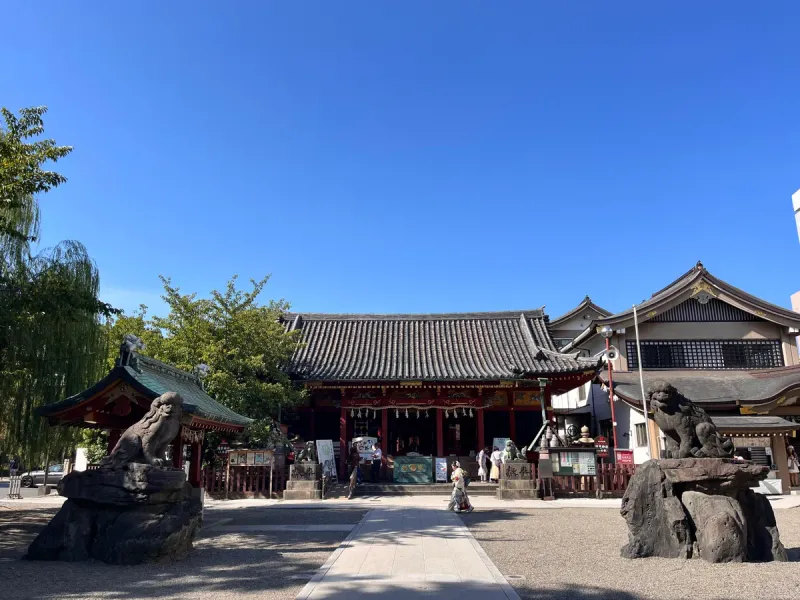
Right next door, and significantly quieter, sits Asakusa Shrine. This is a Shinto shrine honouring the three fishermen who, according to legend, pulled a golden statue of Kannon (the goddess of mercy) from the Sumida River, which led to the founding of Senso-ji. The shrine itself is a handsome 17th-century structure that survived the war intact. Visit any day and you’ll find it peaceful. Visit during Sanja Matsuri in May and you’ll find something entirely different: one of Tokyo’s wildest festivals, with portable shrines carried through the streets by teams of chanting locals and over a million spectators packing the neighbourhood.

Asakusa Shrine
- Shinto shrine honouring the three founders of Senso-ji
- Host of the famous Sanja Matsuri festival each May
- Beautiful architecture without the crowds of its neighbour
Right next to Senso-ji but much quieter. Visit during Sanja Matsuri in May for one of Tokyo's wildest festivals.
"Asakusa Shrine sits right beside Senso-ji but is a Shinto shrine rather than a Buddhist temple. It's significantly less crowded and offers a more peaceful atmosphere."
Nakamise and the Shopping Streets
Once the Nakamise stalls open around 9 or 10 AM, the energy shifts completely. This 250-metre shopping street has been operating since the Edo period, making it one of the oldest commercial streets in Japan. The stalls sell everything from hand-painted fans and wooden geta sandals to freshly pounded mochi and ningyo-yaki (little cakes filled with red bean paste, stamped into shapes of the Kaminarimon lantern or the pagoda).
The real finds on Nakamise are edible. Grab a melon pan from Kagetsudo, which is always the stall with the longest queue and worth every minute of waiting. The freshly grilled senbei (rice crackers) brushed with soy sauce are the kind of snack that makes you wonder why anyone eats packaged rice crackers at all. And the soft-serve matcha ice cream, while not unique to Asakusa, somehow tastes better when you’re eating it in the shadow of a 1,400-year-old temple.
Nakamise Shopping Street
- One of Japan's oldest shopping streets, dating to the Edo period
- Traditional street food and handmade souvenirs
- The 250-metre approach to Senso-ji main hall
Try the melon pan, ningyo-yaki, and freshly grilled senbei rice crackers. Shops close around 5-6 PM.
"The 250-metre shopping street leading to Senso-ji is lined with over 50 stalls selling traditional snacks, souvenirs, and crafts."
Don’t stop at Nakamise. The parallel street, Denboin-dori, is where the more interesting shopping happens. This old-fashioned street has traditional craft shops, small galleries, and fewer tourists. Look for the Edo-era themed decorations and the small statues of historical characters perched on rooftops along the street. There are stores here selling hand-dyed tenugui (cotton towels), kimono accessories, and handmade chopsticks. The Denboin Garden, attached to the temple, occasionally opens for special viewings in spring and autumn, though it’s not reliably accessible.
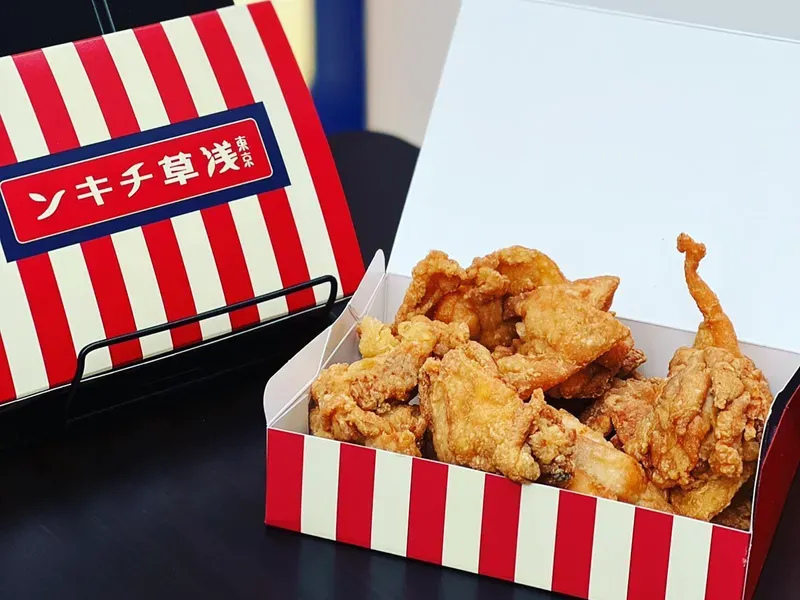
While you’re in the temple area, do not skip Asakusa Chicken. This little stand near Senso-ji opens at 9 AM and serves some of the best karaage (fried chicken) in Tokyo. The chicken is cooked to order from a family recipe, so each piece comes out shatteringly crisp on the outside, juicy inside, still practically steaming. The crab cream croquettes are a sleeper hit that regulars know about. It’s the kind of place that makes you rethink whether fried chicken can be a breakfast food. The answer is yes, absolutely.

Asakusa Chicken
- Award-winning chicken karaage cooked to order
- The crab cream croquettes are a sleeper hit
- Opens at 9 AM near Senso-ji, perfect morning snack
Visit early at 9 AM to avoid crowds and get freshly cooked chicken.
"A gem near Senso-ji known for its delicious made-to-order chicken karaage based on a family recipe. The crab cream croquettes also get high praise."
Hoppy Street and Asakusa’s Drinking Culture
Hoppy Street is the soul of old Asakusa. It’s a narrow alley just west of Senso-ji lined with about 20 izakaya taverns, all of them spilling plastic tables and stools out onto the street. The name comes from hoppy, a low-alcohol (0.8%) beer-like drink invented in the 1940s as a cheap alternative to actual beer, which was scarce after the war. You still order it here the traditional way: a bottle of hoppy and a frozen mug of shochu, which you mix yourself at the table.
The food is classic Japanese drinking fare. Nikomi (simmered beef tendon stew) is the signature dish of the street and nearly every place serves its own version. You’ll also find yakitori skewers, fried gyoza, and grilled motsu (offal) at prices that feel like a time warp. A full meal with several rounds of drinks might cost ¥2,000 per person. Try that in Ginza.
The best time to visit is late afternoon or early evening, when the after-work crowd starts filtering in and the grills are all firing at once. Weekends get rowdy and fun. There’s no single “best” izakaya on the street. Just pick whichever one has a seat available and an owner who looks like they’re having a good time. That’s the Hoppy Street method.
Hoppy Street
- Open-air izakaya atmosphere unlike anywhere else in Tokyo
- Cheap drinks and classic Japanese pub food
- A throwback to postwar Tokyo drinking culture
Go in the late afternoon or evening. Grab a seat outside and order hoppy with a side of nikomi (beef stew).
"A narrow street lined with izakaya taverns where locals and tourists sit outdoors on plastic stools drinking hoppy and eating grilled skewers."
Ramen and Cafes
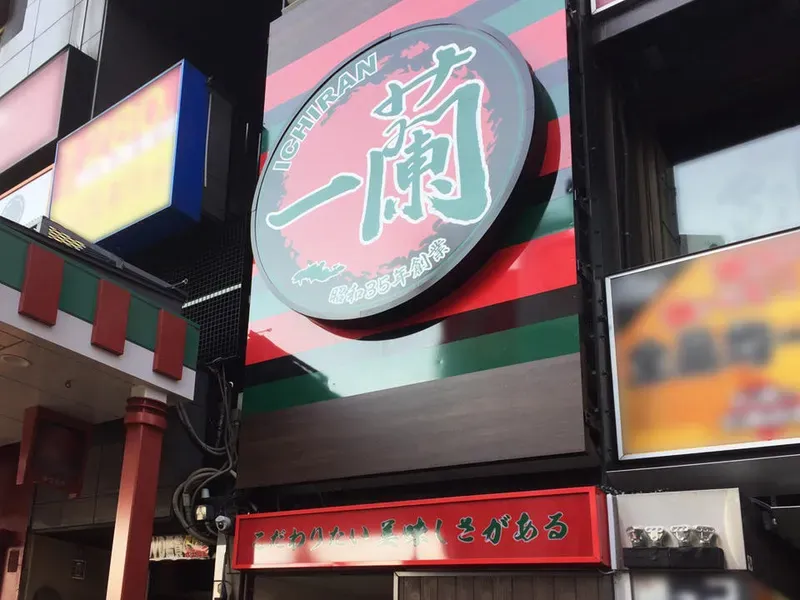
When you need something more substantial than street food, Asakusa has you covered. The Ichiran branch near Senso-ji is one of the more spacious locations of the famous solo-booth ramen chain, with both individual partitioned stalls and regular table seating. You fill in a preference card to customise your tonkotsu broth (richness, spice level, garlic amount, noodle firmness) and your food arrives through a small window. It’s a system that sounds odd until you’re halfway through a bowl of perfectly calibrated pork bone broth at 11 PM and grateful that nobody is trying to make conversation with you. If you want the full ramen rundown, our things to do in Tokyo guide has more options across the city.

Ichiran Asakusa
- Same iconic Ichiran tonkotsu experience near Senso-ji
- Both solo booths and table seating available
- Quick and efficient service even during busy periods
This branch has tables as well as solo booths. An elevator is available for accessibility.
"Praised for incredibly tasty and customizable ramen with rich, complex broth, perfectly cooked noodles, and well-prepared boiled eggs."
For coffee, Asakusa has a few spots that feel like they belong in a different era. Kaminari Issa is a small, cosy cafe tucked away from the main tourist drag. It holds a perfect 5.0 on Google, which in a neighbourhood this busy is a statement. The vibe is calm and intentional, a world away from the crowds at Nakamise just a few minutes’ walk south. Good place to sit with a pour-over and actually process everything you’ve seen that morning.

Kaminari Issa
- Perfect 5.0 Google rating
- Quiet escape from busy Asakusa streets
- Excellent coffee in a traditional neighbourhood setting
Small and cosy. Perfect for a quiet coffee break away from the temple crowds.
"A hidden gem cafe in Asakusa with a perfect rating. Guests love the relaxed atmosphere, quality coffee, and friendly service."
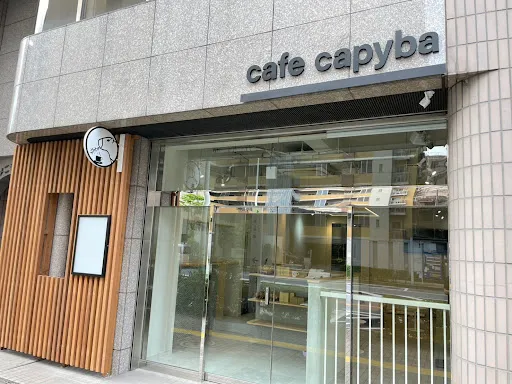
And then there’s cafe capyba, which is exactly what it sounds like. This is a cafe where you drink coffee while capybaras waddle around your feet. Tokyo has no shortage of animal cafes (cats, owls, hedgehogs, rabbits) but capybaras are in a league of their own. They’re enormous, absurdly gentle, and seem completely unbothered by the fact that humans are petting them while sipping lattes. Book ahead because time slots fill up. You get about 30 minutes with the animals, which is enough time to question every life decision that didn’t lead to you owning a capybara.

cafe capyba ASAKUSA
- Interact with real capybaras while drinking coffee
- Perfect 5.0 Google rating
- One of Tokyo's most unique cafe experiences
Book in advance as slots fill up. You get around 30 minutes with the capybaras.
"An animal cafe where guests can pet and interact with capybaras while enjoying drinks. Visitors consistently describe it as a heartwarming and unforgettable experience."
Samurai Ninja Museum
If you’re travelling with kids, or if you just want to throw ninja stars at a target for an hour (no judgment), the Samurai Ninja Museum in Nishi Asakusa is a genuinely fun way to spend a morning. The museum has English-speaking guides who walk you through exhibits on samurai armour, weaponry, and Edo-period warfare, but the real draw is the experience ticket. That gets you hands-on sword training, shuriken (throwing star) practice, and the chance to try on full samurai armour for photos. It’s interactive in a way that most museums in Tokyo are not. The whole visit takes 60 to 90 minutes, making it an easy add-on before or after Senso-ji.
Samurai Ninja Museum
- Hands-on samurai sword and ninja star training
- English-speaking guides and interactive exhibits
- Great for families and rainy days
Book the experience ticket for sword training and shuriken throwing. Allow 60-90 minutes.
"An interactive museum where visitors can try on samurai armour, practice sword techniques, and throw shuriken. The English-speaking guides make it accessible for international visitors."
Kappabashi Kitchen Street
About a 15-minute walk northwest of Senso-ji, Kappabashi is one of Tokyo’s most fascinating specialist shopping streets. Over 170 shops stretch along an 800-metre strip, all dedicated to kitchen supplies and restaurant equipment. If you’ve ever wondered where Tokyo’s 80,000 restaurants buy their bowls, knives, and chopsticks, this is the answer.
The knives are the main draw for most visitors. Japanese kitchen knives are considered among the best in the world, and Kappabashi has dozens of shops selling everything from entry-level santoku knives to hand-forged single-bevel blades that cost more than your flight. The shopkeepers know their steel and can guide you to the right blade for your cooking style. Most shops will engrave your name in Japanese for free.
The other star attraction is shokuhin sampuru, the hyper-realistic plastic food replicas you see in restaurant windows across Japan. Several Kappabashi shops sell miniature versions as souvenirs: sushi keychains, ramen magnets, tempura phone cases. You can even take a workshop to make your own. It’s one of the most uniquely Japanese souvenirs you can bring home, and it’s something you won’t find on Nakamise.
Kappabashi Kitchen Street
- Tokyo's famous kitchen tool street with 170+ shops
- Buy Japanese knives, ceramics, and cookware
- Home of the iconic plastic food sample replicas
Look for the giant chef's head statue marking the entrance. Most shops close by 5 PM.
"A long shopping street dedicated to kitchen supplies and restaurant equipment. Famous for Japanese knives, ceramic tableware, and the hyper-realistic plastic food samples."
The Sumida River Walk to Tokyo Skytree
One of the best walks in Tokyo starts right at the edge of Asakusa. Cross Azumabashi Bridge heading east and you’ll pick up the Sumida River promenade, a flat, paved riverside path that leads directly to Tokyo Skytree. The walk takes about 20 minutes and Skytree looms larger with every step, which is one of those simple pleasures that never gets old no matter how many photos you’ve seen.
Sumida Park lines both banks of the river and is one of Tokyo’s top cherry blossom spots in late March and early April. Even outside blossom season, the park is worth a stroll. The river itself has regular water bus services if you’d rather ride than walk, and the boats offer a different perspective on the Asakusa skyline.
Sumida Park
- Scenic Sumida River promenade connecting Asakusa to Skytree
- One of Tokyo's best cherry blossom spots
- Perfect framing for Tokyo Skytree photos
Walk along the east bank for the best Skytree photos. Cherry blossom season (late March to early April) is spectacular here.
"A riverside park along the Sumida River with walking paths, cherry trees, and excellent views of Tokyo Skytree."
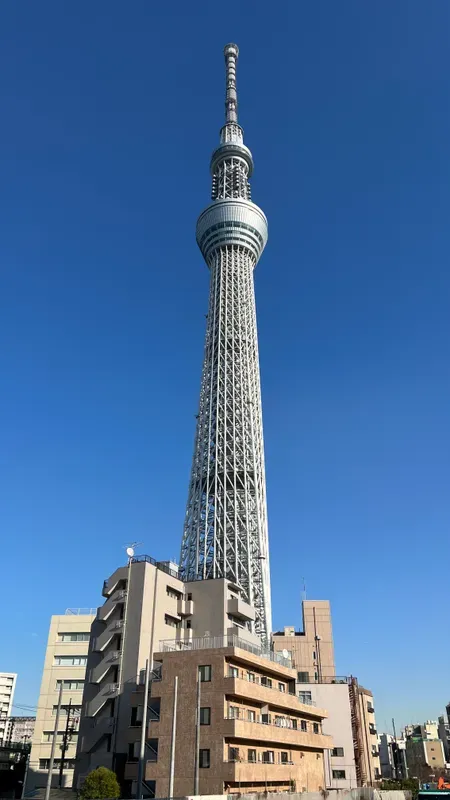
At the end of the walk, Tokyo Skytree rises 634 metres into the sky. It’s the world’s tallest tower and, on a clear day, both observation decks deliver views that stretch all the way to Mount Fuji. The lower Tembo Deck sits at 350 metres and offers the classic city panorama. The upper Tembo Galleria at 450 metres has a dramatic sloped glass corridor that makes you feel like you’re walking along the outside of the tower. Book tickets online in advance, especially for sunset time slots. The night views, with Tokyo’s grid of lights stretching to the horizon in every direction, are worth timing your visit around.

Tokyo Skytree
- World's tallest tower at 634 metres
- Two observation decks at 350m and 450m
- Stunning night views of Tokyo's skyline
Book online for a time slot to skip queues. The 450m Tembo Galleria level is worth the extra ticket.
"Tokyo Skytree offers unparalleled views of the city from its two observation decks. Clear days offer views to Mount Fuji."
At the base of Skytree, Tokyo Solamachi is a massive shopping complex with over 300 shops. It’s a convenient spot for souvenir shopping, and the basement food hall has an excellent selection of bento boxes, Japanese sweets, and takeaway meals. If you’re hungry after Skytree, the restaurant floors have everything from tonkatsu to Italian, though the food hall is honestly the better bet for variety and value.

Tokyo Solamachi
- Over 300 shops at the base of Tokyo Skytree
- Excellent food hall and restaurants
- Good selection of Japanese souvenirs and crafts
The food hall in the basement is excellent for bento boxes and Japanese sweets to take away.
"The massive shopping complex at Skytree's base has a wide variety of shops and restaurants. The food courts and basement food hall are highlights."
Other Things Worth Knowing
Rickshaw rides are available around the Kaminarimon gate area. Runners in traditional garb will pull you through the neighbourhood while narrating the history in English or Japanese. A 30-minute ride costs around ¥9,000 for two people, which is steep, but the runners know photogenic backstreets that most walking tourists miss. If you can afford it, it’s a fun way to start your Asakusa day.
Traditional crafts are scattered throughout the neighbourhood. Look for Edo kiriko cut glass shops, indigo dyeing studios, and woodblock print galleries on the quieter streets east of Senso-ji. Several offer hands-on workshops where you can try your hand at crafting. It’s the kind of thing that makes a better souvenir than anything on Nakamise.
Getting there is easy. Asakusa Station is served by the Ginza Line, Asakusa Line, and Tsukuba Express. From Shibuya, take the Ginza Line direct (about 30 minutes). From Shinjuku, the quickest route is the Marunouchi Line to Akasaka-Mitsuke, then transfer to the Ginza Line.
For more on what to see and do across the city, check our full things to do in Tokyo guide, or plan your trip with our 5-day Tokyo itinerary.
Frequently Asked Questions
How much time should I spend in Asakusa?
What is the best time to visit Senso-ji?
Is Asakusa worth visiting at night?
How do I get from Asakusa to Tokyo Skytree?
More Tokyo Guides
3-Day Tokyo Itinerary (2026)
ItineraryThree days, three pairs of neighbourhoods. This itinerary groups Tokyo by geography so you spend less time underground and more time eating, photographing, and getting properly lost.
5-Day Tokyo Itinerary (2026)
ItineraryFive days, five neighbourhoods. This itinerary groups Tokyo by geography so you spend less time on trains and more time eating, exploring, and getting lost in the right way.
Best Breakfast in Tokyo (2026) - From 6AM Sushi to Kissaten Toast
VibeTokyo is one of the few cities where eating sushi at 6 AM is completely normal. Breakfast here spans everything from a three-piece sashimi set at a Tsukiji fish stall to a ¥500 kissaten morning set with toast so thick it could double as a pillow. This guide covers 11 ways to start your day, from the traditional to the trendy.
11 Best Brunch Spots in Tokyo (2026)
VibeTokyo takes breakfast seriously, just not in the way you might expect. The city runs on kissaten morning sets, fluffy souffle pancakes that take 20 minutes to cook, and hotel buffets that could double as Michelin-level tasting menus. This guide covers all of it.
15 Best Cafes in Tokyo (2026)
GuideTokyo has over 550 cafes in our database alone, ranging from century-old kissaten to cafes where a capybara sits in your lap. These 15 cover matcha specialists, third-wave roasters, themed experiences, and traditional tea shops.
12 Best Izakaya in Tokyo (2026)
GuideIzakaya are where Tokyo actually eats and drinks after work. These 12 spots cover smoky yokocho alleys, refined sake counters, standing bars under railway arches, and a few chains worth knowing about.
Save these places to your Tokyo trip
Tourli turns travel guides into actionable day plans. Save places, get walking directions, and share your itinerary — all in one app.