- Tokyo's oldest temple, and calm before about 9am
- The Kaminarimon gate, the five-storey pagoda and the main hall
- Free
Ginza line exit 1 at Asakusa Station is two minutes from the Kaminarimon gate.
Two days in Tokyo, one half of the city each: Asakusa, Ueno, the Imperial Palace and Ginza on day one; Shinjuku Gyoen, Meiji Jingu, Harajuku and sunset over Shibuya on day two.
With two days in Tokyo, give each half of the city a day. Day one is the east and centre: Senso-ji at 8am, the Tokyo National Museum in Ueno, lunch in Ueno Park, the Imperial Palace East Gardens and sushi in Ginza. Day two is the west: Shinjuku Gyoen at opening, Meiji Jingu's forest, Harajuku, Cat Street down to Shibuya and sunset from the roof of Shibuya Sky. Each day is about 10 km on foot, and the trains in between are short hops on one IC card.
Pick your days with care. The museum closes on Mondays and the East Gardens on Mondays and Fridays, so day one wants a Tuesday, Wednesday, Thursday or weekend; Shinjuku Gyoen closes on Mondays too. The one thing to book is Shibuya Sky, two weeks ahead. With a third day, our 3-day itinerary adds Tsukiji and teamLab, and the 5-day itinerary goes further; for everything else, see things to do in Tokyo. Only have one day? See our 1-day itinerary.

The east and the centre: a temple at 8am, Japan's national museum, lunch in Ueno Park, Edo Castle's grounds and sushi in Ginza.
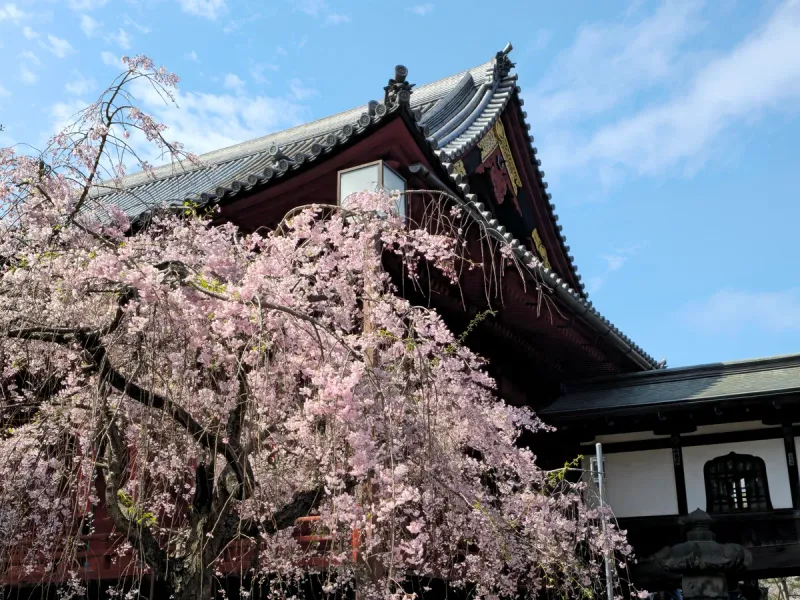
Start at Senso-ji at 8am, before the tour groups. The main hall opens at 6:30am from October to March and 6am in summer; the temple is free. Walk in under the red lantern of the Kaminarimon, past the pagoda to the incense burner, and give it 45 minutes. For the rest of the neighbourhood, see the Asakusa guide.
Ginza line exit 1 at Asakusa Station is two minutes from the Kaminarimon gate.
Walk back down Nakamise as the shops open, pick up a rice cracker on the way, and head for the Ginza line at Asakusa Station.
Eat snacks at the stall you bought them from; the street is narrow and gets crowded by late morning.
Ueno is three stops and about five minutes away on the Ginza line: ¥178 on a Suica or PASMO card (¥180 for a paper ticket). Follow the signs for the park; the museum is about ten minutes' walk at the far end.
The Tokyo National Museum opens at 9:30am and the collection galleries are ¥1,000. With under two hours, stay in the Honkan, the main building: armour, swords, folding screens, kimono and woodblock prints in a sequence that explains Japanese art faster than any book. It's closed on Mondays. The Ueno guide has the park's other museums, and our best museums in Tokyo compares them.
Ten minutes' walk through Ueno Park from Ueno Station's Park exit. With an hour and a half, stay in the Honkan, the main building, for the Japanese galleries.
Walk back through Ueno Park along the central avenue towards Shinobazu Pond. Lunch is on the way.

Walk from the museum down the central avenue towards Shinobazu Pond; Inshotei is on the way.
Walk down to Ameyoko, the market street along the JR tracks south of Ueno Station: fruit on sticks, dried fish, cheap trainers and plenty of noise. Follow it south for half an hour to Okachimachi Station.
Walk it south from Ueno Station to Okachimachi Station and pick up the Yamanote line there.
Take the JR Yamanote line from Okachimachi to Tokyo, three stops and under ten minutes on the same IC card. Leave by the Marunouchi North exit; Otemon gate is about 15 minutes' walk.
The Imperial Palace East Gardens are the grounds of Edo Castle, free and with no booking. Walk up through the old gates to the stone base of the castle keep, then down to the garden below the walls. From November to February the last entry is 3:30pm and the gates close at 4pm, so be through Otemon by 2:30pm. They're closed on Mondays and Fridays; on a Friday, walk the moats and the outer gardens instead, which are open all the time.
Leave by Otemon and follow the moat south for about 15 minutes to the plaza in front of the palace, where Nijubashi bridge crosses the water to the palace gate. In late autumn and winter you'll get there shortly before sunset, which is about 4:30pm.
Enter at Otemon gate, about 15 minutes' walk from Tokyo Station's Marunouchi North exit, and climb to the stone base of the old castle keep.
From the palace plaza, walk past Hibiya Park into Ginza, about 25 minutes, and spend the early evening on Chuo-dori among the department stores. The Ginza guide has the shops, food halls and bars.
The west on foot: a garden at opening, the shrine forest end to end, ramen and Takeshita Street in Harajuku, Cat Street to Shibuya and sunset from the roof.
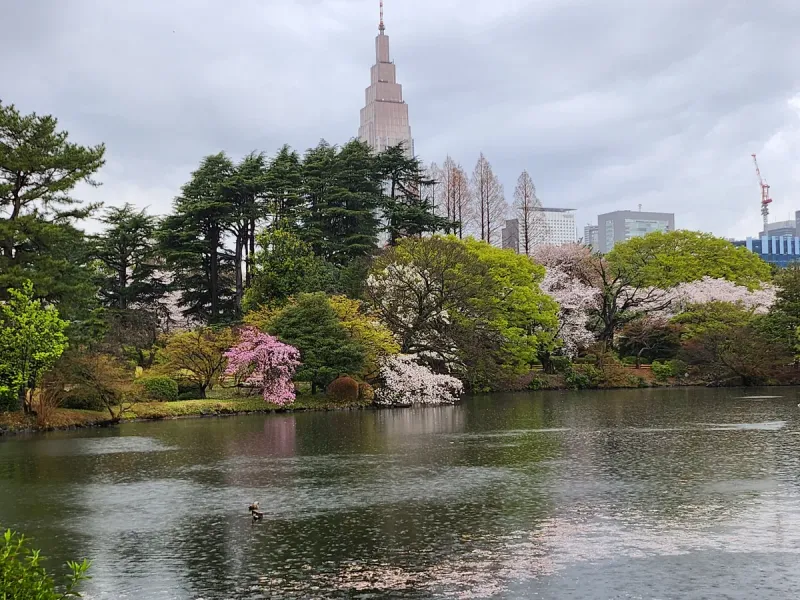
Be at the Shinjuku gate of Shinjuku Gyoen for the 9am opening, five minutes from Shinjuku-gyoemmae Station on the Marunouchi line. It's ¥500 (buy online to skip the gate queue). Walk the Japanese garden first, then the French formal garden and the long English lawn. An hour and a half is plenty. It's closed on Mondays, except from 1 to 15 November and 25 March to 24 April. See the Shinjuku guide for the rest of the area.

Buy the ¥500 ticket online (via asoview, linked from the official page) to skip the gate queue. Alcohol isn't allowed.
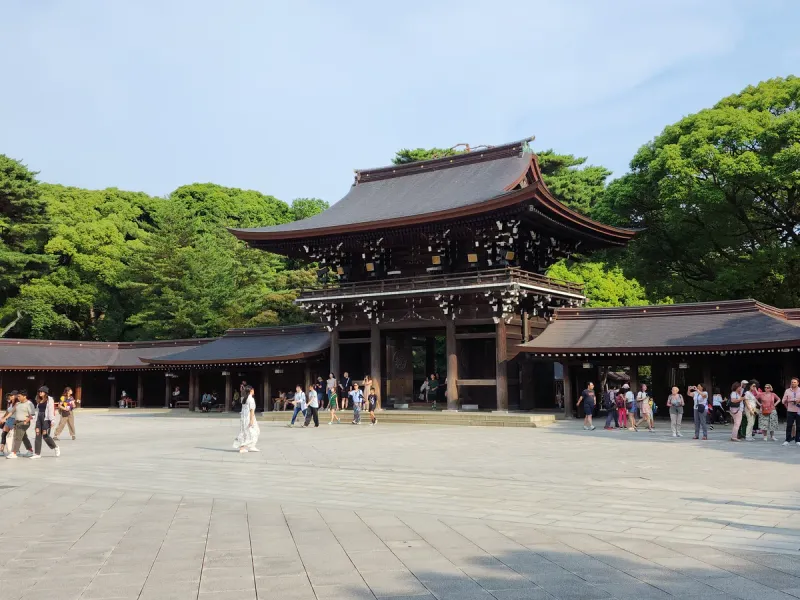
Leave by the Sendagaya gate and walk west for about 20 minutes, past Yoyogi Station, to the north gate of Meiji Jingu. Coming in from the north means you walk the shrine forest once, end to end: the north approach to the main shrine, then the main approach south to the Harajuku gate under the great wooden torii. It's free, and an hour covers it.

Come in by the north gate near Yoyogi Station and leave by the Harajuku gate at Jingu-bashi; that way you walk the forest once, end to end.
Walk back to Harajuku Station and down Takeshita Street, car-free from 11am: crepes, character shops and teenage fashion, busiest on weekend afternoons. At the bottom, turn onto Omotesando. The Harajuku and Omotesando guide has the shops and museums worth a detour.
At its busiest on weekend afternoons. Walk it downhill from Harajuku Station to Meiji-dori.
Turn off Omotesando onto Cat Street and follow it south: a car-free back lane of small shops and coffee bars that brings you into Shibuya in about 20 minutes. Its vintage shops are in our vintage shopping guide.
Join it where it crosses Omotesando and follow it south to Shibuya.
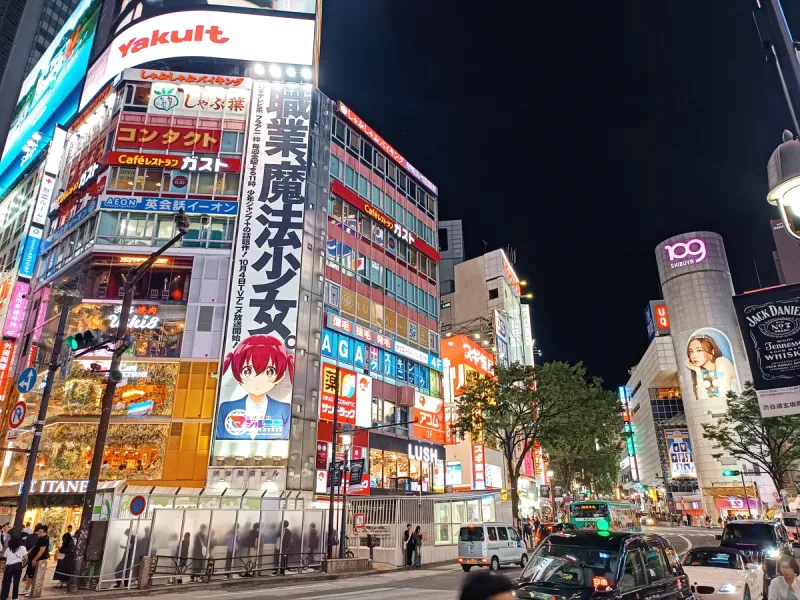
Walk the Scramble Crossing by the station and say hello to Hachiko outside the exit of the same name. If you're early for your Shibuya Sky slot, the Shibuya guide has plenty within five minutes.

Hachiko's statue is outside the station exit on this side; walk the crossing, then watch a light change from there.
End the day at Shibuya Sky, the open-air roof 229 metres above the crossing. Book a slot about 40 minutes before sunset: around 4:30pm from mid-November through December, about 7pm in June. Online it's ¥3,400 from 3pm (¥2,700 before). Tickets go on sale two weeks ahead at midnight Japan time, and from 19 November 2026 visitors who live outside Japan must show their original passport. Stay for the lights; there's no time limit. The Shibuya Sky guide covers the rules and bad-weather closures.
Tickets go on sale two weeks ahead at midnight Japan time. From entry dates of 19 November 2026, visitors who live outside Japan must show their original passport at the entrance.
Day one: 8am Senso-ji · 8:45am Nakamise · 9:15am Ginza line to Ueno · 9:45am Tokyo National Museum · 11:45am Ueno Park · 12pm lunch at Inshotei · 1:15pm Ameyoko · 1:45pm Yamanote line to Tokyo · 2:15pm Imperial Palace East Gardens · about 4pm Nijubashi · 4:45pm Ginza · from 5:30pm dinner at Sushi no Midori.
Day two: 9am Shinjuku Gyoen · 10:30am walk to Meiji Jingu · 11am Meiji Jingu · 12:15pm lunch at AFURI Harajuku · 1pm Takeshita Street · 1:45pm Cat Street to Shibuya · 2:45pm Scramble Crossing · about 40 minutes before sunset, Shibuya Sky · dinner at Shibuya Yokocho.
Those times assume late autumn or winter. In summer the East Gardens stay open to 5pm or 6pm, so day one can run slower; sunset is near 7pm, so on day two book Shibuya Sky for about 6:20pm and give Meiji Jingu and Yoyogi Park longer.
Day one needs a Tuesday, Wednesday, Thursday, Saturday or Sunday. On a Monday both the Tokyo National Museum and the East Gardens are shut (the museum opens on a holiday Monday and closes the Tuesday after). On a Friday only the East Gardens close: walk the moats and the outer gardens to Nijubashi instead. The East Gardens also close from 28 December to 3 January and on the Emperor's Birthday, 23 February. Over Christmas the museum's main building is shut: from 22 to 25 December 2026 only the Horyuji Treasures Gallery and Kuroda Memorial Hall open, and it closes from 26 to 31 December.
Day two works any day but Monday, when Shinjuku Gyoen closes (it opens on Mondays from 1 to 15 November and 25 March to 24 April). On a Monday, start at Meiji Jingu at 9am and add a walk through Yoyogi Park. Shinjuku Gyoen closes from 29 December to 3 January, and Shibuya Sky suspends normal opening on 1 January.
Tickets: ¥4,900 per adult at 2026 prices: the Tokyo National Museum ¥1,000, Shinjuku Gyoen ¥500 and Shibuya Sky ¥3,400 online from 3pm. Senso-ji, Ueno Park, the East Gardens, Meiji Jingu and the Crossing are free.
Trains: ¥178 on an IC card for the Ginza line to Ueno, plus short JR Yamanote rides from Okachimachi to Tokyo and to your start on day two. The ¥1,000 Tokyo Subway Ticket doesn't cover the Yamanote line, so it won't pay on either day.
Food: Inshotei's lunch box ¥2,000, Sushi no Midori's Jo nigiri set ¥2,200 and a ramen at AFURI. Tipping isn't done in Japan.
Day one is the better rain day: the museum fills the morning, and you can shorten the East Gardens. Day two is mostly outdoors; Shibuya Sky's roof closes in strong wind, rain or thunder, and eligible online tickets can then be cancelled free on the day if you haven't gone in. Our rainy day guide has indoor swaps.
Stay near a Yamanote or Ginza line station. Ueno and Asakusa are closest to day one's start, Shinjuku and Shibuya to day two's; Ginza and Tokyo Station sit in between. Where to stay in Tokyo compares the areas.
Book one thing: Shibuya Sky, two weeks ahead at midnight Japan time, with your passport from 19 November 2026 if you live outside Japan. Buy the Shinjuku Gyoen ticket online too, to skip the queue.
Pay with an IC card: put Suica or PASMO on your phone, or buy a Welcome Suica or TOURIST PASMO at the airport. Getting around Tokyo explains the cards and the Yamanote line.
Cash and cards: AFURI is cashless; carry some cash for Ameyoko's stalls.
Shoes: both days are about 9 to 10 km, much of it on gravel paths.
Planning your trip? Save these places into a day-by-day plan with Tourli, the app that turns travel guides into actionable itineraries.
Stop reading lists.
Start the trip.
Tourli turns any guide into an actionable day plan — pinned to a map, walking directions and offline access included. One tap to save every place on this page.